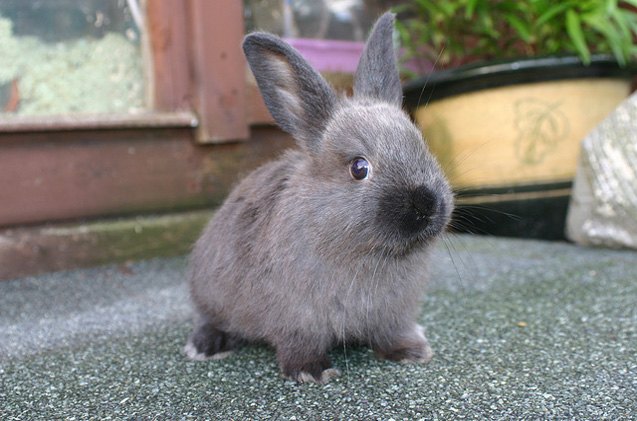
American Sable Rabbit Breed History/Origin
The American Sable rabbit was first noted in early 20th century, when it was developed by Otto Brock in California. The breed was the result of crossbreeding Chinchilla rabbits with several other rabbit breeds until he achieved the desired look we know today. The American Sable Rabbit Association was founded in 1929 and the breed was accepted by the American Rabbit Breeder’s Association (ARBA) two years later in 1931.
American Sables have soft, fine, dense coat that requires more grooming that the average short-haired rabbit.
Overall Description
The American Sable rabbit has a commercial-sized body which weights anywhere from 8-10 lbs., with males usually weighing slightly less than the females. These rabbits have a rounded head with vertical, upright ears.
Coat
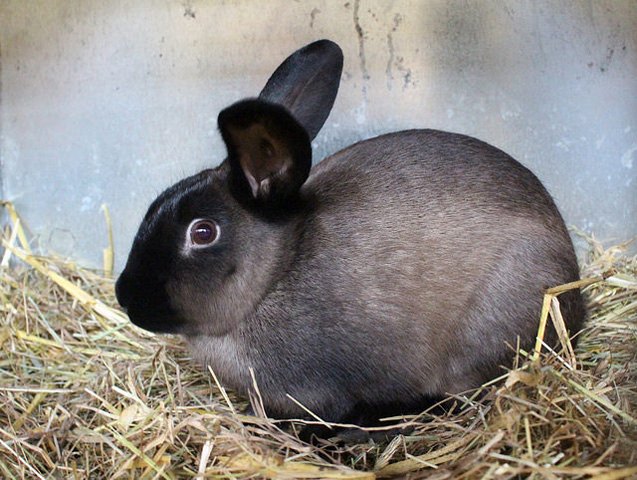
The American Sable rabbit has soft, fine, dense coat that requires more grooming that the average short-haired rabbit, but less than long-haired rabbit breeds like Angoras. Because their coat is so thick, they will definitely shed more during moulting periods. Owners need to be prepared for regular brushings during these heavy shedding periods, especially if your American Sable is an indoor rabbit. Simply groom your rabbit with a slicker brush outdoors 1-2 times per week as necessary during shedding season, and once every two weeks during off-season times.
Colors
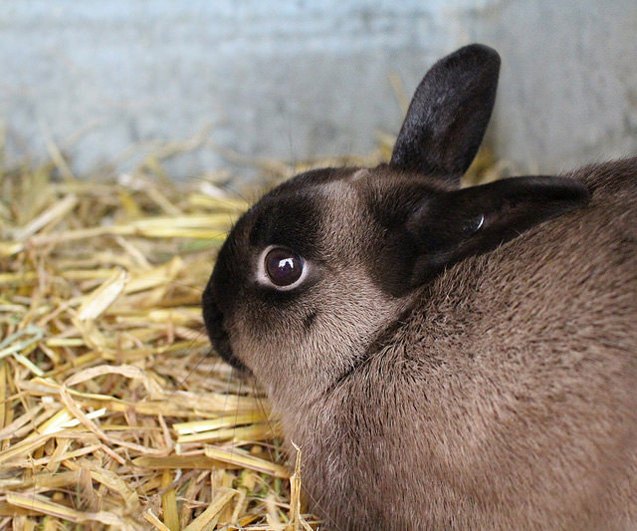
The American Sable rabbit only comes in one color that is accepted by the ARBA. Their head, feet, ears, back and top of tail are a dark sepia color, while the rest of their coat fades to a lighter tan, like a Siamese cat.
The American Sable rabbit enjoys gentle petting on its back and between its ears.
Care Requirements
An American Sable’s diet is like any other rabbits in that it should consist mainly of hay (70 percent), while the rest should be a healthy mix of pellets, leafy greens, fruits, and vegetables. Limit the amount of fruits that are high in sugar. Make sure to stay clear of iceberg lettuce, as it contains too much water and too little fiber to count as a good meal. Do not feed your rabbit yard clippings as grass is usually treated with fertilizer, insecticides, pesticides, and other chemicals that can harm your rabbit. Always research, and/or ask your veterinarian about your rabbit’s diet.
When it comes to enclosures, this particular rabbit breed can live in either an indoor or outdoor enclosure, so long as they are not exposed to extreme weather temperatures or conditions. Outdoor enclosures need to be raised off the ground to protect them from predators such as racoons, coyotes, wolves, and should be made of wood or metal. The top should be covered from the elements and depending on where you live, it may need to have 3/4 sides covered to protect them from extreme snow and allow air circulation. Indoor enclosures should be made of wire and have a metal or plastic bottom to allow bedding to be laid (wire bottoms are not comfortable for long periods of time and are taxing on your rabbit’s feet). The bedding needs to be spot-cleaned every day and completely replaced at the end of every week.
In order for your rabbit’s personality to flourish, American Sables need to have plenty of time outside of their enclosures.
Health
All rabbits are susceptible to developing overgrown teeth – the American Sable is no different. This problem is caused by a diet that lacks a proper balance of hay, which is used to slowly grind down teeth naturally. Overgrown teeth can grow into a rabbit’s jaw and face. In order to prevent this condition, make sure to check your rabbit’s mouth regularly for overgrown teeth and always make sure they have a proper diet consisting of mostly hay. Ears should also be checked periodically for ear mites, especially for rabbits who spend most of their time outside.
Does can be spayed as young as four and a half months old (although veterinarians tend to wait until they are six months old) while bucks can be neutered as young as three and a half months of age. “Fixing” your rabbit usually gives them a few more years of life.
American Sables are energetic rabbits who will happily run round inside or out.
Temperament/Behavior
American Sables are energetic rabbits who will happily run round inside or out, and once they’ve been tuckered out, will enjoy the company of their human. They enjoy gentle petting on their backs and between their ears although they are so active that they may not even give you the chance to do so! They make great pets for singles, couples or families with children, and can live in apartments or homes with or without backyards. They also can make wonderful companions for seniors.
American Sables will benefit from having a couple of toys to sink their teeth into and play with. Some rabbits enjoy having simple toys (such as plastic balls) or a piece of cardboard, while others enjoy more complex, mentally stimulating toys – it all depends on your individual rabbit’s personality.
Rabbits tend to be a little harder to litter train than other animals such as cats and dogs, but it is possible. Unlike cats, rabbits may need to have a few litter boxes spread out across the house.
Photo credit: Corinne Benavides/Flickr; becki_moorcroft/Flickr