Don’t Worry Human, Science Says Your Dog Loves You… Lots

Published A Few Days Ago
ADVERTISEMENT

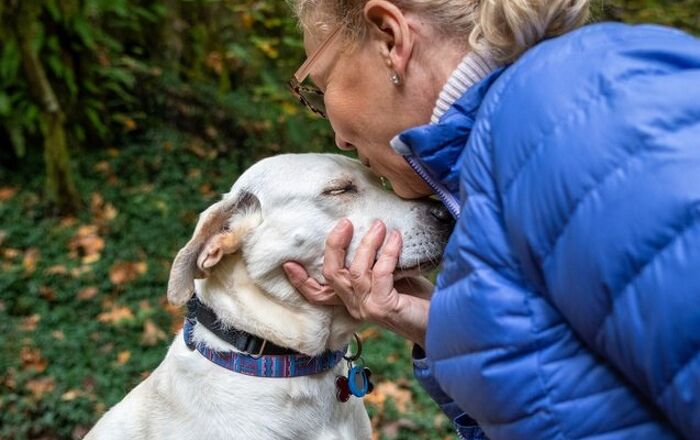
The way pooches spread the love to anyone and everyone at the dog park, it can sometimes seem like our dogs don’t discriminate in their affections; but don’t despair, dear human: scientists say your dog still loves you the most.

Do dogs love people even more than other members of their own species?

That’s the question that Dr. Gregory Berns of Emory University set out to answer with his latest study.

Trust us; it’s not as easy as it sounds. Can you imagine getting a dog to stay still inside an fMRI machine so you can scan its brain responses to different scents? Thankfully, Dr. Berns had done this type of brain imaging study before and had a group of well-trained pooches he could use to help investigate the canine-human bond.

So, just how do you figure out, scientifically, who your dog loves more?

Related:Study Shows Jealousy In Dogs Is Real

The Experiment

Since a dog’s most dominant sense is smell, this is what Dr. Berns and his colleagues focused on.

They used three dog-related scents, one from the dog himself, one from a dog who lived in the same household and one from an unfamiliar dog. They also used two human scents; one from a person the dog was familiar with (like a child or spouse from their human family) and one from a person they didn’t know.

The researchers also paid attention to two special areas in the dog’s brain: the olfactory bulb and the caudate nucleus (yeah, we’re getting all science-y on you — don’t worry, we promise it won’t be that bad!).

The olfactory bulb is the part of the brain that manages scent, while the caudate nucleus is triggered by rewards like food and social interactions; you might call this the “feel good center” of the brain.

Related:Your Dog is Smarter Than You Think

The Results

Dr. Berns and co. found that in terms of the olfactory bulb, there wasn’t a big difference in the way the pooches responded to humans or other dogs. However, they also found an area close by the olfactory bulb, in the cortex, that showed greater activity when presented with a familiar scent. This whole area appears to respond more fervently when the scent is that of another dog. That said, this part of the brain has never been shown to be tied to emotion or feelings, so the increased response likely has more to do with recognizing and identifying the scent of a fellow pooch.

And what about the caudate nucleus, the “feel good center” of the dog’s brain? Well, it paws-itively lit up when the pooches smelled a familiar human. In fact, the caudate nucleus saw more activity when presented with the familiar human scent than any of the other smells. Dr. Berns says this indicates that not only did the dogs recognize the scent of their human, but they likely also have affection for that person, along with the anticipation that spending time with them will be both pleasant and rewarding.

Nature or Nurture?

Does this mean that dogs are now evolutionarily predisposed to caring for all humans over all other dogs? Probably not, says Bern.

Since the dogs showed a diminished response to the scent of the unfamiliar human and a massive response to the scent of the person they knew, we can conclude that affection between dogs and their owners likely comes about because of the way they dog is raised. If it’s a loving and nurturing environment, the dogs will associate the scent of their human(s) with the good things in life, and the “feel good center” of their brain will light up in response.

[Source: Psychology Today]

ADVERTISEMENT

ADVERTISEMENT

You May Like

And The Winner Of The Merrick Dog Food For A Year Contest Is…

Drum roll please! The winner of the Merrick Dog Food for a year contest is Lori W. She’s mom to two poodles… and another puppy on the way. She&r…

Chesa-Poo

The Chesa-Poo brings together the playful personality of the Poodle and the gentle nature of the Chesapeake Bay Retriever.

What You Should Know About Feline Pancreatitis

A serious condition that needs immediate attention from a veterinarian, know what to look for in case your cat suffers from pancreatitis.

Boxer

Enjoying widespread popularity, the Boxer sports a square jaw line and impressive under bite that gives him a fighter-like appearance.

Broholmer

Also known as a Danish Mastiff, the Broholmer is a large dog from Denmark. Despite its size and powerful build, this breed is a calm and good-tempered dog.

Pomimo

The Pomimo is a cross between a purebred Pomeranian and American Eskimo. They''re wonderful first-time pets for families who have children.

4 Cool Tips On How To Avoid Hot Dogs This Summer

Now that the warm weather is upon us, we want to spend all our time outdoors… with our dogs! We’ve got a few tips on how to beat the heat when y…

Best Ramps for Dogs

To make sure your pet gets to go wherever they want without risking their safety and health, check out these highly-rated mobility ramps for dogs.

Bengal

The highly intelligent Bengal forms close and strong bonds with their humans, seeking attention and placing themselves in the middle of all activities.

Learning About Collapsed Trachea in Dogs

Let''s talk about collapsed trachea in dogs, what you should know, and what your options are. The most common symptom is a dry, honking cough.

Breast Cancer in Pets: Causes and Treatments

I discovered the lump while playing with my newly adopted feline, Maude. A much-enjoyed belly rub was how I first felt the mass and because I had been through i…

Old Danish Pointer

Also known as the Old Danish Pointing Dog, the Old Danish Pointer is a medium-sized pointing breed developed in Denmark for hunting.

Korat

An affectionate and cuddly cat, the Korat bonds strongly with its humans, but will single out a favorite. They are playful, but gentle with children.

Don Hairless

A friendly, intelligent, and loving cat, the Don Hairless exhibits an active curiosity about its surroundings. These cats entertain themselves well.

Domestic Shorthair

One of the most popular cat breeds in the world is the Domestic Shorthair, which is also referred to as DSH. But this is not a single recognized breed.