Anglo-Arabian Horse Breed History
Also known as the Anglo-Arab, the Anglo-Arabian Horse is a unique and popular equine breed. It is the third oldest stud book within France, as well as the third oldest horse breed on the planet.
France and Britain both claim that they are the birthplace of the Anglo-Arabian Horse, and both of the countries have been working on producing this all-around horse for over 150 years. The breed combines the best of the Thoroughbred Horse and the Arabian Horse, so it will have the endurance, stamina, and soundness of the Arabian, as well as the speed of the Thoroughbred.
At least 25% of an Anglo-Arabian’s blood must be Arabian.
At least 25% of an Anglo-Arabian horse’s blood must be Arabian. However, it can’t have more than 75% Arabian blood either. Also, the horse’s ancestors should be Thoroughbred, Arabian, or Anglo-Arabian.
In France, the breeding of the Anglo-Arabian Horse began in 1836, and it was based upon three Thoroughbred mares and two Arabian stallions. Also, in Britain, this breed was developed as a cross between an Arabian and a Thoroughbred.
Anglo-Arabian stallions were being used for cross-breeding and pure breeding by 1850, and by 1860, racing competitions that featured Anglo-Arabian horses exclusively had become quite popular.
It was not until 1880 that the breed’s requirements were established formally. It was then that it was set that an Anglo-Arabian only required 25% Arabian blood. The breed was made a part of the French Stud Book in 1890.
Breed Traits
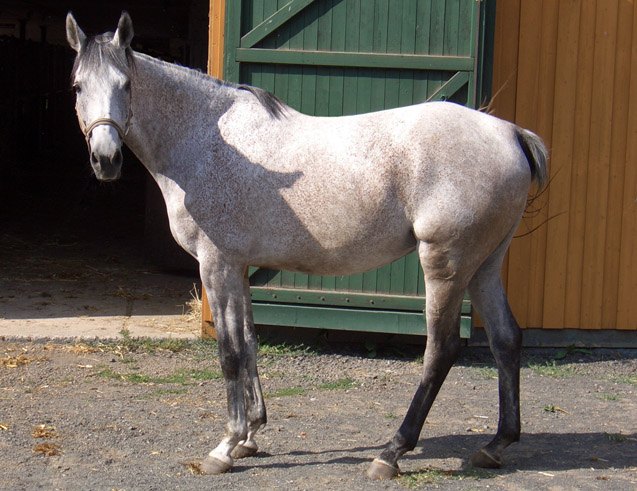
Anglo-Arabian horses are known for having a pleasant disposition. Even though they are considered high-spirited animals, they are manageable.
These horses are intelligent and brave, as well as energetic yet sweet, making them a pleasure to work with and ride.
Like the Arabian Horse, the Anglo-Arabian will be refined and intelligent, with plenty of stamina. However, these horses will also have the size and speed of a Thoroughbred, making them highly competitive athletes.
Because this breed is fast and agile, and because it has plenty of energy, these animals make wonderful sport horses, though they can also be used in pleasure riding as well.
Like the Arabian, the Anglo-Arabian will be refined and intelligent.
Overall Description
Even though the Anglo-Arabian Horse is a combination of the Thoroughbred and Arabian equine breeds, it gets the majority of its physical characteristics, such as its height and head shape, from the Thoroughbred.
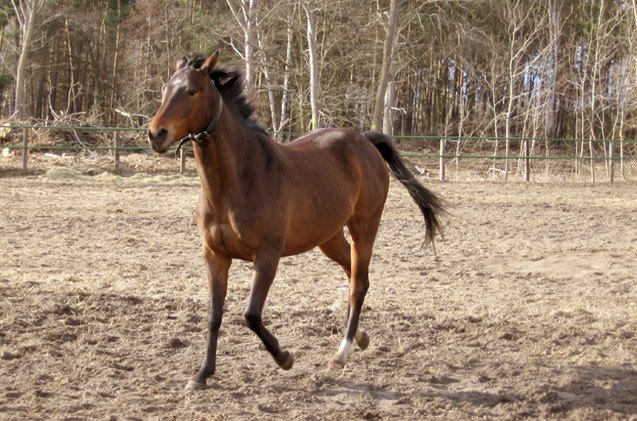
When looking at these horses, you will notice that they feature a straight profile on a delicate, refined, and chiseled head. Their eyes will be expressive and their ears will be mobile.
The neck should be slightly arched and long, and the chest should be deep. The horse’s back should be short, and the withers should be prominent. The breed will also feature solid, oblique, and strong shoulders.
The Anglo-Arabian Horse’s croup will be horizontal and long instead of rounded. The tail will be set high, as well as carried high. The mane, tail, and coat of this breed will be silky and fine.
Overall, the body will be strong and short, but the frame will be solid. These horses will also have a deep barrel, and the legs will be strong and long as well. The legs allow the horse to have a springy jump and a powerful walk.
Anglo-Arabians get most of their physical features from the Thoroughbred.
Colors
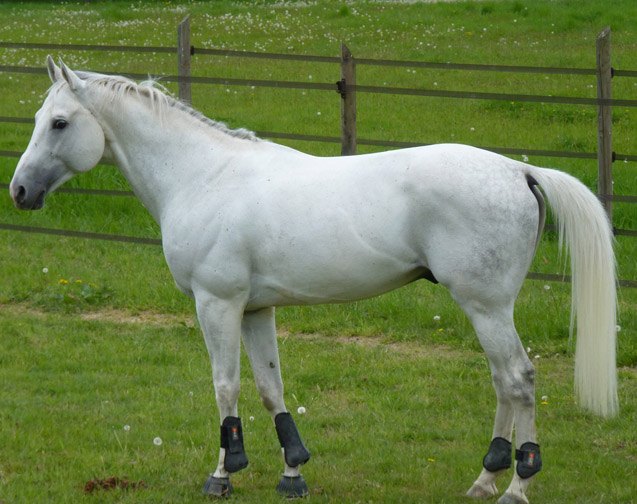
The attractive Anglo-Arabian Horse can showcase any of the solid equine colors. However, these horses commonly feature solid coat colors that include bay, chestnut, brown, and gray. Chestnut and bay are the most common colors for this breed.
Grooming Requirements
Just like all other equine breeds, the Anglo-Arabian will greatly benefit from regular grooming sessions that stimulate circulation and work on thoroughly cleaning the horse’s skin and coat. Grooming sessions are also a fantastic way to bond with your horse beyond riding.
You can use a dandy brush, curry comb, and shedding blade to brush your entire horse’s body and remove all of the excess hair, debris, mud, and dirt that have collected within the coat. A body finishing brush could be utilized on areas like the legs and face, which tend to be more sensitive, and you can use a damp cloth to clean around the horse’s eyes as well.
To keep this horse’s silky mane and tail looking beautiful and to get tangles out completely, you can use a tail brush and mane comb. Then you can finish every grooming session by checking the hooves closely for injuries and infections while using a hoof pick, which will effectively remove any debris, rocks, and dirt that have collected within the hooves.
If your horse requires it, you can also use a gentle equine shampoo to thoroughly clean the coat. After every grooming session, your Anglo-Arabian should have a smooth, shiny, and silky coat that appears lovely and healthy.
Photo credit: Alexander Kastler; Wikikoko