
Beaglier Basics
I’ll bet you didn’t think that a Beagle could get any better. A classic mistake that all too many people make. That’s the thing about designer dogs. Breeders take something that we all love and find a way to make it even better. Today, it’s time to say “hello” to the Beaglier, a mix of Beagle and Cavalier King Charles Spaniel. As it usually goes with designer dogs, these pooches boast the best of both worlds – the most beloved traits of their parents all bundled up in one super cute package. These adorable pooches crave human attention and will be stuck to your side most of the day. When they catch their human family relaxing and unwinding, they will no doubt be attached to your hip, forever begging for belly rubs and head pats. Anyone who enjoys affectionate pups will be seduced by this cutie, who lives to love and be loved.
This hybrid dogs are even easily adaptable to most home environments. Beagliers don’t often bark at strange noises or strangers coming into the house, which makes them perfect apartment dwellers. However, you should provide them with plenty of chew toys, as they do often get bored and will go after whatever they see that is chewable (for example, Beagliers will consider your shoes to be perfect toys to sink their teeth into). Despite being chewers, the Beaglier does wonderfully with children, both younger and older. They are friendly, affectionate, and absolute saps when it comes to their favorite humans. This doggos love aggressively and it’s all too easy to love them right back.
These dogs usually take their excellent sniffing abilities from their Beagle parent, so expect them to always follow their nose wherever it should take them.
Origin
Designer dogs are a fairly new and recent phenomenon, but they’ve taken the world by the storm. These dogs are 50/50 mixes of two different purebred dogs and have been specially developed to display certain characteristics or reduce some traits in the existing parental breeds – for example, combining the genes of a hypoallergenic dog to make a certain breed more suited to people with mild dog allergies, and so on. However, while hybrids are quite popular, not many of them have a well-documented history, including Beaglier. After all, it’s difficult to say when such a mix first occurred, when there has probably been a fair share of Beagle and Cavalier King Charles Spaniel mixes throughout history – albeit not intentional, but rather accidental.
Even so, knowing what we know about designer dogs in general, we can, fairly confidently ,assume that the Beaglier was also first developed as a breed sometime in the 1990s or early 2000s when most crossbreeds came to be. Some sources indicate that it was first developed in Australia, but that is yet to be confirmed.
What’s clear is the idea behind developing the Beaglier breed. Breeders were probably looking for a small and energetic dog who had a less active scent drive than the Beagle. So they decided to cross-breed a Beagle with a Cavalier King Charles Spaniel (because they are known to be well-mannered, even-tempered dogs). Since then, their popularity has grown and they can be found throughout North America and Europe. These dogs keep spreading around the world because they are such incredible companions in almost any environment.
Pedigree

The Beaglier is a cross between a Beagle and Cavalier Charles Spaniel. This is a first generation designer dog mix, which means that the puppies are a 50-50 mix of both breeds. While the most common type of designer dogs, this type of hybrid is also the one that varies the most, both in terms of the appearance and behavior. The puppies, even across one litter, can favor different parents more. For example, some might inherit the coloring and the floppy eyes of the Beagle, others could resemble the Cavalier with a longer and softer coat. Designer dogs are a bit unpredictable in this regard. While you always know what you are getting with a pure bred puppy, hybrid dogs tend to be a surprise every time, mixing and matching their parents traits seemingly at random. However, most Beagliers do at least share a similar and recognizable look. Each puppy being unique tends to work in favor of the breed and not against it.
Since the direct crossbreeding of two different purebreds can’t always produce uniform results, some breeders turn to multigenerational breeding. That means crossing a first generation Beaglier to an unrelated Beagle or Cavalier, or mating two Beagliers for a second generation litter. This leads to offspring that are a little more genetically predictable since the parental gene pool is less wildly varied. Multigenerational breeding is a fairly common practice, and it’s not that rare to come across a multigenerational Beagliers. While this does create a more predictable mix in terms of appearance, multigenerational designer dogs might also be more prone to certain health issues – so if you are getting one, be sure to check their background, parentage, and breeder’s qualifications before adopting one.
Food / Diet
The Cavalier King Charles Spaniel and the Beagle are quite different in size and activity levels, which also makes their dietary needs slightly different, as well. So how does that fare for their mixed breed offspring? Like all dogs, the Beaglier will require a health and well-balanced diet to stay in top shape. These designer dogs do well when fed high-quality dry food that is made to suit their own unique needs. Which dry food does the trick will depend on each pooch, so you will have to find a formula that is appropriate for your dog’s size and activity level as well as their age. As a rule of thumb, the Beaglier does best on medium breed or active formula. Additionally, the kibble you choose should be based on natural, high-grade ingredients. If you’re unsure which dry food to pick, always talk to your veterinarian to find the best dog food at your dog’s particular stage of life. While kibble manufacturers offer a fairly reliable guide to their formulas, every dog is unique and so are their dietary needs. Only your vet will be able to accurately determine which food will be best for your pup at their particular stage in life.
Once you’ve found the right dry dog kibble, this small dog will require a total of 3/4 to 1.5 cups of food per day and that should be divided between 2-3 meals. As these dogs are not too big, they don’t need much food to stay full. So be careful and do not let them overfeed. Not unlike most pooches, Beagliers also tend to have a healthy appetite. They will gladly eat anything that is put in front of them, far more than their fair share. However, while you might be tempted to give in to your dog’s puppy eyes and indulge them with a few extra treats, you really shouldn’t. These dogs are prone to obesity, so it’s important to keep their weight in check to avoid potential health issues. Doggy obesity can quickly devolve into quite an unpleasant life for any pup. So, be careful not to indulge your Beaglier to avoid these sad possibilities.
If you find that your Beaglier is being overly destructive of your things or feeling separation anxiety, you may have to increase the amount of outdoor playtime.
Training
Now this is a tricky category. There seems to be a divide on whether or not Beagliers are easily trainable dogs. Depending on your Beaglier’s personality, they may take from the Cavalier King Charles Spaniel side and be timid, yet eager to please when training. That would be lucky. Because on the other side of things, Beagles are notorious for being stubborn dogs to train. However, you may find that being a crossbred dog may make it easier for them to follow through with commands. Always be patient, speak with a firm, even tone and reward their behavior with a piece of kibble or a treat. Any sort of negative reinforcement training is a huge mistake with any dog. It’s abusive and never works out in the long run. So, if your training sessions end up being less than successful, obedience classes should be the next logical step to having a well-trained house pooch. Trust the professionals. They’ll know how to get your pup in line without ever crossing the line.
Weight
The Beaglier is a relatively small sized dog who will weigh anywhere between 10 to 20 pounds once they are fully grown adults. As such, they generally don’t need a whole lot of space and will do just fine in most homes and apartments. Of course, no dog can be cooped up all the time, so make sure they are getting enough exercise each day, and a chance to run around outside. Keeping the inside and outside times in good balance is key to rearing a healthy and happy dog. In the end, Beagliers really don’t ask for much – a good dose of daily fun, affection, and exercise will keep them quite happy.
Temperament / Behavior

Small and docile, the Beaglier makes an excellent first dog for families who have children (no matter what their age may be) and are also friendly with other dogs. Because of their Beagle side, they may not do wonderfully with pets that aren’t dogs (cats or hamsters, for example), as they do have hunter characteristics. So certainly keep that in mind to avoid any unfortunate scenarios. Younger kids will love the Beaglier’s affectionate nature and ever-wagging tail as they will attempt to make every day of your kid’s life a fun-filled and entertaining one. Adults will benefit from the Beaglier’s quiet and sweet nature after a long day’s work when all you want to do is crash on the couch and watch some television. This pooch will happily climb up on that couch and sit right by your side, no questions asked.
These dogs usually take their excellent sniffing abilities from their Beagle parent, so expect them to always follow their nose wherever it may take them. It is for this reason (besides needing plenty of exercise), that we recommend getting your backyard fenced if you have one. Otherwise, they will go exploring and get into all sorts of trouble. In terms of exercise, 1-2 walks a day around the neighborhood or to your local dog park with some indoor playtime should tucker this pooch right out. Nothing too extreme, but you’ll definotely want to keep these pups well exercised to avoid any health or behavioral problems. Beyond that, Beagliers are rather low-maintenance animal. Because their fur is short they will never need much grooming. Affection and exercise are all that will be necessary to keep your Beaglier pup happy and healthy on a day-to-day basis.
Common Health Problems
Even though many people believe that hybrids are healthier than their purebred parents, it doesn’t necessarily have to be true. While, yes, some mixes can end up being healthier than their parents – for instance, if a flat-faced breed is combined with a dog that has a regular snout, there will be less chance for breathing issues – it doesn’t mean that they are impervious to problems their parental breeds face.
Crossbred dogs may inherit any of their parents’ health issues, so it’s a good idea to know what those are in advance. For Beagles, this includes cherry eye, ear infections, heart disease, glaucoma, epilepsy, hypothyroidism and intervertebral disc disease. When it comes to Cavalier King Charles Spaniels, they may suffer from hip dysplasia, luxating patellas, vision and hearing disorders, early onset mitral valve disease and syringomyelia. Do remember that these are only risks and your Beaglier will likely suffer from none of these problems when they are older, but the possibility of them developing them is always present. So make sure to maintain regular checkups with your vet as your Beaglier gets older to catch any of these potential problems early.
Life Expectancy
The Beaglier has an average lifespan of 10-13 years. Considering that the usual maximum dog lifespan is 15 years, the Beaglier falls right in the middle – a decent average. And if you take into consideration their great disposition, friendly attitude, and good bonding qualities, it is easy to see why they make fantastic companion dogs that many people choose to share a good chunk of their life with. Share in adventures and some quality love for well over a decade of your life – plenty of time to create some fantastic memories.
Exercise Requirements
Beagles flourish with plenty of outdoor exercise so if you live in a studio apartment in the city and don’t have time to spare for visits to the dog park, you might want to consider a different breed. On average, one to two long walks a day with some playtime (fetch, tug-of-war, etc) in the middle should be sufficient to burn up all that energy in their small bodies. If you find that your Beaglier is being overly destructive of your things or feeling separation anxiety, you may have to increase the amount of outdoor playtime. Doing that should keep them active, healthy and happy. Don’t forget that these dogs have working, hunting breed genes in their ancestry which means that they need to burn off that energy that accumulates when they live the pampered life of a pet. Neglecting their need for exercise can be detrimental both for their physical and mental health, and drive them to destructive behaviors.
When they catch their human family relaxing and unwinding, they will no doubt be attached to your hip, forever begging for belly rubs and head pats.
Recognized Clubs
As a dog of mixed lineage, the Beaglier is not accepted by the American Kennel Club or any other major canine organization. However, the Beaglier is recognized by the American Canine Hybrid Club (ACHC), Designer Breed Registry (DBR), Dog Registry of America (DRA), International Designer Canine Registry (IDCR) as well as the Designer Dogs Kennel Club (DDKC). And even though it is a relatively new mixed breed, it quickly gained popularity and a large following. There are a lot of affirmed clubs and organizations around that are dedicated especially to the Beaglier breed. Usually run by devoted groups of Beaglier owners and lovers, these clubs can offer you a lot of important insights that every owner needs to know. Find out how best to take care of your pet, their daily habits and temperament, their wants and the things they hate, and so on, directly from the owners and breed enthusiasts. Of course, these clubs are also a great place to find out about the Beaglier pedigree – their ideal looks and physical characteristics that make them unique.
Coat
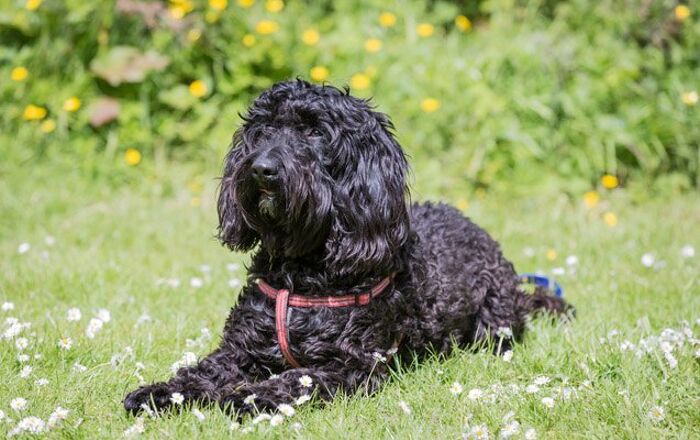
The Beaglier’s fur tends to be short in length and may be wavy and silky-smooth, or it may have the coarse qualities of the Beagle. Colors include black, brown, white, tan or tricolor. Due to their fur’s length, it does not need to be trimmed. However, it should be brushed regularly to keep it in good shape, especially when the shedding season comes along. As far as brushing is considered, it should be done once or twice per week ordinarily, and a bit more often in the shedding season. This is where their thin undercoat is shed, and an occasional brushing can keep all that hair in the bin and not on the furniture. Nevertheless, the Beaglier is a breed that has a thin and smooth coat, and won’t shed much at all. Give your Beaglier a bath when their fur is dirty (probably after some outdoor rough housing) or every 3-4 months to keep it shiny.
Puppies
The mother of the Beaglier litter is always the bigger of the two breeds, so in this case that’s the Beagle. As a result, most litters have about 6 puppies, each one cuter than the next. Since Beagliers are a small breed of dog, their puppies will be smaller than say Golden Retriever pups, for example. This will make them a bit more sensitive to careless handling, as they will be more easily injured during play or if dropped from a low height. As always, pups need to be supervised by an adult when they are around children especially younger ones who may not realize that they are such small, fragile creatures. That’s a good rule of thumb for any family planning on bringing a puppy into their home.
Once your puppy is a few weeks old, it’s a great time to start with their training and socialization. Begin with the basics, such as potty training and a few simple commands (sit, stay, come), before advancing to anything more complex that you may have in mind. Training your Beaglier will take some patience (especially if your puppy has a stubborn streak) but with a bit of an effort, you’ll ensure your puppy matures into a well-behaved dog. So it’s important not to waste those early and impressional months and start training right away. It will always pay off in the long run.
Remember that socialization plays a big role in the overall behavior of your pet. Without it, certain behavioral issues can develop and affect them in later life. This becomes especially apparent if you neglect your pet’s needs while they are in their puppy stage. Fail to introduce them to other dogs, people, and children, and they may grow up to become aloof, anxious, afraid, and aggressive. And that’s never a good thing. By socializing them early on, you are making sure that your Beaglier pet will become their true self – a friendly, sociable, and goofy dog that simply loves to play and have fun.
Photo credit: Rangajk95/Wikimedia; Julie Bayer-Vile/Flickr; Bram Meuris/Flickr