Birman

Published A Few Days Ago
ADVERTISEMENT
fast facts

About Birman

Weight
8-12 lb
Physique
Medium to large, silky coat
Lifespan
13-15 years
Best Suited For
Perfect for families with children and/or other pets
Temperament
Sweet-natured, patient, even-tempered, tolerant
Comparable Breeds
Maine Coon, Siberian
Top Breed
7
Height
8-10 inches
ADVERTISEMENT

Birman Breed History

Known as the “Sacred Cat of Burma,” the Birman is an ancient breed whose true origins are unknown. One legend places the first members of this breed in Burma where they were kept as temple cats at Mount Lugh. Birmans came to France in 1919, which began the establishment of the breed in Europe. The first Birmans came to the United States in 1959 and were registered with the CFA in 1967. Most U.S. Birmans originated in France, England, Germany, or Australia.

Known as the “Sacred Cat of Burma,” the Birman is an ancient breed whose true origins are unknown.

Breed Traits
ADVERTISEMENT

Known for having an excellent disposition, the Birman is a friendly, outgoing, self-assured cat. They like to know what’s going on around the house, and will follow their humans to find out, but they aren’t intrusive cats. They participate, but they don’t take over. Birmans do need and want the company of their humans, and don’t like to be left alone. They do quite well with families, and are unusually fond of children. Moderately active, but quiet and gentle by nature, these loyal companions are an excellent addition to active households.

Overall Description

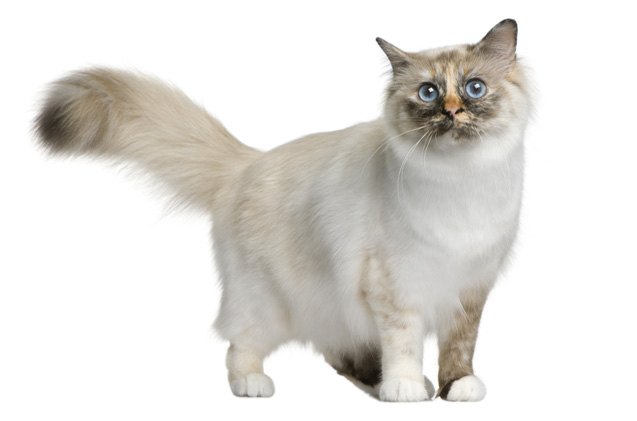
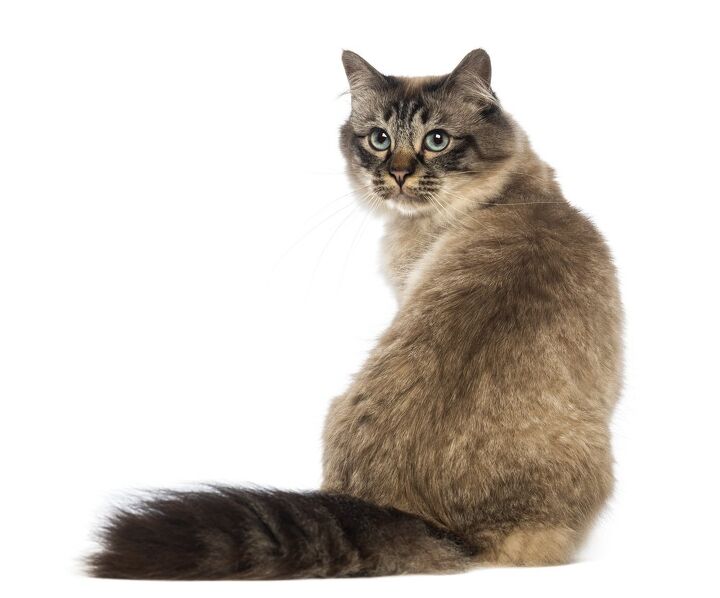
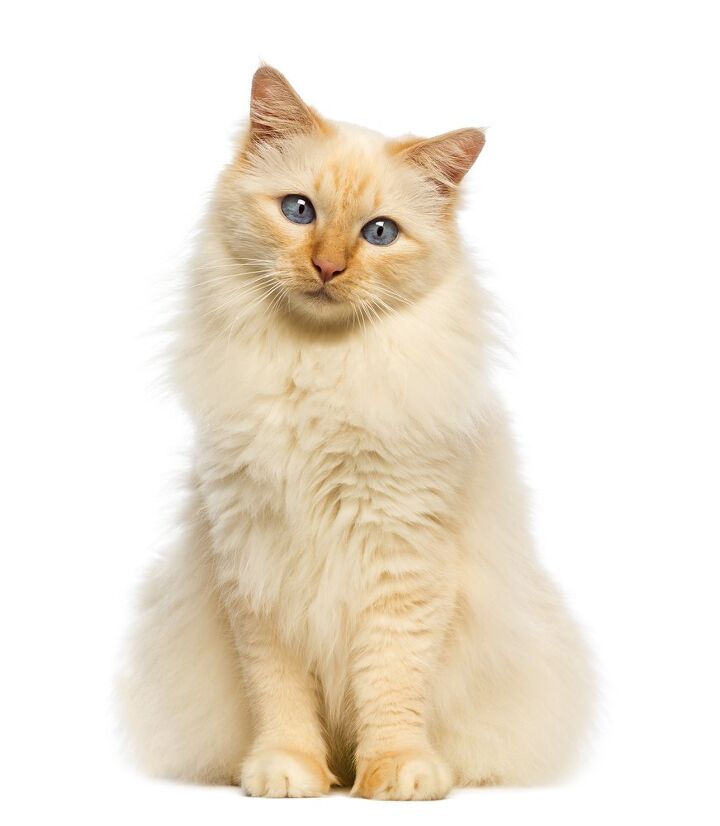
The Birman is a medium-sized cat with a sweet, round face, full cheeks, and gorgeous blue eyes that should be oval in shape. These cats are strongly built, and have lush, silky fur that is exquisitely soft to the touch. The ears sit at a slight angle well up on the head. Often they have a pronounced neck ruff and exceptionally fluffy tails. Slow growing, kittens do not reach full adult status until three years of age. White “gloves” on the paws are a dominant characteristic of the breed.

Colors
ADVERTISEMENT

Birmans are colorpoint cats with pale bodies offset by darker areas on the face, ears, feet, and tail. At birth, the kittens are all white, developing their distinctive colorations with age. Birmans come in a variety of colors including seal, lilac, chocolate, red, cream, blue, and tortie. All patterns can be either solid or exhibit the more dramatic lynx pattern, which displays tabby markings in the point colors. The breed has distinctive white paws that should be symmetrical on both the front and back and extend upwards on the hind paws in an inverted “V.”

Grooming Requirements

Although the Birman’s coat is long and luxuriant, their grooming requirements are surprisingly minimal, with the added plus that when they do need to be brushed or washed, they like the experience! They are especially receptive to being combed and will often ask their owners to do so. Surprisingly for a longhair breed, the Birman’s dense coat does not mat easily. By keeping loose hair out of the coat, the fur almost glows with good health, and shedding is kept at a remarkably low level.

Photo credit: Eric Isselee/Shutterstock
ADVERTISEMENT

ADVERTISEMENT

You May Like

HABRI Proves Animals Provide Amazing Health Benefits

Human Animal Bond Research Initiative survey shows that 97% of doctors believe owning a pet benefits health Whenever I come home after a bad day, my dog is m…

Comfort Retriever

The Comfort Retriever is a fun-loving mixture of the gentle, sensitive Golden Retriever, loyal Cocker Spaniel and playful Poodle.

Aegean Cat

Tracing its originals to Greece, the Aegean cat is a natural feline breed that developed without human intervention, making it a healthy and hardy breed.

Bossi-Poo

The Bossi-Poo is a fun, well-behaved family dog that brings together the personalities of the Poodle and the Boston Terrier.

Gambling With Pet Insurance: The Sick Hits The Fan

Pet insurance may seem complicated, until two of your dogs need expensive medical treatment. Maggie Marton shares her gamble with pet insurance.

Obesity Treatments: Tipping The Scale For Fat Dogs

Obesity is a growing problem with pooches and even a few extra pounds make a difference. Here are some ways you can treat this weighty issue for fat dogs

Schapendoes

The Schapendoes has a friendly temperament but it is known for its herding abilities as well as its talent for dog sports. Loves to learn and play.

Dogs Can Party With Snoopy This October During Dog Days At Kings Islan

Get ready for a howling good time – Dogs can get their Halloween thrills at the theme park’s Dog Days celebration October has begun and that mean…

Required Reading For Pet Parents: If I Should Die Before My Dog

Is your dog in your will? If I Should Die Before My Dog helps pet parents plan for their dog’s future in their will. As pet parents, we know that there…

Best Dog Calming Collars

Dog calming collars rely on the potency of pheromones, herbs, or essential oils to provide much-needed relief to anxious dogs.

VetPronto Is Like Uber, But For Sick Pets

Get the vet to make house calls? Trust us; your pets will thank you. This might be the most ingenious thing we’ve seen in a long time. Just like Uber a…

Best Dog DNA Tests

How Do Dog DNA Tests Work? How Accurate Are Dog DNA Tests?DNA kits have been all the rage the last couple of years- almost every other person has done one to figure out if they have relatives they don’t know or where their ancestors came from. But what about DNA tests for canines? While they are not as precise or as all-encompassing as tests developed for humans, dog DNA tests can provide you with plenty of useful information and at a pretty accurate level to boot. Companies claim an accuracy level of over 90% which is more than impressive. The way these tests work is always the same: to

Maltichon

The lovely Maltichon was developed by crossing the Maltese and Bichon Frise, two well-loved toy breeds. Find out what makes this designer dog so popular!

Swedish Hare

The Swedish Hare is bred to enjoy being athletic and active. The Swedish Hare should appear graceful, powerful, and alert.

What Is Feline Cerebellar Hypoplasia?

A developmental disorder, Feline Cerebellar Hypoplasia affects the way a cat walks. Here''s what you should know about the illness and what can be done.