Flemish Giant Rabbit Breed History/Origin
The Flemish Giant rabbit is an old breed and researchers are still not sure on its origins. Some say they are descendants from Patagonian and/or Stone rabbits, which were breeds raised for their meat and fur. Others say they are descendants of the Argentinian Patagonian rabbit – questions concerning their history continue to be unanswered.
What we do know is that this breed came from Belgium and England to America in the 1890s and it wasn’t until the early 1900s that the breed began to make appearances in livestock shows. The National Federation of Flemish Giant Rabbit Breeders (NFFGRB) was formed in 1915 and when the American Rabbit Breeders Association (ARBA) was formed in 1924, the NFFGRB became part of that association. The Flemish Giant became an ARBA recognized breed in 1929.
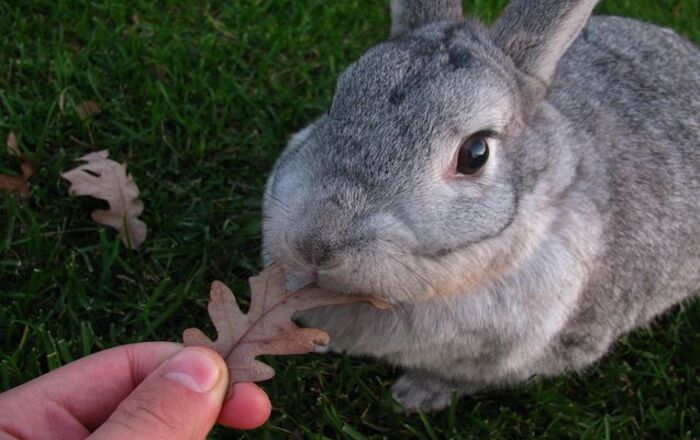
The Flemish Giant Rabbit has a glossy, short and dense coat.
Overall Description
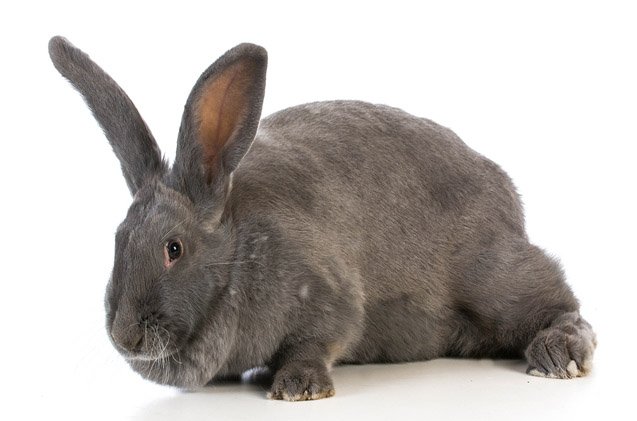
True to their name, the Flemish Giant Rabbit is indeed an imposingly large breed. On average, these popular rabbits weigh 15 pounds on average once they are fully grown. Granted, there are much bigger specimens of the breed recorded, with males weighing up to 22 pounds and females up to 20 pounds. But, while it’s undeniable that their impressive size is the most striking thing about these rabbits, it’s not the only appearance trait that appeals to bunny owners.
A Flemish Giant Rabbit will have a mandolin or semi-arched body shape, with a well-defined rise starting near the shoulders. The highest point of the body’s arch is at the hip, giving them a graceful appearance. Their bodies are long and strong, well-muscled but not fat. Males (bucks) have a broader, more massive head than females (does) who can also have a dewlap. The usual length of these rabbits is about 20 inches, but one Flemish Giant Rabbit made history when it became the longest recorded rabbit- at a whopping 4 feet and 3 inches. The ears are erect, thick and around 5 inches in height.
Coat
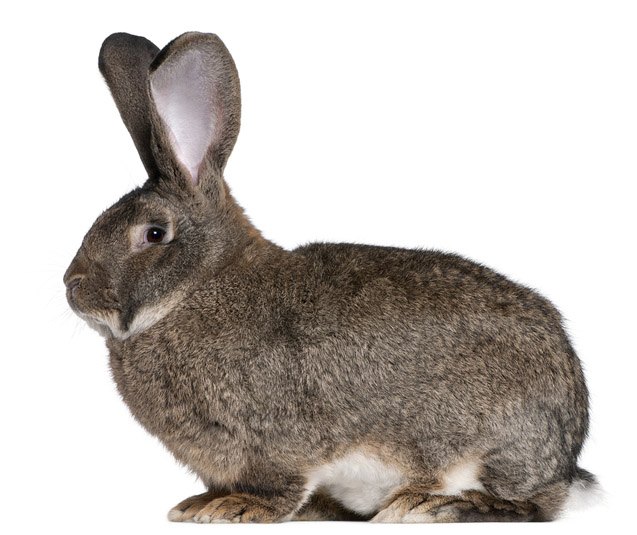
The Flemish Giant’s coat is glossy, short and dense. This is the so-called rollback fur. Because it is not long like that of the Angoras, for example, they do not require much grooming. Regular brushing with a slicker brush will be more than enough to keep their hair lustrous and soft.
Rabbits tend to shed more than usual during the springtime months, so make sure to increase the grooming frequency at that time. It’s important to help your pet get rid of loose hair, otherwise, they can end up ingesting most of it, which leads to serious health issues.
Colors
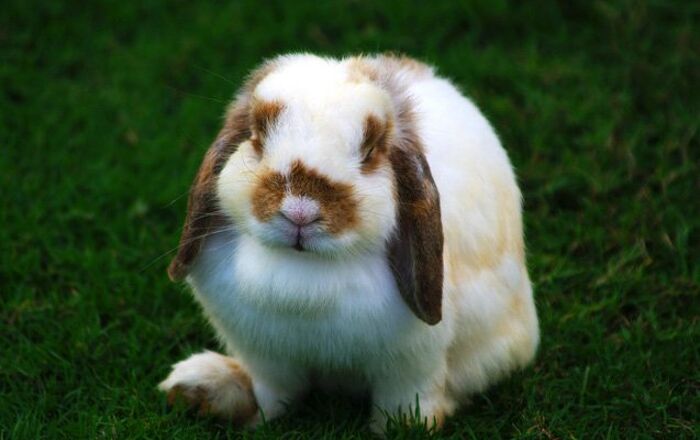
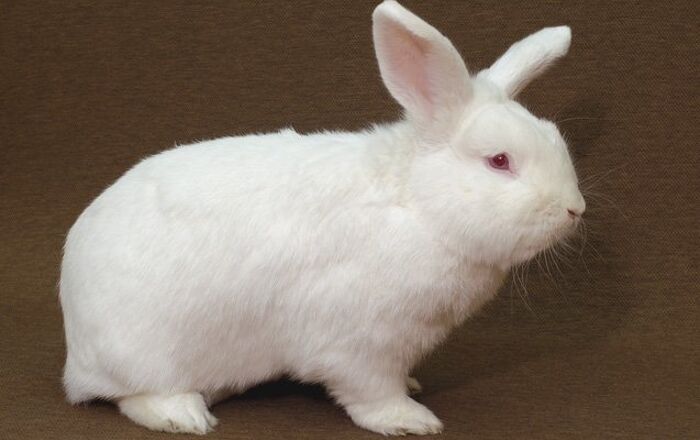
The ARBA accepts only seven varieties of the Flemish Giant Rabbit. This includes the following colors: sandy, fawn, white, light gray, steel grey, black and blue. The ARBA does not accept any combinations of color, also known as “broken patterns”
Many Flemish Giants play with other dogs and can be seen cuddling alongside them.
Care Requirements
This particular rabbit can live in indoor or outdoor enclosures/cages, depending on the owner’s housing situation. Outdoor rabbits should have a hutch, however they should not have any stairs or ramps leaving to another level because of its size. Either indoor/outdoor enclosures need to be large enough so your Flemish Giant Rabbit can stretch out and hop inside of it. As a rule of thumb, for this giant breed, this would mean a minimum of 3 feet by 4 feet. Some owners have found out that large dog crates work perfectly well for their rabbit and have set the inside to cater to their rabbit’s needs. In any case, rabbit cages need to have a solid bottom (not wire) and need to be laid with bedding. Bedding needs to be spot-cleaned every day and completely replaced at the end of every week.
Regardless of how spacious and comfy their enclosure is, Flemish Giants will need to spend plenty of time outside of it. Keeping a bunny full-time in a cage is cruel, especially when you have a large, active breed such as this one. On a daily basis, let out your rabbit to hop about freely and explore his environment at his own pace. In case they are indoors, thoroughly bunny proof the room before letting them out. All bunnies are big chewers, but Flemish Giant especially so, as they have the strength to make even more damage if you let them. Protecting furniture from bunnies and bunnies from electric cables is a must if you want your pet to play safely and without any destructive consequences for your belongings.
For those rabbits who get to play in a yard, make sure to securely fence the area where you are letting them roam and always supervise them. Flemish Giant Might be a bit big for most predators (but still, not for all!) but there’s still a possibility of them hopping over a fence or finding a hole to go through.
When it comes to nutrition, Flemish Giant’s diet is no different than any other rabbit breed – they only need more food because of their size. They enjoy a diet comprised mostly and hay (about 70 percent). They also enjoy fresh fruits and vegetables including carrots, watercress, red or green lettuce, celery, mango, pear, and peach. Select leafy greens can also be added into their diet so long as they do not have high water content. They also enjoy daily pellets – adult rabbits will eat about 1/4 cup of high-fiber pellets everyday for every five pounds they weigh. Considering this rabbit’s size, they do require quite a lot of food so financial responsibility is definitely needed in order to properly feed them.
Health
Besides having sore hocks as a direct result of wire-bottomed cage, Flemish Giants are not particularly susceptible to any hereditary disease or health complication.
Having said that, there are a few health problems you need to be aware of before purchasing a rabbit.The most common issue with rabbits is overgrown teeth- unlike most animals, their teeth just keep on growing as long as they live. Usually, rabbits who have a high-fiber diet of hay won’t have these issues, as their teeth wear down from chewing on roughage. However, if you find your rabbit’s teeth seem to be growing a little faster than they are wearing down, provide straw or wicker mats, rabbit-safe blocks of wood or straw baskets. These are a great way for them to have fun and wear down those teeth to boot. Seventy percent of their diet should be hay, though, so make sure you’re not skimping on hay in favor of fruits and veggies.
Rabbit ears also need to be checked regularly for ear mites, which is more common with outdoor rabbits than indoor ones. Finally, they should also be given a pea-sized amount of de-worming paste twice a year as a preventative measure.
Other issues include sniffles, GI stasis, or infectious diseases. In case you notice anything amiss with your bunny, from eye discharge to constipation or simple unusual behavior, contact a veterinarian that specializes in small animals.
The Flemish Giant is also known as “Universal Rabbit” and “Gentle Giant.”
Temperament/Behavior
The Flemish Giant rabbit has two nicknames – the “Universal Rabbit” because of it is a breed that serves all four rabbit purposes (meat, show, coat and pet) and a “Gentle Giant” because it is so well-mannered and docile. Despite its large size, they are a recommended rabbit breed for first-time owner, as they are relatively low maintenance and have sweet personalities. This also makes them great pets for singles, couples and families with children of any age. Because they are so large, children should not attempt to pick this rabbit up but instead play with them while they are on the ground (which means stroking their fur, nuzzling them, petting them, etc).
A great advantage with this breed being so large is that some owners have found that dog harnesses for medium-sized dog breeds fit this rabbit well. There are some who enjoy taking their rabbit out in the back/front yard on the harness, and if your yard is not fenced, putting your rabbit on a leash is a great idea. Be sure to slowly introduce the harness and reward them when they have made progress. Like other rabbit breeds, their personalities will also flourish when given some toys they can chew and play with. This can include balls, rabbit-safe wooden blocks and toys purchased from your local pet store. Rabbits do not generally become upset or possessive over toys, so having children play with their toys while they are around should not be a problem, especially because Flemish Giants are so well-mannered.
Unlike some rabbit breeds, Flemish Giants generally do well with other animals in the house as well so long as the other animal don’t mind the rabbit’s presence. There are many cases of Flemish Giants playing with other dogs (generally larger ones like Labradors, Golden Retrievers, etc.) and can be seen cuddling alongside them when they are in their beds/loungers as well.
This breed of rabbit is intelligent so training them to obey basic commands as well as potty training may be slightly easier than other rabbit breeds (however compared to cats and dogs, still challenging). With lots of patience, time and rewards, your rabbit will understand the connection.
Photo credit: DLHoward/Bigstock; Life on White/Bigstock; Willee Cole/Bigstock