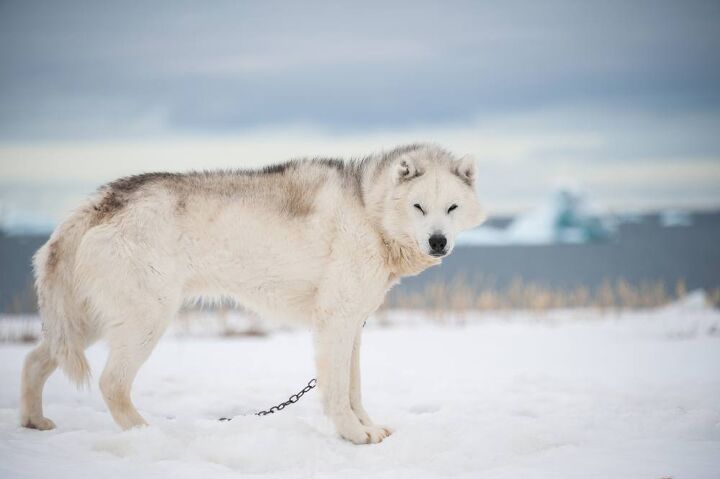
Greenland Dog Basics
The first time you see a Greenland dog, you might think you are looking at a Siberian Husky or an Alaskan Malamute. After all, they have thick double coats, fluffy tails, and pointy years. But the Greenland Dog is a completely unique breed that thrives both in a working environment and a family environment. If you are looking for a hard-working sled dog but you also want him to get along with your family, the Greenland Dog might be a good option to consider.
The Greenland Dog thrives both in a working and family environment.
Origin
The Greenland Dog is thought to be an ancient breed, developed several thousand years ago to work alongside man as a sled dog in the Arctic regions of the world. In order to survive this type of life and work, the breed needed a thick double coat and excellent stamina – these are two hallmarks of the typical Spitz-type breed. Though the ancestors of this dog has been around for many hundreds of years, the breed made its first appearance outside Greenland in the 1750s but wasn’t exhibited in show until the late 1800s. Though they are still beloved in their native land, the Greenland Dog is still fairly rare outside of Greenland.
Pedigree
The exact origins of the Greenland Dog are unknown because it is considered an ancient breed. It is believed, however, that ancestry of these dogs can be traced back to the ancient Siberian people who traveled the Arctic region thousands of years ago.
Food/Diet
As a medium- to large-sized dog breed, the Greenland Dog should be fed a high-quality commercial dog food diet formulated for dogs of its size. Because this breed is a high-energy working breed, however, an active or working breed formula may be more appropriate to meet his needs.
As is true for many Spitz-type breeds, the Greenland Dog is a hard-working and intelligent dog.
Training
As is true for many Spitz-type breeds, the Greenland Dog is a hard-working and intelligent. These dogs were bred to work hard and to follow the lead of a strong handler, so you need to be prepared to make some rules and to stick to them closely if you want to keep your dog under control. These dogs are highly intelligent and respond well to training but you need to start them with socialization and training as early as possible for the best results. The Greenland Dog needs to understand its place in the pack, so you will need to establish yourself as the alpha and be firm and confident without being harsh or overly demanding.
Weight
The Greenland Dog is a medium- to large-sized breed, standing 22 to 25 inches tall and weighing 60 to 100 pounds at maturity.
Temperament/Behavior
In general, the Greenland Dog is a highly intelligent dog but individual temperaments may vary from one dog to another. These dogs are generally not recommended for first-time dog owners because they do tend to have a bit of an independent streak and they require a great deal of exercise and training. The breed is generally quiet and mild-mannered, but it can go off into a howling frenzy unexpectedly. These dogs are also affectionate when bonded with their owners but they need a firm and consistent hand in leadership to prevent the development of problem behaviors.
Common Health Problems
Because the Greenland Dog is an ancient breed it is generally healthy and hardy. As a large-breed dog, however, this pooch is subject to a few health problems such as gastric torsion, hip dysplasia, and other musculoskeletal problems. They are also prone to working injuries received in the field.
Life Expectancy
The average lifespan of the Greenland Dog breed is about 13 years.
Exercise Requirements
As a sled dog, the Greenland Dog has excellent stamina and endurance. These dogs are active and require a significant amount of daily exercise in order to remain happy and healthy. Because these dogs are intelligent they also require mental stimulation in addition to physical stimulation and exercise.
In general, the Greenland Dog is a highly intelligent dog.
AKC
The Greenland Dog is not currently recognized by the AKC but it is recognized by several other groups. The UK Kennel Club, for example, classifies the Greenland Dog in the Working group and the United Kennel Club classifies it as a Northern Breed. This breed is also recognized by the FCI and the Canadian Kennel Club.
Coat
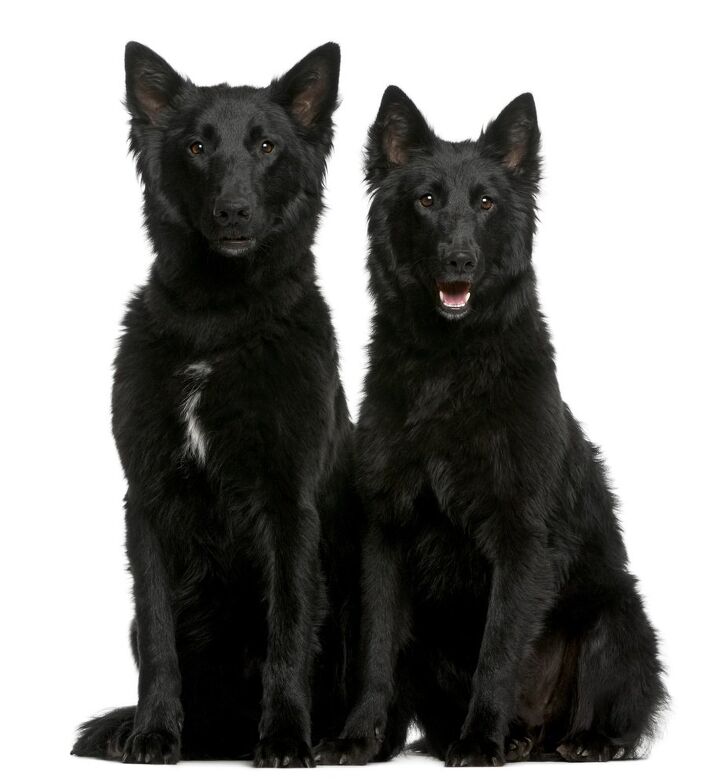
As an ancient Spitz-type breed, the Greenland Dog has a thick double coat of medium length. The inner layer is soft and wool-like to provide warmth while the outer layer is made up of longer, coarser hair that provides protection against water and cold. The tail is densely furred and the ears covered in thick fur as well. The Greenland Dog comes in a variety of colorations, generally in various combinations of white, black, brown, red and gray.
Puppies
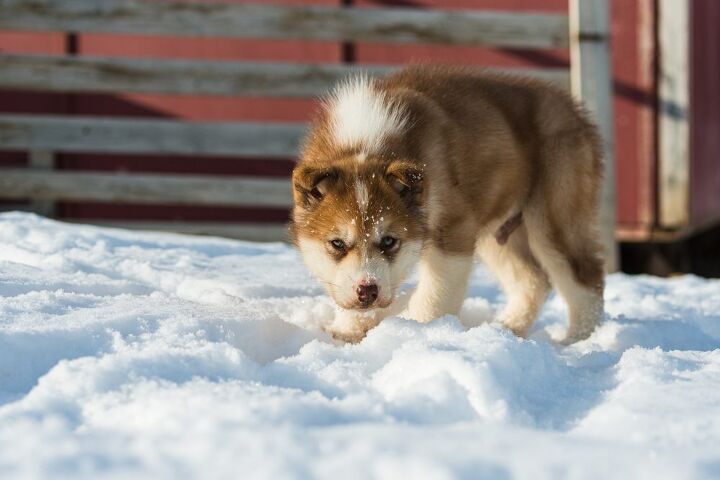
The average litter size for the Greenland Dog breed is 4 to 6 puppies. These puppies are active and inquisitive from early in their lives – this is why it is best to start your puppies with socialization and training as young as possible. If you plan to train your puppy for sled work, you can start basic training while he is young but should wait until he is fully grown to start real training so you don’t put him at risk for joint problems.
Photo credit: Yongyut Kumsri/Shutterstock; Eric Isselee/Shutterstock; Kedardome/Shutterstock