Griffon Fauve de Bretagne Basics
Primarily kept as a hunting dog, the Griffon Fauve de Bretagne is actually one of three Brittany hound breeds. These dogs are known for their skills as a scenthound and for their rough red coat. Though these dogs are largely kept for hunting, they also make good family pets and have started to do well in the show ring. Because of their wily nature, this breed may be a challenge for inexperienced dog owners but most Griffon Fauve de Bretagne owners describe their dogs as sociable and affectionate.
Primarily kept as a hunting dog, the Griffon Fauve de Bretagne is actually one of three Brittany hound breeds.
Origin
The Griffon Fauve de Bretagne was originally popular during the reign of Francois I. He was known for keeping a pack of these dogs specifically for the purpose of hunting wolves. When wolves became all but extinct during the 19th century, the Griffon Fauve de Bretagne breed nearly went extinct along with them. The Club de Fauve de Bretagne was founded in 1949 to revive the breed and it has been considered successfully restored since the 1980s. Though the breed has decent numbers in France, it is sometimes exported to other countries as a rare breed.
Pedigree
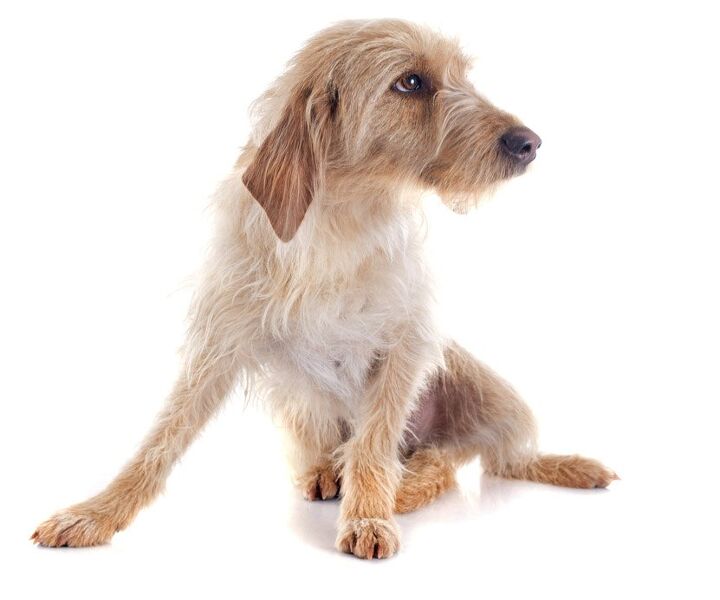
The Griffon Fauve de Bretagne is one of three types of Brittany hound, also known as the Fawn Brittany Griffon. After the original type nearly went extinct, the modern Griffon Fauve de Bretagne was created by crossing the Grand Griffon Vendeen with the Briquet Griffon Vendeen.
Food/Diet
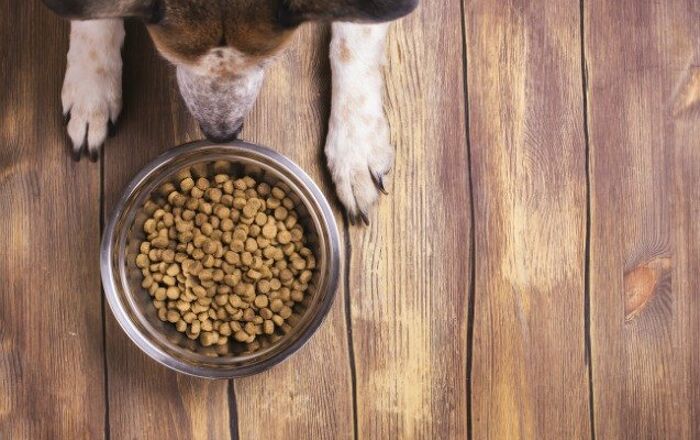
As a medium-sized dog, the Griffon Fauve de Bretagne should be fed a high-quality dry food formulated for adult dogs and made with premium animal proteins. You should also keep in mind that this is a breed typically used for hunting, so an active or working breed formula may work best as long as you are careful about overfeeding to prevent obesity.
As a hunting breed, the Griffon Fauve de Bretagne generally responds well to training.
Training
As a hunting breed, the Griffon Fauve de Bretagne generally responds well to training. In fact, this breed does best when given a job to do. Positive reinforcement training methods are usually the best option, though you may need to make some adaptations according to your dog’s temperament. When properly trained, this breed makes an excellent hunter – these dogs have even been described as tenacious in the field on all types of terrain.
Weight
The Griffon Fauve de Bretagne is a medium-sized dog, standing between 19 and 22 inches tall for both males and females. This breed typically weighs 40 to 50 pounds at maturity, making him a medium-sized dog breed.
Temperament/Behavior
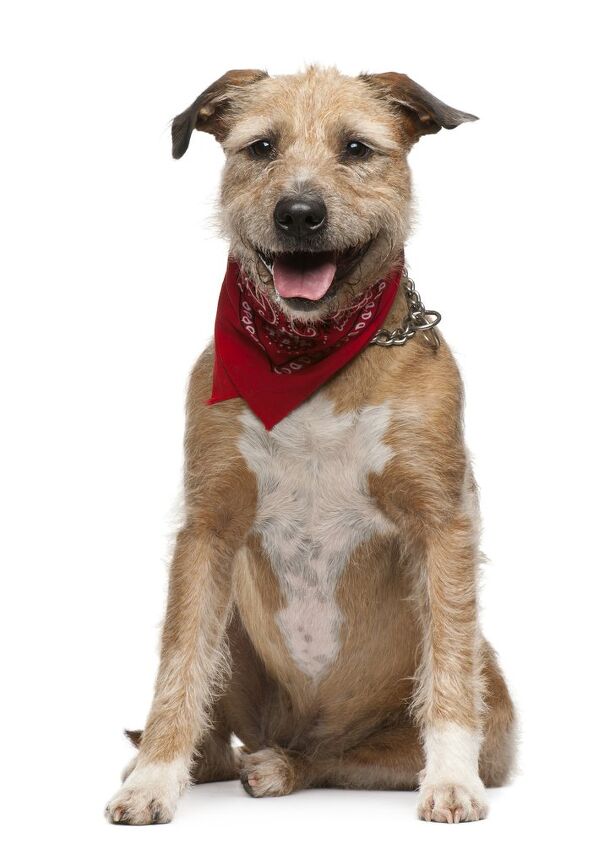
There is not a great deal of information available about the Griffon Fauve de Bretagne and his temperament as a family pet because he is still primarily kept for hunting. Owners do say, however, that the breed tends to be sociable and affectionate with family, albeit with some wily and tenacious tendencies. This breed may do well with children if raised from a young age and with plenty of early socialization and training. The Griffon Fauve de Bretagne also tends to get along well with other dogs and can be amenable to other pets as well.
Common Health Problems
As a medium-sized breed, a lifespan of 12 years or so is not unusual for the Griffon Fauve de Bretagne. This breed is not known to have any specific inherited health problems, though all dogs are prone to certain issues. Some of the health problems that have been known to affect the breed include hip dysplasia, ear infections, and bloat. The breed may also be prone to injury in the field.
Life Expectancy
The average lifespan for the Griffon Fauve de Bretagne is thought to be about 12 to 13 years which is about average for a breed of its size.
Exercise Requirements
As a hunting breed, the Griffon Fauve de Bretagne has fairly high needs for exercise. These dogs are not typically hyperactive, but lack of exercise may lead them to develop destructive behaviors out of frustration. A long daily walk is a must for this breed, though these dogs will appreciate having extra time to spend outdoors, even if it is just time playing freely in a fenced yard. These dogs are happiest when they have a job to do.
The Griffon Fauve de Bretagne tends to be sociable and affectionate with family, albeit with some wily and tenacious tendencies.
AKC
The Griffon Fauve de Bretagne is not currently recognized by the AKC but he is recognized by the FCI and the UKC. The FCI classifies him in Group 6 as a Scenthound and the UKC as a Scenthound. Though primarily used for hunting, the breed has become more popular in the show ring of late.
Coat
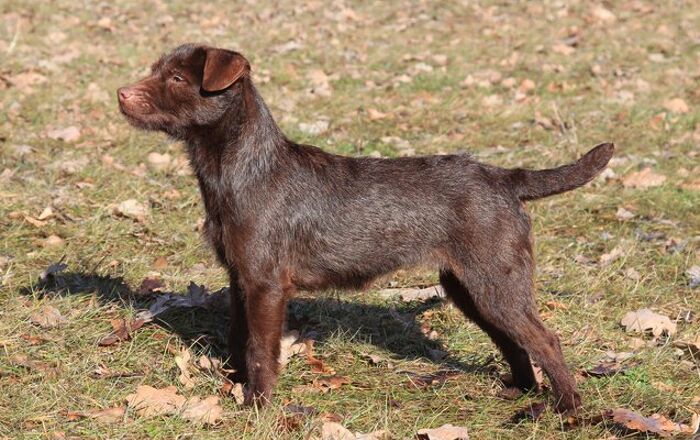
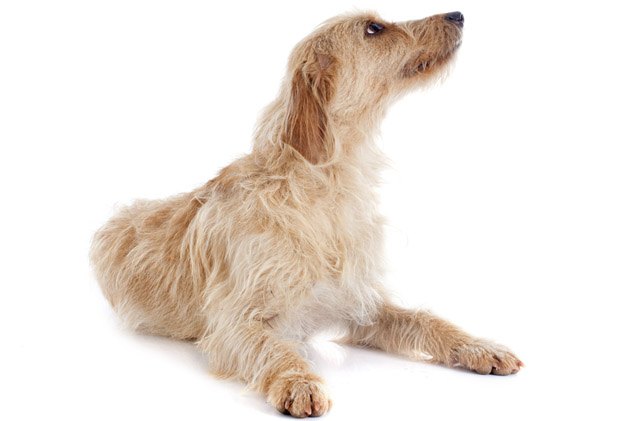
The Griffon Fauve de Bretagne has a very distinctive coat. Not only is it easy to identify by its red color, but it has the typical Griffon roughness to it. This dog has a short red coat with a rough texture to it. Though a soft wheaten red is the ideal color, coats may range from fawn to gold to red.
Puppies
The average litter size for the Griffon Fauve de Bretagne is unknown but is likely somewhere in the range of 2 to 6 puppies. Because this breed is typically used for hunting, puppies should be started with socialization and training as young as possible.
Photo credit: cynoclub/Shutterstock