Italian Greyhound Basics
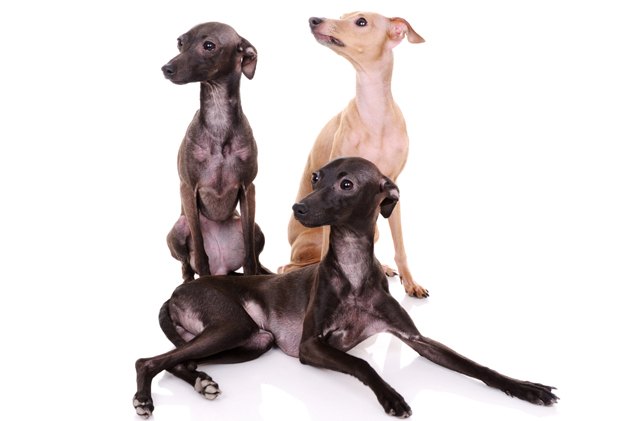
At first thought, you probably think of the racing Geryhound when you picture the Italian Greyhound. The two may be similar, but there are a few important elements that help distinguish the Italian Greyhound. This dog has a thick coat with a long head and thin pointed muzzle. As well, its ears are pointed, which stand up when nervous or happy. This breed also has different colorings, with shades of blue, black, slate, cream or gray.
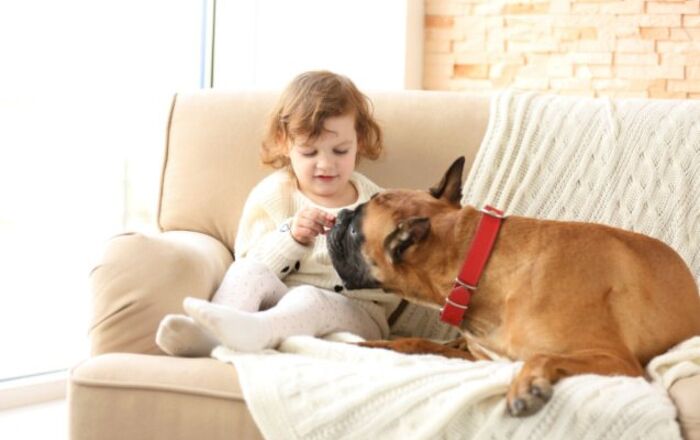
The Italian Greyhound is gentle, reserved, sensitive, and are often timid with strangers. You’ll find this dog to be a devoted and loyal companion, and are wonderful with children, dogs, and other pets. Read on to learn more about the Italian Greyhound.
The Italian Greyhound is gentle, reserved, sensitive, and are often timid with strangers.
Origin
The name Italian Greyhound is a reference to this breed’s popularity in Renaissance Italy. Used as a lapdog and hunting dog many centuries ago, there is evidence that the Italian Greyhound existed in ancient Egyptian times and in Pomeii, dating back about 4000 years ago. The Italian Greyhound came to Europe when the Phoenicians brought them over, which were then trained by the Romans.
Pedigree
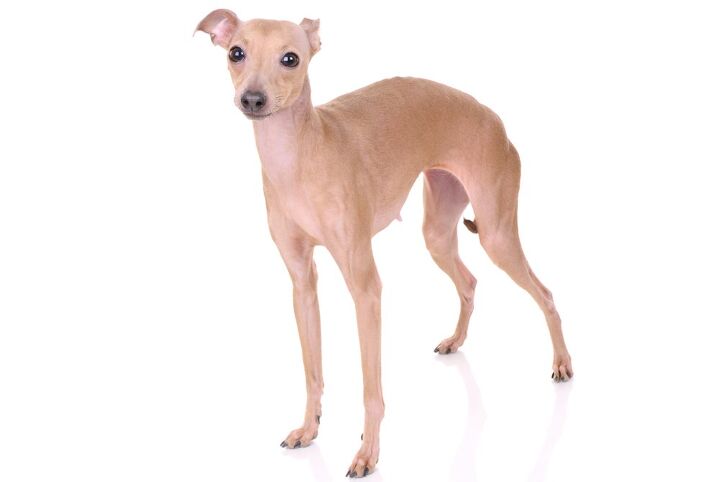
The Italian Greyhound is an old breed, having originated more than 4,000 years ago in the countries now known as Greece and Turkey. This breed is the smallest of the family of gazehounds (dogs that hunt by sight)
The Italian Greyhound was recognized by the AKC in 1886.
Food / Diet
Italian Greyhounds are a naturally skinnier breed, so don’t be alarmed at its lean appearance. This breed needs to have scheduled meals that encourage them to eat, otherwise your dog might ignore its food. Stick to a high-quality dry kibble that covers all of its nutritional needs.
You’ll find this dog to be a devoted and loyal companion, and are wonderful with children, dogs, and other pets.
Training
Good news – this intelligent dog can be trained quite easily. Start training as early as possible in order to ensure that your dog will not pick up bad habits. Since this is a timid and shy breed, be affectionate toward your pup during training sessions.
When socializing your new Italian Greyhound, teach it to play gentle with other dogs and children. This is an energetic and playful breed, so it may get carried away with a child. As well, children need to be taught to speak in a regular tone of voice as loud pitch voices can startle the dog.
Because the Italian Greyhound is small, so is its bladder, which makes housebreaking difficult. Wait until the dog is at least 10 weeks old, but don’t wait past 12 weeks because it can make it much harder to train. You could even train your Italian Greyhounds to one paper train or go in a litter box.
Weight
Both male and female Italian Greyhounds weigh 6 to 10 pounds.
Temperament / Behavior
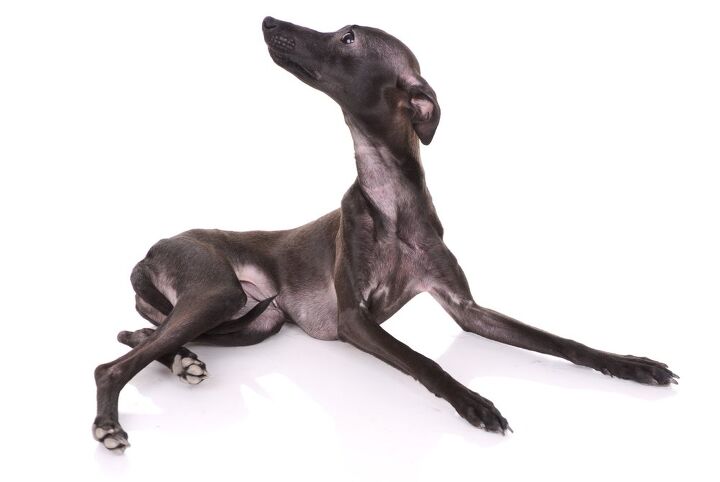
A great pet for any household, the Italian Greyhound is calm and gentle toward others. This breed will work hard to please you and loves to be around people. Keep them well exercised so it doesn’t get bored and chew on your furniture.
Once trained properly, the Italian Greyhound will be the perfect playmate for your children. Since it is smart and gentle, it can be taught not to play rough with smaller members of the family. This dog does have a timid side and can be scared by loud sounds, causing it to shy away from family members who are rambunctious. As well as training your dog, teach your children how to be careful around your Italian Greyhound.
The Italian Greyhound does not make a good guard dog, as it loves everybody. But it will alert you to people coming close to your house, which makes it a good watchdog, as it will bark at strangers and unfamiliar sounds.
Common Health Problems
It may look small and skinny, but the Italian Greyhound is a hardy dog. At about 18 months of age, these dogs have strong and muscular legs; however, it is still prone to fractures if exercised in rough terrain or your dog trips. Italian Greyhounds can also suffer from a slipped stifle, which is a stress fracture and slipped vertebrae. Other conditions to be aware about include Progressive Retinal Atrophy (PRA), epilepsy and anesthetics.
Life Expectancy
Italian Greyhounds have a life expectancy of 12 to 15 years.
Exercise Requirements
To keep your Italian Greyhound healthy and happy, you need to make sure your dog gets plenty of exercise. This is an energetic breed and it needs an outlet for its energy. Take time to take your Italian Greyhound out for a run or walk, or let it loose at the dog park where it can play with other dogs.
A great pet for any household, the Italian Greyhound is calm and gentle toward others.
AKC
The American Kennel Club says this about the breed: “The Italian Greyhound is extremely slender and barely over a foot tall, but has all the grace and sweetness of his taller Greyhound relatives. There is debate as to whether they were originally bred for hunting small game or meant to be simply a companion. In all likelihood, both are true, as they are adaptable to city and country life.”
Coat
Easy to maintain and groom, the Italian Greyhound’s coat is short, silky and can be black, dark blue, grey, and slate. Its coat sheds minimally, so you won’t have to brush through tangles.
Puppies
Since your Italian Greyhound can be shy and timid, start training and socialization as early as possible. Puppies are a bundle of energy, so playtime with small children should be monitored.
Photo credit: steamroller_blues/Shutterstock