Masked Lovebird General Info
In every home it enters, the Masked Lovebird brings a whirlwind of fun. Like all the other lovebirds, they are one of the silliest, cutest and most energetic pet parrots you can meet. There’s no end to amusement with these small, “pocket-sized” birds, and with their excellent health, lovely nature and small size, they can be a perfect beginner’s pet. After you get to know each other, a lasting friendship will quickly bloom, and you’ll find out that there is so much to love about these mischievous little lovebirds.
If you’re looking to bring some fun into your home, then the playful nature of these lovebirds makes them a perfect choice.
Native Region/Natural Habitat
These parrots are native to the small region in northeast Tanzania, which is world famous for the Lake Victoria, the Serengeti, and Kilimanjaro. They can often be seen in small flocks near sources of fresh water. They usually prefer dry regions with sparse growth close to woodlands. Some populations also exist in Kenya and Burundi, where they have been introduced over the years.
Overall Description
Like all the lovebirds, this breed is also quite small. The adults reach a total length of 6 inches (15 centimeters). They are known for their stubby, short tails that give them an all-round stocky, chubby look. They are pretty social and might depend on the company of another lovebird. Without any apparent differences between the sexes, it might be difficult choosing the right partner for your pet.
Speech and Sounds
They are not considered to be too noisy as pet birds. Their call is a natural twittering and chirping standard for most smaller parrots that, although repetitive, is not too loud. Paired with their size, this can make them a good pet for both an apartment and a house. They can also be a bit more relaxing than the bigger parrots who like to mimic and talk a lot, requiring more patience.
Colors
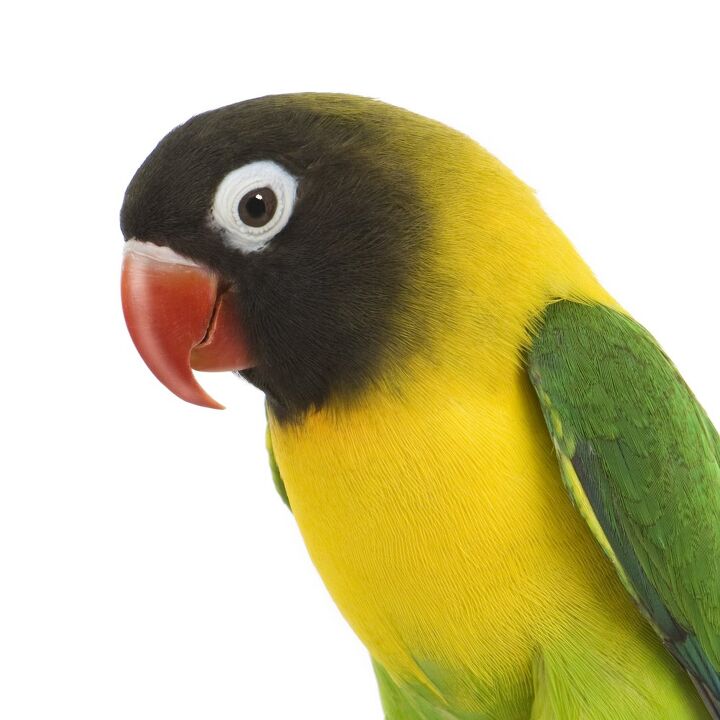
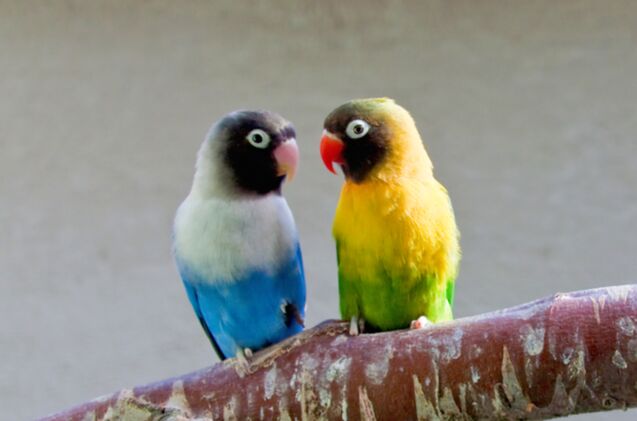
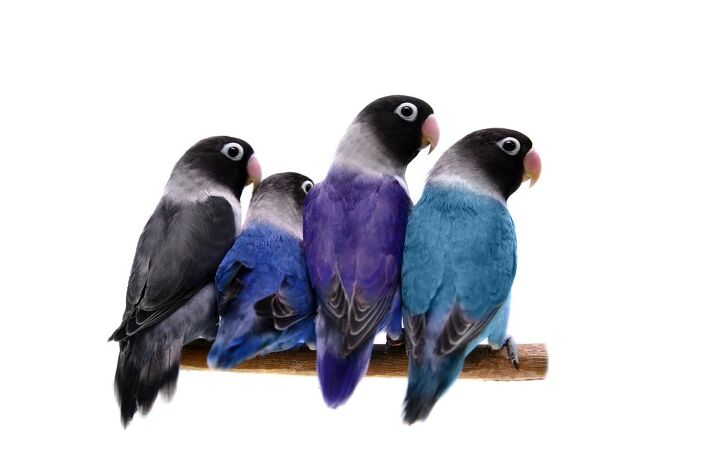
Their small, stocky build and the lovely set of colors make the Masked lovebird a really cute birdie. The body is mostly light, tropical green, usually darker on the wings. The breast and back are bright and vibrant yellow. Their unique, trademark sign, also giving them their name, is the black “mask” that covers most of the face and head. Add a striking red beak into the mix, and you get a colorful, exotic little parrot that is as charming as it is funny! There are also many mutations that have been created in captivity. These include the black, albino, violet and blue.
The unique and bright mix of colors only adds to the already present cuteness of the Masked Lovebird.
Care and Feeding
As parrots in the wild, the Masked Lovebird diet is mainly made up of seeds, fruits, crops, and nuts. The common pre-made seed and pellet mixes aimed at lovebirds will do just fine as the basis of their diet. To balance it out, you should add some fresh green vegetables, like lettuce, cabbage, kale, and spinach, as well as some fresh fruit. To keep their hygiene tidy, offer a regular bathing dish for them. They’ll love it. Clean drinking water is a top priority.
Health and Common Conditions
Masked lovebirds are an excellent choice for beginner owners for many reasons. One of these reasons is their hardy health and great ability to adapt to common conditions. To keep it like this, make sure you meet some requirements, like optimal temperature, enough sunlight and good hygiene. Allow for a lot of time outside the cage – these little birds are full of energy and love to explore. Plenty of flying time is sure to keep them happy and healthy.
Don’t restrict your little lovebirds to a cage. Give them enough time to fly and play around the house.
Personality & Behavior
It’s often true that the smallest birds have the largest amount of energy. Lovebirds are like that. These fun little feathery bundles are full of energy and fun tricks, and they are also very, very inquisitive. They love to crawl and squeeze everywhere, only to see what’s in that hidden place. Most of the time though, they’re just pure comedy and a lot of fun. On the other hand, when a deeper bond is established, they often show their cuddly and playful side. Their health and happiness both depend on social interaction. Make sure you don’t neglect it!
Photo credit: StockHouse/Shutterstock; Rosa Jay/Shutterstock; Eric Isselee/Shutterstock