Mastiff Basics
Look up the “Mastiff” online and you’ll be greeted with a plethora of options. Why? It’s almost like looking up a breed in and of itself: the Mastiff is such a varied and multifaceted division in the world of dog breeds that you’re likely to come across a number of different individual Mastiff breeds. There are Cuban Mastiffs, English Mastiffs, French, German, Japanese Mastiffs – heck, we probably don’t have the space to list them all right here. (Note: We will, however, be doing a lot of concentration in the English Mastiff, the oldest of English dog breeds and often synonymous with the breed.)
So how do you find out whether or not a Mastiff is really right for you? Well, you learn about the breed and about the common characteristics many of them share. In this summation of the world of Mastiffs, we’ll do our best to bring all of this information together so that you can easily navigate through the breed and find out if one might suit your home situation. Let’s take a closer look and find out what this breed is really all about.
The original English Mastiff has a pedigree that can be traced throughout history and has been intertwined with the history of Europe itself.
Origin
Many Mastiffs are particularly young breeds, particularly if you’re talking about the American Mastiff, a breed that is so young that we can trace its roots back to English and Anatolian Mastiff breeding about 20 years ago. You may not be old enough to remember a time when there was no such thing as the American Mastiff.
But when you’re talking about the formal “Mastiff,” you are talking about the English Mastiff, which is the breed many of the subsets can trace its roots. The English Mastiff actually has a long history, having been given a name by the ancient Romans, who spotted the dogs in what was then known as Britannia. This breed is recognized as the oldest English breed.
The breed was being described in documents even around the 16th century, but even during the 15th century’s infamous Battle of Agincourt, at least one Mastiff was present. There is evidence that the Mastiff also made the trip to America on the Mayflower, although the real documentation for Mastiffs in America didn’t start until the 19th century.
Today, the Mastiff is a classic enough breed that it has the aforementioned offshoots all over the world, from Cubans to Americans.
Pedigree
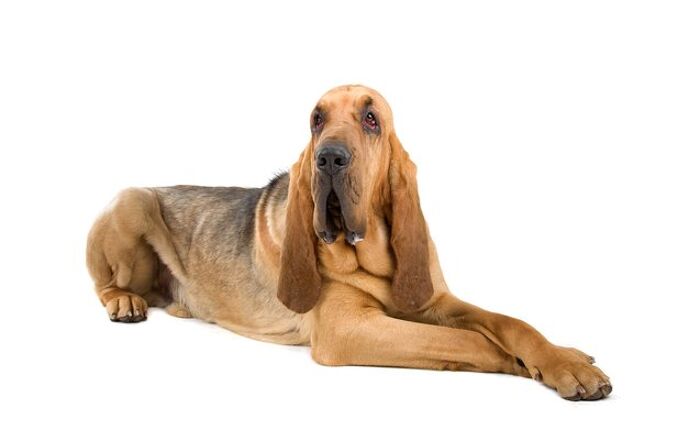
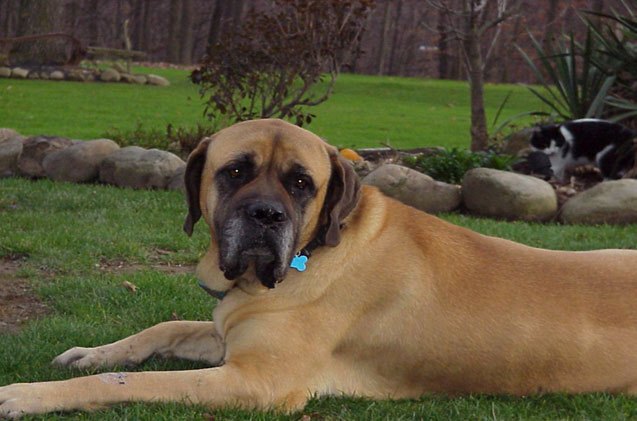
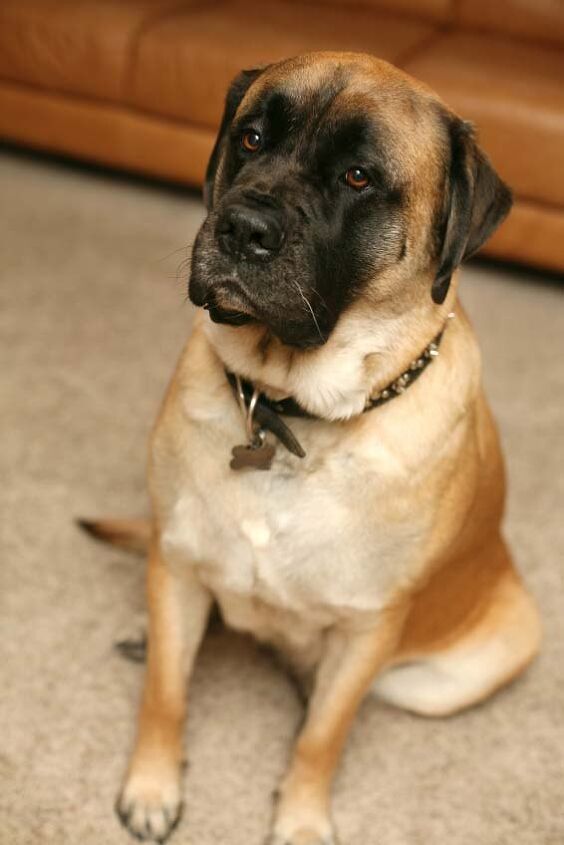
Given the name Pugnaces Brittanae, the original English Mastiff has a pedigree that can be traced throughout history and has been intertwined with the history of Europe itself. These dogs have remained very pure throughout the ages, which is probably why the classic light-brown color along with the black mask has been such a familiar trait of dogs throughout the years. The large size of the dog breed has also been a favorite of many noblemen and leaders who have had their portraits taken with their dogs by their side, giving us verification that the Mastiffs referred to in historical times match what we know about their history today.
Food / Diet
Mastiffs are large dogs and require a similarly healthy-sized diet, but the real danger of overfeeding an under exercised dog means that you shouldn’t necessarily feed them too much. It’s a good idea to keep your Mastiff well-enough fed that its mood and general health do not suffer. These dogs enjoy a good cut of meat and a lot of meat-flavored food, so even flavoring other kibbles or even vegetables with meat can be a great treat for Mastiffs.
Mastiffs are strong instinctual dogs that are aggressive in guardianship but responsive to training.
Training
Don’t over-run your Mastiff for the first two years of its life. Like many large dogs, the Mastiff can run into hip and joint problems that should not be exacerbated by over exercise. At the same time, regular exercise will be critical in ensuring that your Mastiff has a relatively healthy weight throughout its life.
Mastiffs are strong instinctual dogs that are aggressive in guardianship but responsive to training and can even be easy-going in temperament to people it recognizes.
Weight
The English Mastiff can weigh 150-250 pounds in males and 120 to 200 pounds in females.
Temperament / Behavior
Mastiffs are instinctual guardians, and will often put themselves in between its owners and other people as a matter of instinct. Despite this instinct, however, the Mastiff is popular because it can be such a friendly and loyal guardian of the house in other occasions, making it an easy “large” dog to get along with. Its sheer size can be a little intimidating for some people, but if a dog’s size doesn’t bother you, you can find both a great companion and an instinctive guard dog for your home, making the Mastiff’s temperament very versatile.
Common Health Problems
Mastiffs are large and will see a lot of problems corresponding to this size, particularly with joint and hip problems like hip dysplasia. They also see a range of other health problems that you’ll want to consult an animal doctor about.
Life Expectancy
Living anywhere from 10-12 years in general, the care you take of your Mastiff will have a dramatic impact on its lifespan. A regular routine of exercise and good eating habits should extend its life considerably.
Exercise Requirements
Regular exercise is required for Mastiffs as just about any dog, but it’s important not to go too hard on these large dogs because of potential hip and joint problems.
Mastiffs are instinctual guardians, and will often put themselves in between its owners and other people as a matter of instinct.
AKC
The American Kennel Club writes of the Mastiff, “One of the biggest dogs recognized by the American Kennel Club, the massive Mastiff loves being around people and is known to bond closely with his ‘family.’”
Coat
A short coat, generally predictable in color, the Mastiff is certainly a low grooming-type dog.
Puppies
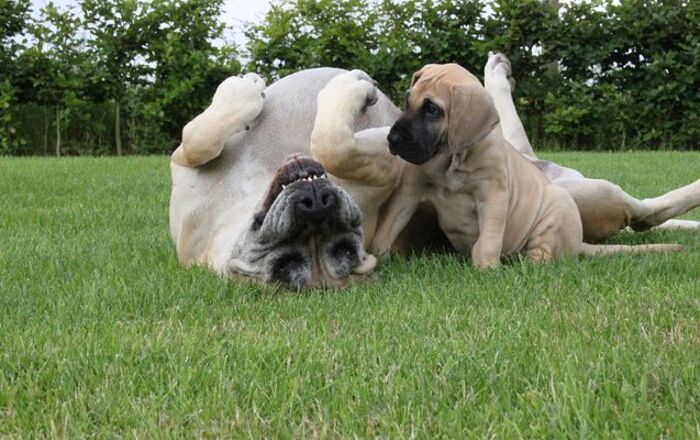
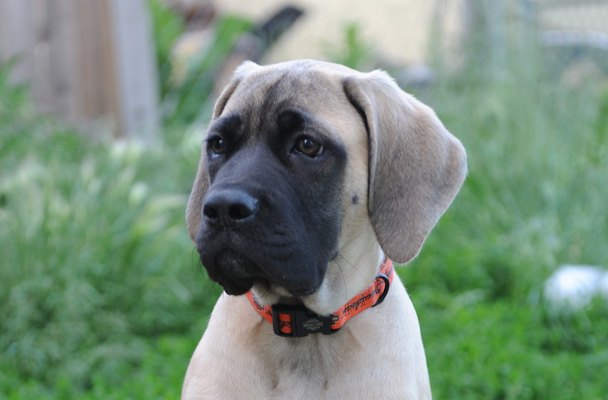
Requiring light exercise, be sure not to over-run your Mastiff as a puppy. Give it activity but remember puppies are growing a considerable amount, so it’s best to avoid overworking them.