Neon Tetra

Published A Few Days Ago
ADVERTISEMENT
fast facts

About Neon Tetra

Group
Freshwater
Size
Small
Temperament
Non-aggressive
Aquarium Size
Medium (30 gal)
Swimming Region
Middle
Fish Water Condition
Suitable Tank Mates
Guppies, Rummy-nose Tetra, Cardinal Tetra, Glow Light Tetra and other small species of tetra
Difficulty Of Care
ADVERTISEMENT

Neon Tetra General description

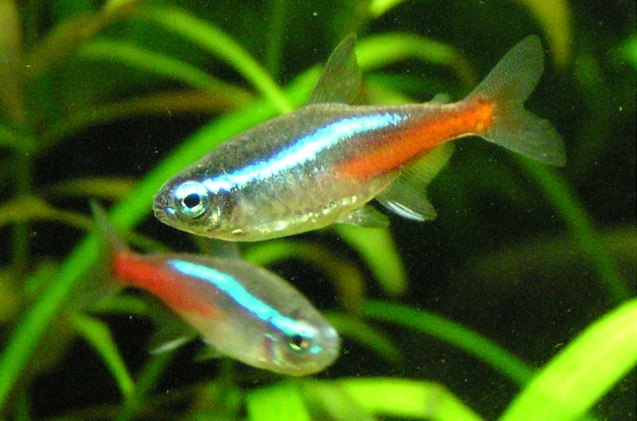
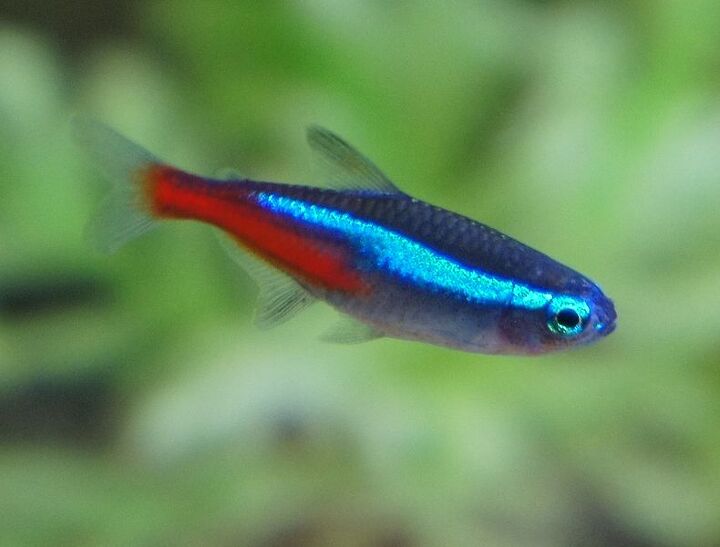
Neon tetras are an incredibly beautiful species of tropical freshwater aquarium fish. It gets its name from the iridescent blue horizontal stripe that runs along each side of the fish from its nose to the base of the adipose fin, and the iridescent red stripe that begins at the middle of the body and extends to the base of the tail fin. The neon tetra also has a light blue back and a silver abdomen. Except for these markings, the fish is completely transparent and often loses its coloration in the night or when under stress. Neon tetras usually grow up to around 1.2 inches in length and can survive for up to three to four years given adequate care.

Neon tetras are an incredibly beautiful species of tropical freshwater aquarium fish.

Origins

The neon tetra is native to the black water and clearwater streams of south-eastern Colombia, eastern Peru and western Brazil.

Color

In addition to the more common red and blue variant, neon tetras have also been bred into a light yellowish color (Gold Neon Tetras) and a variety called the Diamond Neon Tetra, where the blue stripe has been reduced to a tiny spot on the tetra’s head.

Maintenance and care
ADVERTISEMENT

While most commercially bred neon tetras are hardier than their wild cousins, and are able to adapt to a wide range of water conditions, they are still very sensitive to abrupt changes in water quality. Neon tetras thrive in mildly acidic, warm water in heavily planted aquariums. They are a shoaling fish and are best kept in schools of ten or more. The neon tetras’ extremely peaceful temperament makes them excellent additions to most community tanks. But they are also incredibly timid and should not be kept with more aggressive species of fish or larger tank mates that could eat them whole.

Feeding

Neon tetras are omnivores and can be fed on a diet of crushed flakes. Their diet should also be occasionally supplemented with live foods such as brine shrimp, daphnia, frozen bloodworms and tubifex worms.

Neon tetras thrive in mildly acidic, warm water in heavily planted aquariums.

Breeding

It is fairly difficult to sex neon tetras, but females will often be plumper in shape than the males and their blue lines will be slightly more curved.

To breed neon tetras, you will need to set up a dedicated breeding tank. The water of the breeding tank should be slightly acidic and as soft as possible. The tank should also be dimly lit and should include fine leaved plants or spawning mops for the eggs to be deposited in.

The eggs and resulting fry are extremely sensitive to light and the aquarium should be kept as dimly lit as possible for a few weeks once the fry eggs are laid. The parents should also be removed promptly from the breeding tank as they will devour their own eggs on sight.

Aquarium varieties

Neon Tetra, Gold Neon Tetra, Diamond Neon Tetra

Photo credit: Corpse89/Wikimedia

ADVERTISEMENT

ADVERTISEMENT

You May Like

Mastiff

Look up Mastiff online and you''ll be greeted with a plethora of options. The Mastiff is such a varied and multifaceted division in the world of dog breeds.

Zuke’s Grain Free Gift Pack Giveaway

After a couple of weeks off, we’re back with another contest. And let us tell you, it’s bigger than ever. This time around, you could win a Zuke&…

7 Sparkling Safety Tips For A Dog-Proof Christmas Tree

Not all trees are for dogs – make sure you follow these safety tips to keep your dog off your Christmas tree this holiday season Ah… the allure…

Red Lored Amazon

Often called the Amazon''s prettiest bird, the Red Lored Amazon is also considered to be one of the most popular and interesting pet parrots of the region.

How to Tell If Your Cat Is at a Healthy Weight

In order to live a long, healthy life, cats need to fall within a certain weight range that varies on height, age, and body size.

Preparing Your Pooch For His First Dog Groomer Visit

Is Scruffy starting to look a bit scruffy? We''ve put together some points on what you need to do to prepare your pup for his first dog groomer visit.

What’s With Cats and All That Stretching?

Cats are able to contort their bodies into all kinds of positions when they stretch. Here''s what experts say about cats and their nimble stretching habits.

Is Your Cat Overweight or Just Big Boned?

With so many cat breeds out there, how can you tell if your cat is packing on the pounds or simply reflecting DNA from a distant relative that just happens to be one of those larger-sized breeds?

Choosing The Right Boarding Kennel For You And Your Dog

Need-to-know tips. Parting is such sweet sorrow - so it makes a world of difference when you pick a boarding kennel that takes care of your dog properly.

Discussing The Truth About Cat Food

Do you really know what goes into your cat''s food? We chatted with the folks at TruthAboutPetFood.com to learn more about what our cats are eating.

Beefaloaf Meatloaf Dog Food Recipe

When you think of comfort food, good, ol'' fashioned meatloaf has to come to mind. Now your dog can enjoy my Beefaloaf Meatloaf Dog Food Recipe.

Blanc De Bouscat

Blanc De Bouscat is a French ""gentle giant"" rabbit, distinct for its pure white fur and red eyes. Due to their friendly personality, they make great pets.

European Shorthair

Today, the sleek and stocky European Shorthair may be the most common feline in Europe, and it may also be the oldest feline breed in continental Europe.

Pomapoo

With the affectionate nature of a Pomeranian and the intelligence of a Poodle, the Pomapoo is known for its affectionate nature and big personality.

Belgian Shepherd

Also known as the Belgian Sheepdog, the Belgian Shepherd is a beautiful, long-coated breed that comes in a variety of colors.