Peterbald Breed History
The Peterbald is a new hairless cat breed that originated in Russia in the early part of the 1990s. In 1994, a hairless breed known as the Donskoy was bred with the Oriental Shorthair. Because it became really popular in Saint Petersburg, Russia, the name Peterbald was given to this new and unique cat breed.
The Peterbald is a new hairless cat breed that originated in Russia in the early part of the 1990s.
Breed Traits
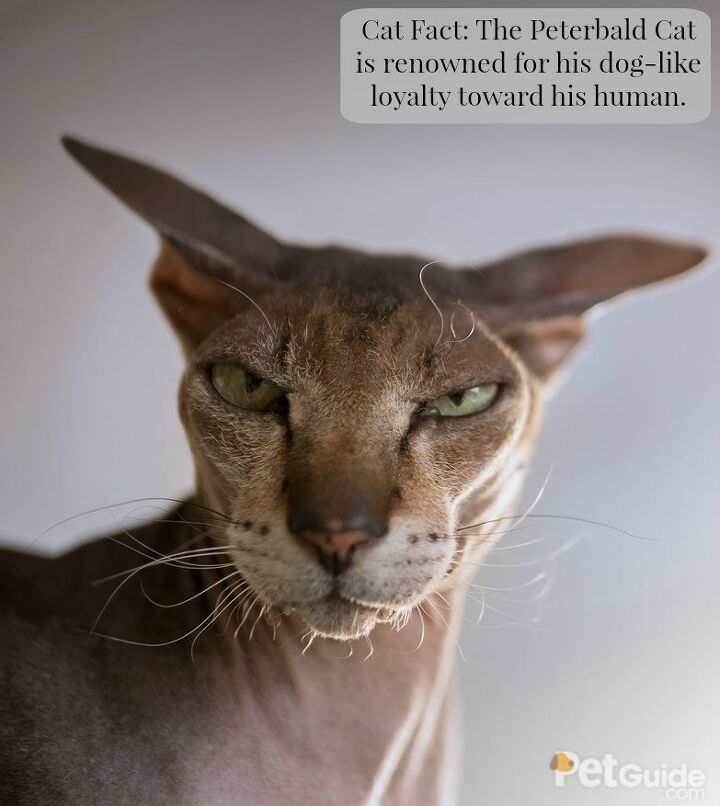
These cats are renowned for their dog-like loyalty toward their human companions. They are highly affectionate, loving, and social, and they will also often follow their owners around the house to stay near them as much as possible. They crave attention and interaction with their human family on a consistent basis, often waiting for their owners to come home and being very vocal to communicate with their favorite people.
Peterbalds are outgoing, friendly, curious, trusting, and playful. They get along well with other cats, as well as children and pets of other species. And they are even willing to meet and become friends with strangers.
Overall Description
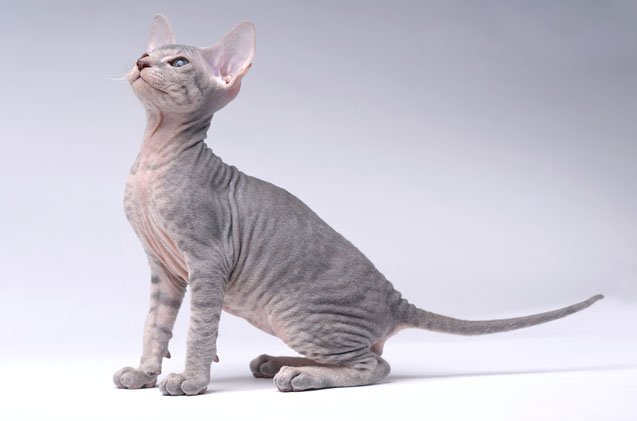
The Peterbald typically has no fur, but some members of the breed do have a short, fuzzy coat that somewhat resembles cashmere. Other distinctive features include almond shaped eyes and large, pointed ears that resemble those of a bat (both of these features were actually inherited from the Oriental Shorthair). These cats also have slender, long bodies, and their heads are shaped like inverted triangles. And because they are hairless, you will also notice a lot of wrinkles on their bodies.
While hairlessness is often the most sought-after quality of these cats, they can also come in other coat textures, such as chamois, velour, brush, and straight. In fact, depending on the genetics of the parents of a litter of Peterbalds, some kittens can be bald, while others can have straight, full coats. Kittens can also change the type of coat they sport as they age, with hair being lost, gained, or altered in texture for up to the first two years.
Ultra bald cats will be hairless and will not have any eyebrows or whiskers. Chamois will be roughly 90% hairless, with kinked eyebrows and whiskers. Velour cats will be roughly 70% bald and feature a coat that is as high as 1mm in length. Brush Peterbalds will sport wiry hair that can be as high as 5mm in length with a wavy or curly texture and kinked whiskers. Finally, straight coats have close-lying and short coats, along with straight whiskers. And some Peterbalds can even have a combination of these coat types.
Colors
The Peterbald breed comes in all colors.
Grooming Requirements
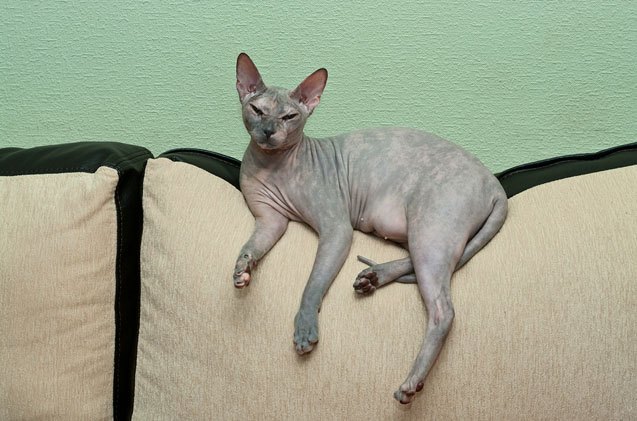
Because the Peterbald is a hairless cat, a strict skincare routine is necessary to keep these felines healthy. For example, if you bring your cat into the great outdoors with you, apply a feline-safe sunscreen to its skin. You also need to take steps to protect this cat from the cold because of its lack of fur.
These cats also need to be bathed weekly in order to remove excess oil from the skin, which can easily attract dirt, lead to body odor, and cause the cat’s skin to feel sticky.
Photo credit: toloubaev/Bigstock; AntiKsu/Bigstock; logoboom/Bigstock