Rhodesian Ridgeback Basics
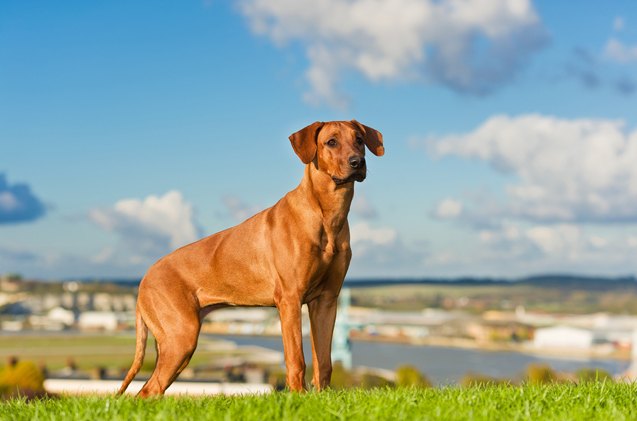
The Rhodesian Ridgeback gets its name not only from its place of origin, but also from its unique coat, as there is a ridge of hair on its back that grows the opposite direction. Sleek and athletic, the Rhodesian Ridgeback is relatively calm after it has passed the puppy phase, making it a great choice from active families.
Strong, intelligent, and protective, the Rhodesian Ridgeback will adore its family, but are known to be somewhat reserved with strangers. If you’re looking for a jogging partner, this is one dog that can keep up. Read on to learn more about the breed.
Strong, intelligent, and protective, the Rhodesian Ridgeback will adore its family, but are known to be somewhat reserved with strangers.
Origin
A native of South Africa, the Rhodesian Ridgeback was bred by the Boer farmers that needed a dog that could hunt in the wild. Used to hunt lions, the Rhodesian Ridgeback would keep the lion distracted so the hunter could make the kill. This breed can go for long periods of time without water, which was necessary in the harsh climate of Africa.
Pedigree
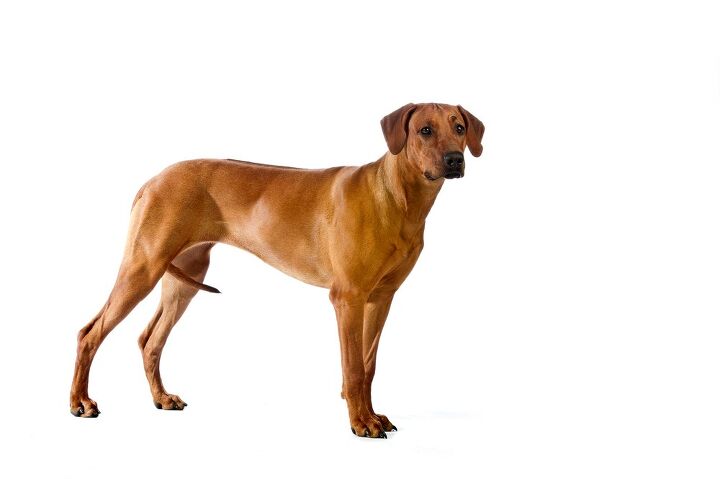
Its ancestry can be traced back South Africa, where farmers crossed dogs with the semi-domesticated, ridged hunting dogs of the Khoikhoi. The Rhodesian Ridgeback was also known as Van Rooyen’s Lion Dogs, the African Lion Hound or African Lion Dog.
The Rhodesian Ridgeback was recognized by the AKC in 1955.
Food / Diet
The Rhodesian Ridgeback is not a fussy eater, so you have to monitor its diet to make sure it’s getting what it needs. It is always hungry and will act as though you never feed it. Some dogs can be prone to skin allergies or can develop recurring ear infections, and diet can be a factor with these issues. You’ll need to adjust your dog’s diet, as some need more protein than others. You can give your Rhodesian Ridgeback supplements such as like Omega3 fish oils for a shiny coat. A high-quality dog kibble is a safe bet for this breed, one that covers all of its nutritional requirements.
The Rhodesian Ridgeback as a knack for being stubborn as well as intelligent, and it doesn’t take much for your dog to become bored and distracted while training.
Training
As with most breeds, you must train your Rhodesian Ridgeback in a consistent and firm, but loving, manner. The Rhodesian Ridgeback as a knack for being stubborn as well as intelligent, and it doesn’t take much for your dog to become bored and distracted while training. This breed loves being around people, but it takes a serious commitment to own a Rhodesian Ridgeback, so only dedicated owners should undertake the care of this breed. Once it is properly trained, the Rhodesian Ridgeback will settle in its place within your family.
Weight
Male Rhodesian Ridgebacks weigh 70 to 85 pounds, while females weigh 60 to 70 pounds.
Temperament / Behavior
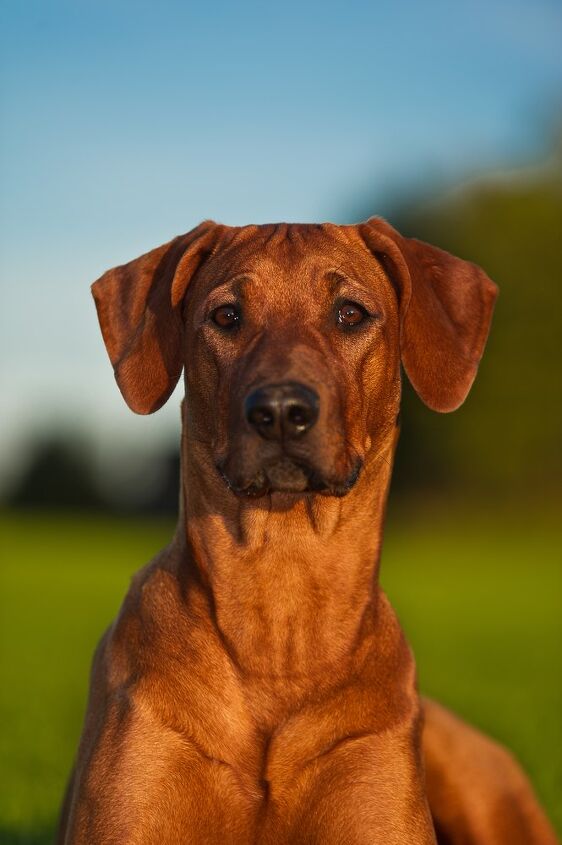
As well as a hunter, the Rhodesian Ridgeback is a fiercely protective guardian of its family. But even though it’s protective, the Rhodesian is gentle with children. This breed is very strong (it had to be, hunting lions), and is able to tolerate cold and hot conditions.
The Rhodesian Ridgeback is a stubborn dog, so start training young or you may end up with a battle of the wills. You need to be assertive with this dog and establish the pecking order within your family. Once that has been established, your Ridgeback will become a loving and affectionate addition to the family. The Rhodesian will get along with other animals in your household.
Any dog is a commitment, but it is so much more so with the Rhodesian Ridgeback. You need to establish your dominance early, take part in daily training, and provide enough exercise and mental stimulation so your dog is happy, healthy, and secure.
Common Health Problems
The biggest health concern for Rhodesian Ridgeback presents at birth. The condition is Dermoid Sinus, one that is closely related to Spina Bifida found in humans. Painful and sometimes fatal, most puppies born with this condition are put to sleep. If not, surgery is necessary and not always successful.
Life Expectancy
Rhodesian Ridgebacks have a life expectancy of 9 to 15 years.
Exercise Requirements
It may not be able to chase lions in your neighborhood, but your Ridgeback needs daily exercise. To release pent up energy, take your dog for a long run or jog. Tire them out with play time – get your kids involved in the fun. You’ll need to put aside time every day in order to ensure your Rhodesian Ridgeback gets enough exercise.
As well as a hunter, the Rhodesian Ridgeback is a fiercely protective guardian of its family.
Recognized Clubs
The American Kennel Club says this about the breed: “A large and muscular dog, the Rhodesian Ridgeback was not only developed as hunter but also as a family protector. The breed can be light wheaten to red wheaten and are sleek and glossy in appearance. Originally bred to hunt lions the breed is also known as the African Lion Hound.”
Coat
Sporting a short and sleek coat, the Rhodesian Ridgeback is easy to groom. Some of the traditional solid colors include black, red, beige, and blue, but you may also see white or brindle coats on these beautiful creatures.
Since its coat is relatively low maintenance, you’ll only need to groom at home about twice a month. You can even use a brushing mitt while petting your Rhodesian, which removes hair and dead skin cells while giving you a chance to bond with your dog.
Puppies
Rhodesian Ridgeback puppies should always be screened at birth by the breeder and veterinarian for Dermoid Sinus before it makes its way into your home. Start training early to teach your puppy that you are in charge and to establish dominance in the family.
Photo credit: Tatiana Katsai/Shutterstock