Swedish Vallhund Basics
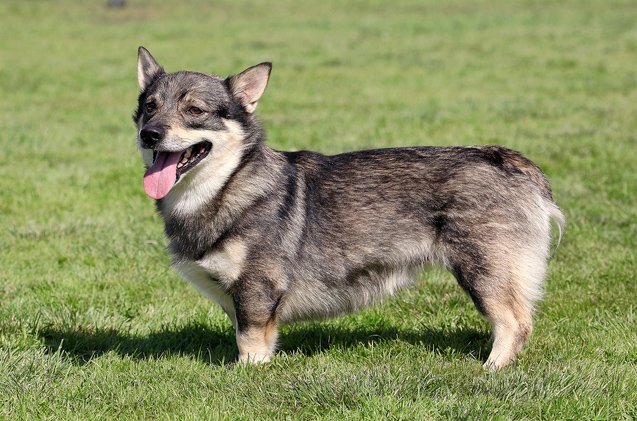
The Swedish Vallhund is a member of the Spitz family, so you might recognize its thick double coat and curled tail. Unlike many Spitz-type breeds, however, the Vallhund has a short, stout stature that is more like that of the Corgi than the Siberian Husky. These little dogs are energetic and playful, eager to make friends and to spend time with family. As well, this breed comes with one of three different types of tail: no tail (bobtail), a stub tail or a full curl tail. If you are looking for a friendly dog with a loving personality, the Swedish Vallhund may be right for you.
These little dogs are energetic and playful, eager to make friends and to spend time with family.
Origin
The origins of the Swedish Vallhund can be traced back more than 1,000 years to Sweden in the days of the Vikings. At that time, these dogs were known by the name “Vikingarnas Hund” – the Viking dog. It is unclear whether the Vikings brought the Viking dog to Wales where it was developed into the Welsh Corgi breed or if the Corgi was brought to Sweden where it became the Swedish Vallhund. What is known is that the breed nearly went extinct in Sweden during the 1940s until Count Bjorn von Rosen of Sweden stepped in to rescue the breed.
Pedigree
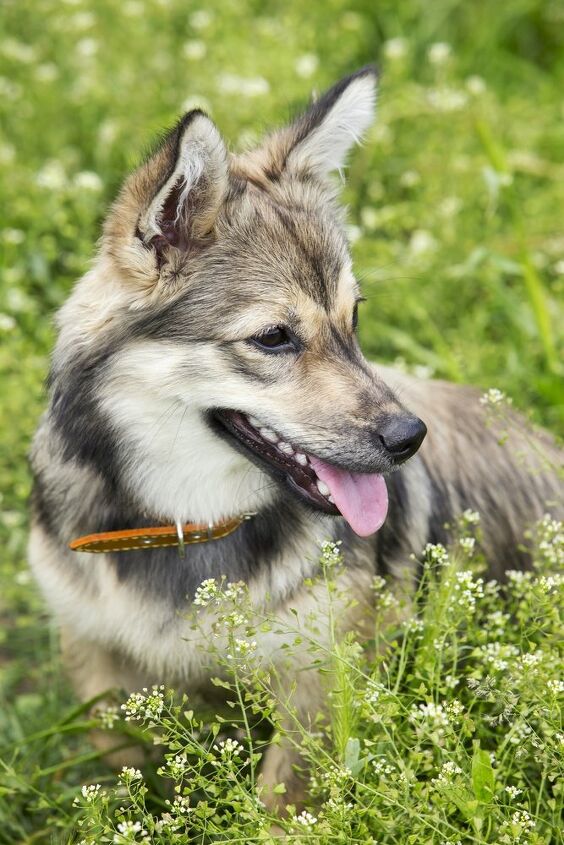
The Swedish Vallhund is a relative of the Welsh Corgi, but it is unclear whether the Welsh Corgi breed was used to develop the Swedish Vallhund or if it was the other way around. What is known is that it is considered an ancient breed.
Food/Diet
The Swedish Vallhund is a fairly small dog, so it is recommended that you feed it a dog food diet specially formulated for small-breed dogs. It is also important to note that these little dogs are active, so an active-breed formula may also be a good option depending on your individual dog’s activity level.
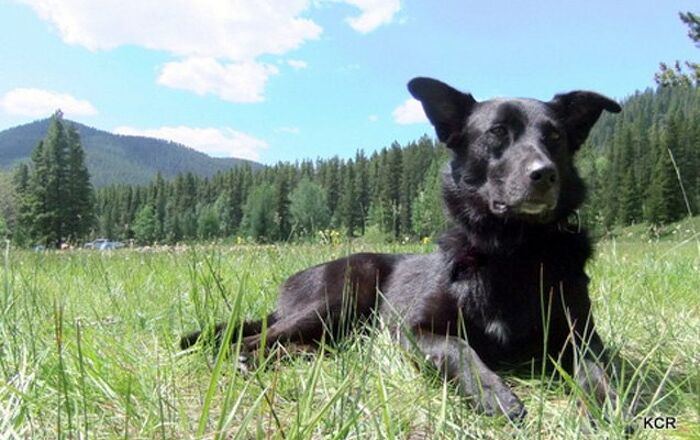
The Swedish Vallhund is an intelligent breed that loves to learn.
Training
The Swedish Vallhund is an intelligent breed that loves to learn. This being the case, these dogs typically respond well to training as long as you start it at a young age. The longer you wait to train your dog, the more likely he is to develop an independent streak – he may also develop problem behaviors out of boredom. Always use positive reinforcement-based training methods and be firm and consistent in your training with your dog.
Weight
The Vallhund is a short dog with a substantial build, standing between 11.5 and 13.5 inches at maturity. There is no standard weight for this breed, but they typically weigh between 20 and 30 lbs. at maturity.
Temperament/Behavior
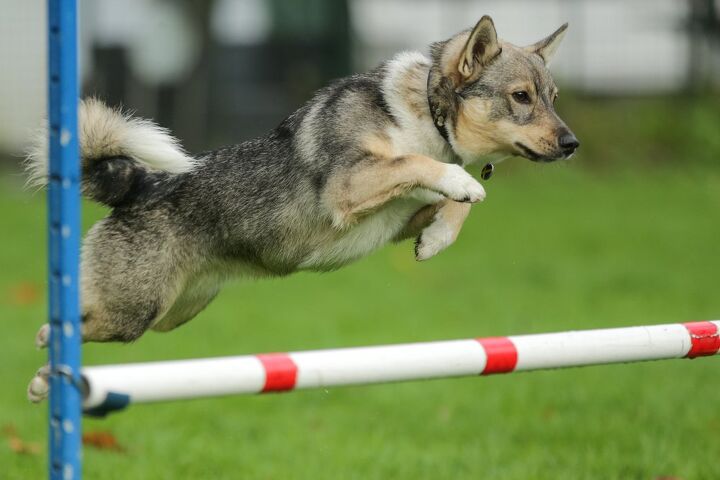
The Swedish Vallhund is a confident and active breed that thrives when given a job to do. These dogs are intensely loyal to their families and they are friendly by nature. Because these dogs are typically calm and adaptable, they are well suited to a variety of housing situations as long as they get the exercise they need on a daily basis. This breed is known for having a sense of humor and an eager-to-please attitude. Like most dogs, this breed requires early socialization to ensure that the dog gets along well with children, strangers, and other pets.
Common Health Problems
In general, the Swedish Vallhund is a healthy breed not overly plagued by inherited medical conditions. That being said, all dogs are prone to developing certain health conditions. The conditions most likely to affect the Swedish Vallhund breed include patellar luxation, hip dysplasia and eye problems like retinopathy.
Life Expectancy
The average life expectancy of the Swedish Vallhund breed is between 12 and 14 years.
Exercise Requirements
The Swedish Vallhund was bred to be a herding dog so they are a fairly active and energetic breed. These dogs tend to thrive when given a job to do and they are excellent at a number of dog sports including obedience, agility trials, herding, flyball, and tracking. This dog requires a long walk every day to meet his exercise requirements.
The Swedish Vallhund is a confident and active breed that thrives when given a job to do.
AKC
Even though the Swedish Vallhund was brought to the United States in 1983, the breed was not accepted for AKC registration until 2007. Currently, the Swedish Vallhund is accepted for AKC registration in the Herding Group.
Coat
As a Spitz-type breed, the Swedish Vallhund has a double coat and a full curled tail. These dogs have a soft, dense undercoat with a topcoat that is short and harsh. The color of this breed may vary, including various shades of gray, brown, and red with lighter shades of color on the throat, chest, belly, and buttocks. The Vallhund also typically exhibits harness markings on the shoulders. Twice-weekly brushing is recommended to keep shedding under control.
Puppies
The average litter size for the Swedish Vallhund is six to eight puppies and puppies are born with a naturally bobbed tail, a stub tail or a long spitz-type tail. Swedish Vallhund puppies are little more than energetic bundles of fur. These dogs require early training and socialization but, as long as you fulfill these needs, your Swedish Vallhund will get along just fine with children and other pets in the household.
Photo credit: CaptureLight/Bigstock.com; Marcel van den Bos/Shutterstock; Olga Aniven/Shutterstock