Swiss Fox Rabbit Breed History/Origin
As the name suggests, Swiss Fox Rabbits originated in Switzerland, and they were first bred in the 1920s. Hermann Leifer and Müller wanted to create a rabbit breed that had a pelt similar to one of Arctic foxes, as their fur was highly coveted in that era. They started by crossing Angora rabbit with Havana rabbit, but the resulting breed wasn’t what they’ve hoped it to be. Even though Swiss Fox Rabbit didn’t have a fox-like fur, which lessened its initial popularity, it was further developed by rabbit breeding enthusiasts to create a beautiful, docile, soft-haired rabbit we know it as today.
Even though it is still a rare and relatively unknown breed, the Swiss Fox Rabbit is recognized and shown throughout Europe.
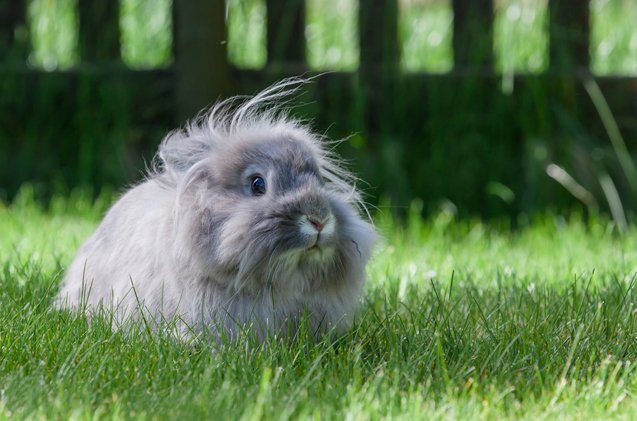
The Swiss Fox Rabbit is a rare long-haired breed that makes an excellent family pet.
Overall Description
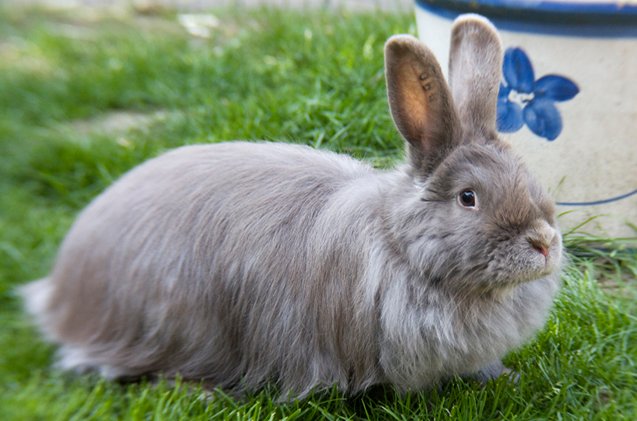
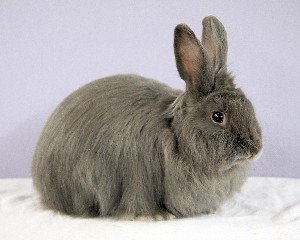
A medium-sized breed, Swiss Fox Rabbit has a compact body type and weighs between 5.5 and 7.5 lbs. They are well-muscled, with short necks, and slightly upright posture. Their ears are strong, carried upright and long, usually around 4 inches. Although they originate from Angora, Swiss Fox rabbits have no facial furnishings, and the hair on their head and ears is shorter than on the rest of their bodies, creating an attractive contrast.
Coat
Even though it’s not fox-like, the fur of Swiss Fox Rabbit is beautiful in its own right. They have long hair of normal type, and their coat is very soft and easy to groom. Their glossy, silky fur is dense, with an undercoat and plenty of awn hair. During the molting season, they should be regularly brushed to help the shedding process and minimize the amount of hair that ends up in your rabbit’s digestive tract.
Colors
Inspired by the bluish hue of an Arctic fox’s seasonal coat, the breeders first created a Swiss Fox Rabbit with a blue coat. Now, the accepted coat colors include white (with red or blue irises), black, Havana, and Chinchilla. Like all long-haired rabbits, Swiss Foxes have diluted colors, which are more pastel than vibrant. When it comes to patterns, this breed can have self (mono-colored) and agouti (chinchilla) specimens.
Even though they have long, fine hair, their coat is very low-maintenance.
Care Requirements
Originally bred for commercial purpose (fur), this rabbit breed is now kept mostly as a pet. They could adapt to living in an outdoor hutch, provided that their needs are met, but would fare better if kept indoors.
Swiss Fox Rabbits need a spacious enclosure or cage to spend their time in, so make sure to choose one that fits their size. The enclosure should leave enough room for your bunny to comfortably hop around, sit up straight and stretch. You should also make sure to use a rabbit-friendly bedding for the cage, such as wood shavings or straw, and clean it as soon as soiled. The bedding should be replaced entirely once a week.
Not unlike all rabbits, this long-haired breed thrives on a diet that is rich in fibers and roughage. Veggies, some fruits, and rabbit pellets will provide your bunny with important nutrients, but quality hay is an essential part of their diet. Roughage such as meadow hay or alfalfa hay is not only healthy for rabbits, it keeps their teeth in check and helps their digestion.
Social and friendly, Swiss Fox Rabbits will need quality playtime to be happy. If you are letting your bunny play outside, always make sure they are supervised, and in a safe, enclosed space, to prevent them from wandering away or being attacked by predators. When it comes to indoor fun, get some rabbit toys for their cage and let them out to play and exercise in a rabbit-proofed room.
In case you work long hours, consider getting a pair of Swiss Foxes- they’ll keep each other entertained and happy while you’re away.
Health
Similar to all long-haired breeds, Swiss Fox Rabbits are particularly susceptible to digestive issues, such as GI stasis. As rabbits are avid groomers, a lot of their hair ends up in their gastrointestinal tract, which can lead to intestinal obstruction, and in severe cases, death. To prevent this problem, feed your bunny a lot of roughage and veggies high in fiber, and brush them routinely, especially during the molt seasons. If you notice pearly poop (poop connected by strands of hair), or that your bunny is constipated, contact your vet immediately.
Feeding a diet with a good percentage of roughage is not only beneficial for the rabbit’s digestive system, but it also helps them grind their teeth down. Rabbit’s teeth keep growing throughout their lifetime, and if they’re left unchecked, overgrown teeth can cause a myriad of health issues.
Unless you plan on breeding Swiss Fox Rabbits, you can spay or neuter your pet. Does are prone to uterine cancer, so spaying is advisable to prevent any health issues down the road. Sterilization also helps with unwanted urine marking in males (and females), so neutering your buck is an option worth considering, too.
Swiss Fox Rabbits have a sweet nature, and love to play and cuddle with their owners.
Temperament/Behavior
Smart and affectionate, Swiss Fox Rabbits are an excellent choice for a family pet. They enjoy human companionship and can be litter trained. As long as you know how to handle rabbits properly, this fluffy bunny will love sitting on your lap and enjoy plenty of cuddles.
Calm and docile, they’ll get on great with older kids, but only if the children know how to responsibly cuddle with them, without lifting them up or playing too rough. Agitated rabbits can try to jump out of a person’s hold, seriously injuring themselves and the handler in the process, so make sure that you don’t leave your kids alone with the bunny.
Photo credit: Aramat/ Wikipedia; Linas T/Shutterstock.com