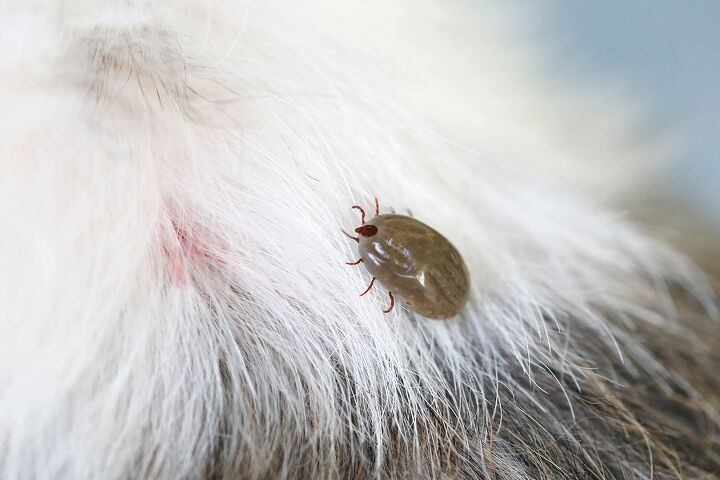
Ticks are harbingers of disease and illness. During tick season, be on the lookout for these Lyme Disease symptoms in dogs.
While it is true that a tick bite is the method of transmission, Lyme disease is actually caused by a specific type of bacteria, a spirochete called Borrelia burgdorferi. Ticks carry a number of diseases that have the potential to affect dogs, but Lyme disease is one of the most serious. Be on the lookout for these Lyme Disease symptoms in dogs.
Lyme Disease Transmission and Diagnosis
Ticks and other insects carry a wide range of pathogenic viruses and bacteria that can be transmitted to animals through a bite. In most cases, it is deer ticks that carry the bacteria responsible for Lyme disease. Once a Borrelia-carrying tick bites the dog, it usually takes two to three days for the infection to be passed along but once it is in the dog’s bloodstream it can travel throughout the body. The prevalence of Lyme disease is highest in the eastern United States, particularly in coastal regions, though it can occur anywhere.
Related:Common Diseases Spread by Fleas and Ticks
In order to diagnose a dog with Lyme disease, your veterinarian will perform a blood test to detect antibodies produced by the dog’s immune system in response to the Borrelia burgdorferi bacterium. It is possible for the test result to be positive even if the dog has not contracted the disease – he could merely have been exposed to the pathogen and his body was successful in fighting it off. If the antibody test is positive, a second test may be required to determine whether the dog actually has the disease. The results of this test, combined with other information such as your dog’s medical history and your description of symptoms, are usually enough to make a diagnosis.
Clinical Signs and Symptoms of Lyme Disease in Dogs
Though Lyme disease is one of the most common , it only produces symptoms in between 5% and 10% of affected dogs. It is also important to note that only about 10% of dogs that are exposed to the bacterium (whether in vaccine form or from a tick bite) actually contract the disease. The most common symptoms seen in dogs are fever, lameness, swollen joints, swollen lymph nodes, loss of appetite, and lethargy. Unfortunately, these symptoms overlap with a number of different diseases which can make the accurate diagnosis of Lyme disease difficult.
Related:How To Remove A Tick From A Dog
As it has been mentioned, a vast majority of dogs infected with Lyme disease do not display symptoms. Of the dogs that do show symptoms, lameness is one of the most common and it is caused by inflammation in the joints. In some cases, this lameness only lasts for a few days but it may recur in the same or other joints. Some dogs with Lyme disease also experience kidney problems which may eventually result in kidney failure. For some reason, Lyme disease-related kidney problems are more common in certain breeds including the Golden Retriever, Labrador Retriever, Shetland Sheepdog, and Bernese Mountain Dog.
Once a correct diagnosis of Lyme disease is made, the treatment is fairly straightforward. In most cases, dogs can be treated on an outpatient basis, except in cases of severe kidney disease. The most common treatment for Lyme disease is an antibiotic called Doxycycline and the treatment period is usually four weeks. Your veterinarian may also prescribe anti-inflammatory medications or pain relievers if your dog is experiencing severe symptoms. Most dogs recover from Lyme disease but in some cases, the antibiotic is not effective in completely eliminating the infection – it may return at a later date.
Lyme disease can be serious but it is also completely preventable. Speak to your veterinarian about the risk for Lyme disease in your area and to determine which preventive might be right for your dog.