Akhal-Teke Horse Breed History
The Akhal-Teke Horse, which is considered one of the oldest of all of the modern domesticated horse breeds, has a striking appearance and a history that dates back 3,000 years. This ancient equine has influenced other breeds, and it is recognized for its agility, movement, speed, stamina, and athleticism.
Akhal-Teke horses, as they are known today, appeared first in Turkmenistan, which is a country located in Central Asia. More specifically, this breed comes from a flat and rocky desert called Karakum. The area is surrounded by mountains that actually played a large role in helping to preserve the purity of the breed over time. Historically, Turkmenistan tribesmen utilized these horses for raids, and they selectively bred the animals so that they would be agile and fast.
Akhal-Teke horses will form a strong bond with a single person.
Turkmenistan became a part of the Russian Empire in 1881. A Russian General named Kuropatkin, who had admired the Akhal-Teke horses, decided to begin a breeding farm once the war was over. It was at that point that the horses were renamed Akhal-Teke, in reference to the Teke Turkmen tribe that resided close to the Akhal oasis.
The first Akhal-Teke studbook was printed by the Russians in 1943, and the breed was first imported into the United States in 1979.
Breed Traits
Thanks to the selective breeding that has occurred over thousands of years, the Akhal-Teke Horse is known for being highly sensitive, as well as sensible. The breed is even known for being able to respond to the mental suggestions made by their human companions, and they are highly intelligent animals that are dedicated to a single person. In fact, some Akhal-Teke horses might not enjoy being ridden by strangers.
However, because these horses are also excitable, restless, and vigorous, they are best suited for experienced riders, trainers, and owners. Using small gestures, softly spoken words, and glances are enough to train these horses to obey, while punishments and shouting should be avoided because these animals can become defensive.
If you can provide Akhal-Teke horses with daily attention and love, they will respond much like a canine would. They will readily bond with you if you give them the care that they desire and truly understand their needs.
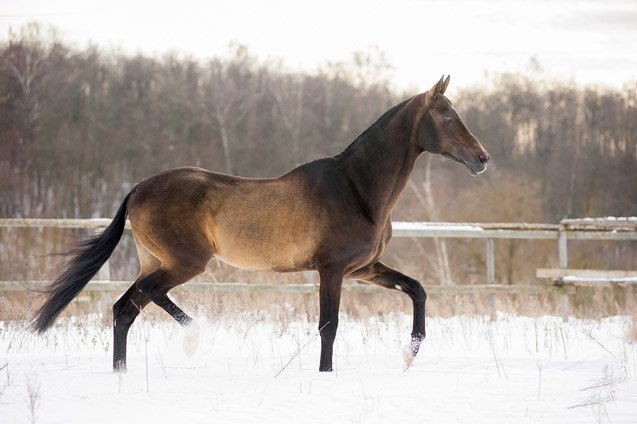
The Akhal-Teke features a golden iridescence that’s evident on all colors except black
Overall Description
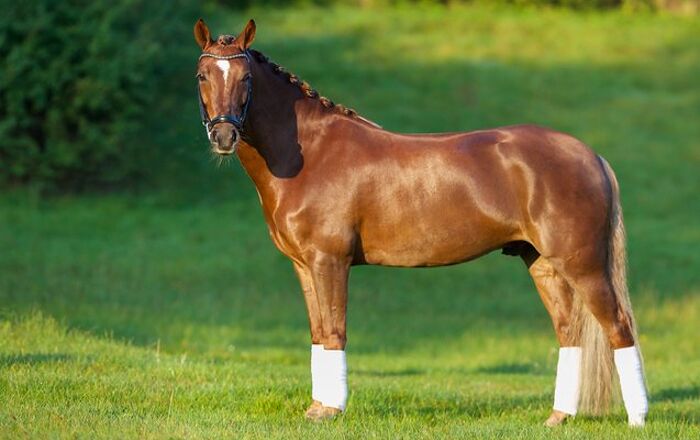
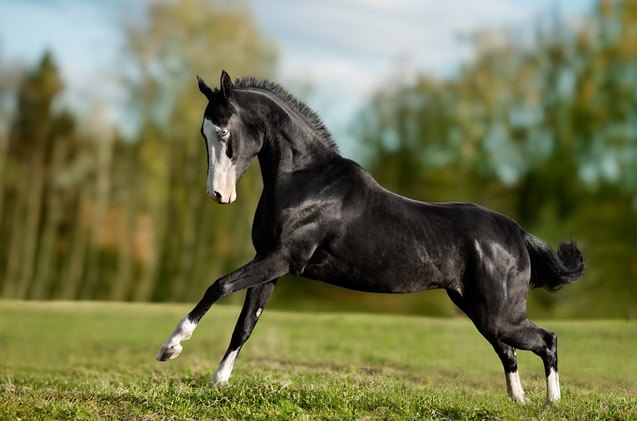
Akhal-Teke horses are exotic, graceful, powerful, athletic, and elegant. The breed features several characteristics that distinguish it from other equine breeds.
The head of the Akhal-Teke Horse should be narrow and long, and most of its length will be from the muzzle to the eyes. The ears of this horse are set forward, slim, and long, and the nostrils are large, while the lips are thin. This horse’s eyes are typically “hooded” in appearance, and the neck is slim, long, and set high from the shoulders.
This horse breed is medium sized, with a level top-line and a strong, long back. It also features prominent withers, shoulders that are free-moving and sloped, and a tail that is set low. Thanks to the wide hip angle, this horse appears strong. Also, you will notice a narrow chest, a deep heart girth, and a sparse tail and mane.
Because this is a desert breed, the horse will display hardiness and stamina, along with low-set hocks and short cannon bones. The gaskins and forearm are smoothly muscled and long, while the legs have tendons that are well defined. Also, this horse has large joints, flat knees, long pasterns, and small hooves that are exceptionally hard and round.
Another interesting characteristic of the Akhal-Teke is its trot. Because this breed comes from the sandy desert, its pace is considered soft, as well as elastic, with upright patterns and a smooth manner. The horse has a flowing movement and does not swing the body. Also, its trot is free-sliding, the gallop is long and easy, and the jumping action can be considered cat-like.
The Akhal-Teke is one of the oldest of all of the modern domesticated horse breeds.
Colors
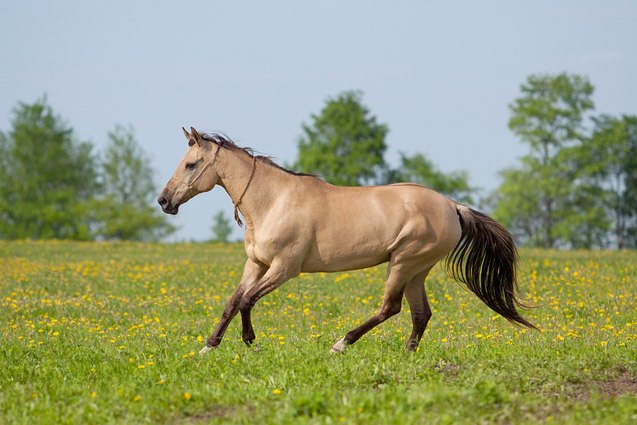
The Akhal-Teke Horse features skin that is very thin, and a coat that is also fine. This horse can feature a wide range of colors. In fact, all equine colors are acceptable, as are all combinations of white markings.
Common colors include bay, gray, chestnut, black, dun, buckskin, perlino, palomino, and cremello.
Many of these horses display an outstanding shade of gold as well because they have a sheen that can be described as glimmering metallic. This unique characteristic makes them truly lovely to behold. The golden iridescence is evident on all colors except black, and it appears as silvery iridescence on gray horses.
Grooming Requirements
To keep the Akhal-Teke’s beautiful iridescent coat looking spectacular, you will need to regularly bathe and groom your horse. Every grooming session will also provide these animals with the attention they require, and it will serve to strengthen your bond with your horse.
Basic horse grooming tools, including an equine shampoo, hoof pick, dandy brush, curry comb, shedding blade, mane comb, tail brush, and body brush can be used to thoroughly remove dirt, mud, excess hair, and other debris from all over the horse’s body.
Photo credit: i_love_nature/Bigstock; Edoma/Bigstock