American Mastiff Basics
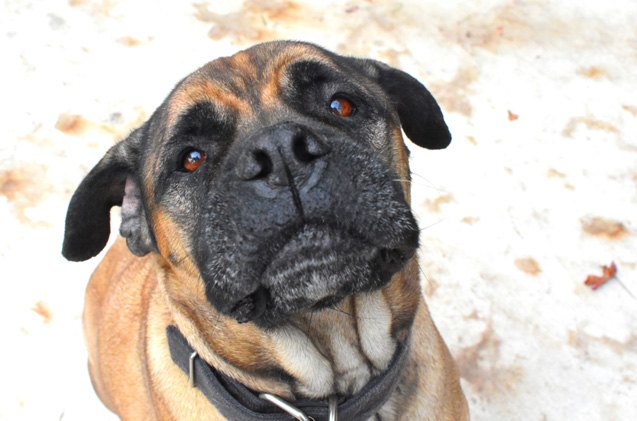
When you hear the word Mastiff you probably picture a giant dog with sagging cheeks and a mouth full of drool. While the American Mastiff is certainly a large, powerful dog with many similarities to other Mastiff breeds, he has a much drier mouth. This trait, combined with his loyalty and protective instincts make him a wonderful pet if you have the space for him. American Mastiffs may not be the easiest dogs to keep, but they are a calm and steady breed you’re sure to love.
American Mastiffs may not be the easiest dogs to keep, but they are a calm and steady breed you’re sure to love.
Origin
The American Mastiff was developed by Fredericka Wagner of Piketon, Ohio. This breed is the result of a crossing between the English Mastiff and the Anatolian Mastiff. Early litters of puppies had firmer, tighter lips than either parent breed and they drooled much less. Outcrossing for the American Mastiff breed continued until the late 1900s until Wagner had enough stock to breed from her existing lines. The Continental Kennel Club recognized the breed in 2000 and Wagner formed the American Mastiff Breeder’s Council in 2002. As of yet, the American Mastiff is not recognized by either the American Kennel Club or the United Kennel Club.
Pedigree
The American Mastiff is the result of a cross between the English Mastiff and the Anatolian Mastiff.
Food/Diet
As a giant breed, the American Mastiff should be fed a high-quality recipe formulated specifically for large-breed dogs. These recipes are made with high levels of protein to sustain lean muscle mass with moderate fat content to keep the calorie content under control. The American Mastiff needs a lot of calories simply due to his size but you should carefully control his portions to avoid obesity.
The American Mastiff is the result of a cross between the English Mastiff and the Anatolian Mastiff.
Training
The American Mastiff is not the most intelligent breed out there, but he is by no means stupid. These dogs are somewhat difficult to train, however, so they are best for experienced dog owners. American Mastiffs can respond well to positive reinforcement training but harsh training methods are likely to produce a stubborn, willful dog. Training should be started from an early age along with socialization to ensure that this breed grows up to be calm and well-adjusted.
Weight
The American Mastiff is a very large breed, standing 28 to 36 inches tall and weighing between 120 and 200 pounds at maturity.
Temperament/Behavior
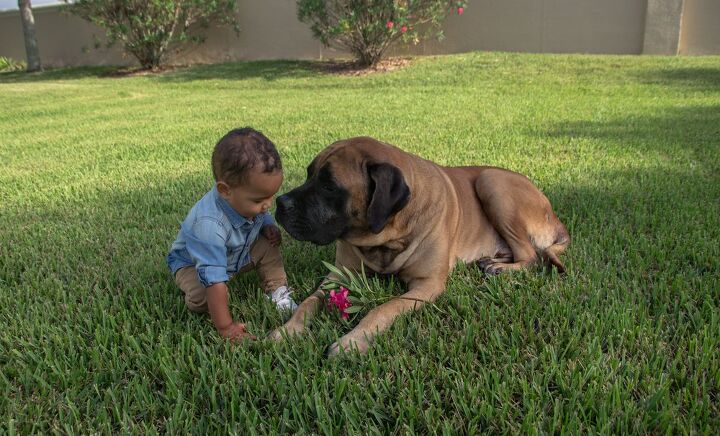
Looking at the American Mastiff, you might not expect him to be much of a family pet but, despite his protective tendencies, this breed can be very gentle. American Mastiffs are calm, loyal, and affectionate dogs that do very well with children when properly socialized – they can also get along with other dogs and household pets. You should know, however, that they can be a bit tricky to handle due to their size so they may not be the best choice for first-time dog owners. This breed is not inherently aggressive, but he won’t hesitate to defend his family. He doesn’t need an excessive amount of exercise, but he does require plenty of attention and time with family to prevent destructive behaviors.
Common Health Problems
Part of the reason Wagner created the American Mastiff breed was to counteract some of the health problems seen in the English Mastiff. Unfortunately, the American Mastiff can carry some of those same health problems, though the risk is a little lower. Some of the conditions to which this breed may be prone include eye problems, joint dysplasia, heart problems, hypothyroidism, arthritis, bloat, and skin problems.
Life Expectancy
The average lifespan for the American Mastiff is 8 to 12 years.
Exercise Requirements
The American Mastiff is not overly active, but he does have moderate needs for exercise. A thirty-minute walk once a day should be sufficient to meet these needs.
American Mastiffs are calm, loyal, and affectionate dogs.
Recognized Clubs
The American Mastiff is not currently recognized by the AKC.
Coat
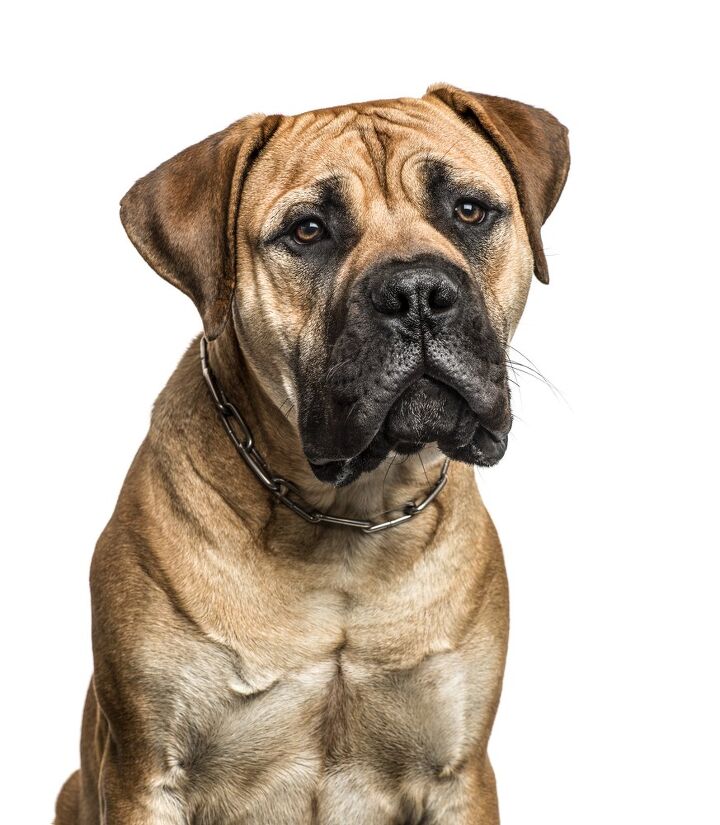
The American Mastiff has the kind of coat you would expect from a Mastiff – short and smooth. These dogs shed to a moderate degree, but the length of their coat makes it easy to groom. Regular brushing with a firm bristle brush is recommended several times a week and you can bath your dog as needed. Compared to other Mastiff breeds, the American Mastiff has tighter skin (especially on the face). The most common colors for the breed include fawn, apricot, and brindle with or without white markings on the chest, chin, and feet.
Puppies
The average litter size for the American Mastiff is 2 to 5 puppies. Because this is a giant breed, you should expect puppies to take 2 years or more to reach their full size and to grow out of their puppy-like tendencies. To prevent overgrowth, feed your American Mastiff puppy a large-breed puppy formula and control his portions. Once he reaches 80% of his maximum size (usually between 12 and 18 months of age), you can switch him to a large- or giant-breed adult formula.
Photo credit: PJW31189/Shutterstock; tamara321/Shutterstock; Eric Isselee/Shutterstock