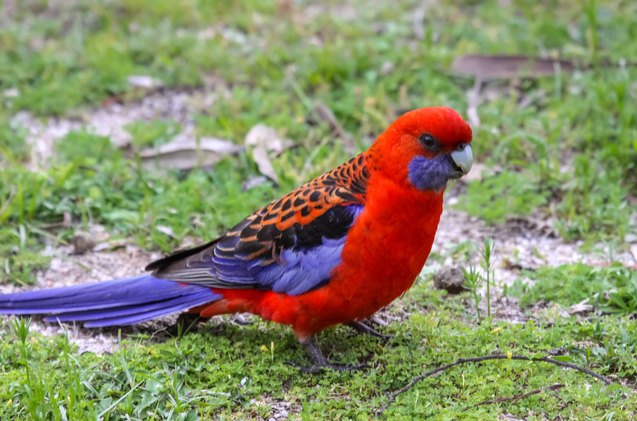
Crimson Rosella General Info
With their eye-catching looks, it’s hard to overlook a Crimson Rosella. A common sight in aviculture, these parrots are prized for their good behavior and charming temperament. Slender and agile, they have a lot of energy and can be surprisingly smart and inquisitive. Crimson Rosella needs a lot of room to fly about in order to be happy and healthy. After some time spent with you, this bird will form a strong bond, and you will realize why these Rosellas make great pets. Of course, it also doesn’t hurt that these birds are real lookers!
The Crimson Rosella is the most popular pet parrot breed in its family.
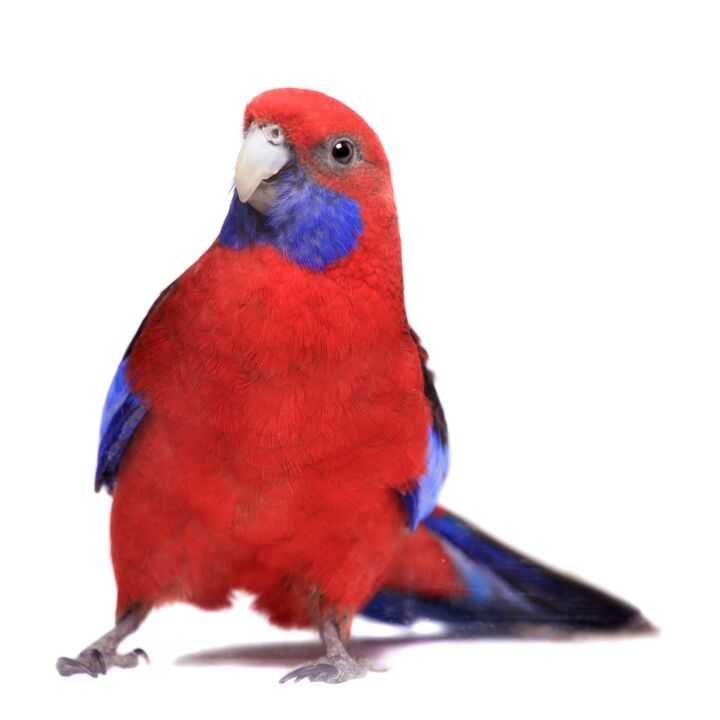
Native Region/Natural Habitat
The Crimson Rosella mostly lives in coastal areas of Southeastern Australia. This breed is exclusive to a region that spans parts of Tasmania, New South Wales, Victoria, and Queensland. They live in rainforests, woodland edges, Eucalyptus forests, and several other habitats. These birds can also be spotted in gardens and cultivated areas close to cities. Although their numbers are stable, they do have a few threats, including a large number of natural predators, such as the peregrine falcon and goshawk.
Overall Description
In addition to flashy colors, distinct traits of the Crimson Rosella are its stubby beak, a hawk-headed profile, and the long, broad tail. The adults reach an average length of 14 inches (36 centimeters) and can weigh around 6 ounces (170 grams). Remember that a good portion of their size is reserved for the tail. Even though it’s a medium-sized parrot, the Crimson Rosella requires a large cage or an aviary. That way you ensure they get exercise and minimize the threat of apathy.
Speech and Sounds
Besides their charming looks, these parrots have another lovely trick up their sleeve – their song. Crimson Rosella is a great whistler and will pick up new melodies to repeat without much trouble. Play a few simple tunes and you will quickly hear your pet repeat them in a spot-on, clear tone. When alarmed or neglected, they can be vocal and produce a high pitched, shrill call. Depending on the size and the number of birds, a Crimson Rosella might not be the best choice as an apartment pet. A house setting offers more freedom to them.
Colors
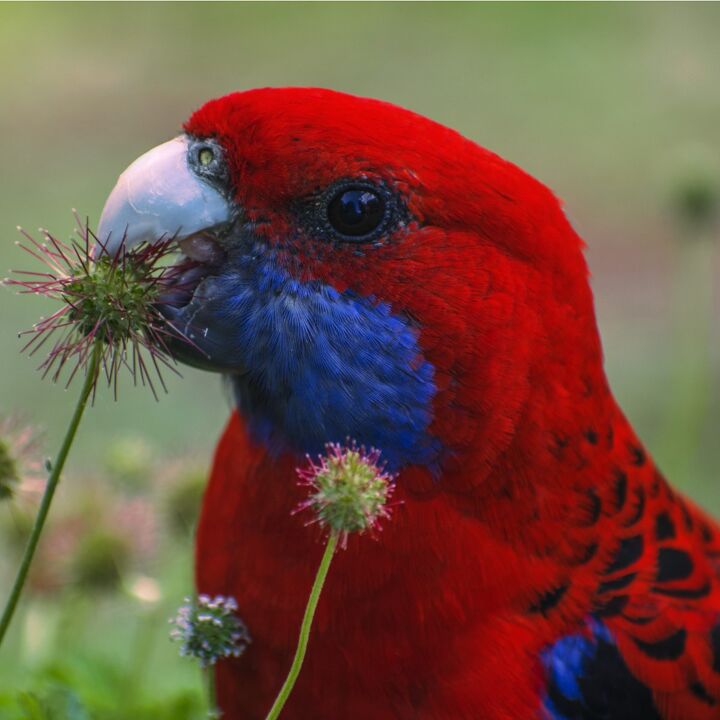
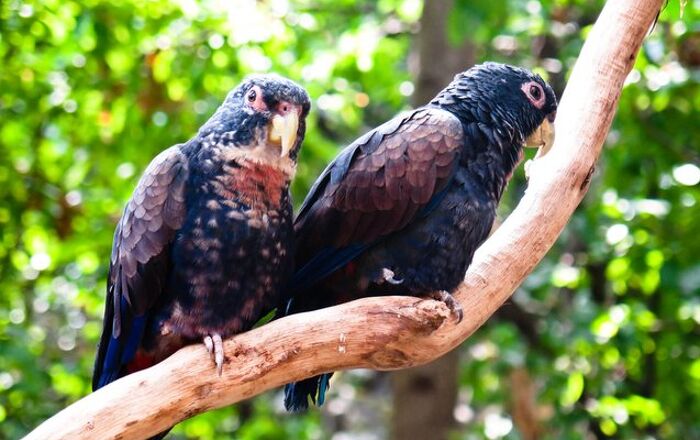
One of their biggest points of pride and a major reason behind the popularity of the Crimson Rosella is their impressive appearance. Their body is mostly a deep, crimson red. Their chin and tail feathers are a rich and bright purple, which is also seen on the primary flight feathers. The wing and back feathers are mostly black and bordered with red, creating an interesting pattern. Males and females have the same color, and their only difference is size – males can be noticeably larger. In aviculture, breeders created a few color mutations. These include the blue, yellow and white color of plumage.
Young birds have a lot of green feathers- until they reach maturity and the crimson red takes over.
Care and Feeding
To mimic the varied diet of a Rosella in the wild, offer your pet a mix of fruit and vegetables. Cucumber, kale, sweet potato, apples, mangoes and many more are a good choice. Reinforce this with commercial pet parrot food, such as seed mixes or pellets.
Having enough room for movement is essential for a Crimson Rosella. They are usually kept in an aviary or a bird room, especially since they respond well to the company of similarly-sized parrots. Another aspect of proper care is bathing. Offer bathing dishes or regular showers to help keep their hygiene up to par. In the wild, Crimson Rosella loves to roll around in the dirt. A good substitute for this is a dish with a bit of clean sand.
Health and Common Conditions
Crimson Rosella is hardy and adapts easily. Their lifespan of 25 years or more is easily achievable with a bit of care and company from their owner. The most important thing they’ll need from you is clean living conditions. Bad hygiene can cause intestinal worms and fungal infections. Rasping and difficult breathing, lethargy and loss of appetite are major signs of this. Of course, you can easily prevent this with timely care and optimal living conditions.
Water-soluble vitamins for parrots are a great addition to your pet’s diet.
Personality & Behavior
These little parrots initially come off as shy, but once they get to know you, you’re in for a treat. Crimson Rosella is sweet, playful, and very inquisitive. Offer them of parrot toys, perches, and ropes, as well as free flight around the house. They can have a temperament though, so watch your fingers if they are not in the mood for cuddling – you could get a nibble. All in all, Crimson Rosella makes a great pet- whether as an only parrot in the home or in the aviary with other feathery friends.
Photo credit: Uwe Bergwitz/Shutterstock; Rosa Jay/Shutterstock; Nomadic Exposure/Shutterstock