Black Capped Lory General Info
We’re ready to bet that you haven’t seen a bird as extravagant and unique as the Black Capped Lory. With an astonishing display of bold and exotic colors and an intelligent and fun personality to boot, these tropical parrots have been rising in popularity with each year. They might require a little bit more patience than some of the more common pet parrots, but with a little bit of getting used to, you will quickly get attached to your rare and colorful pet. You can expect to get a loyal and affectionate companion in return for your care and effort.
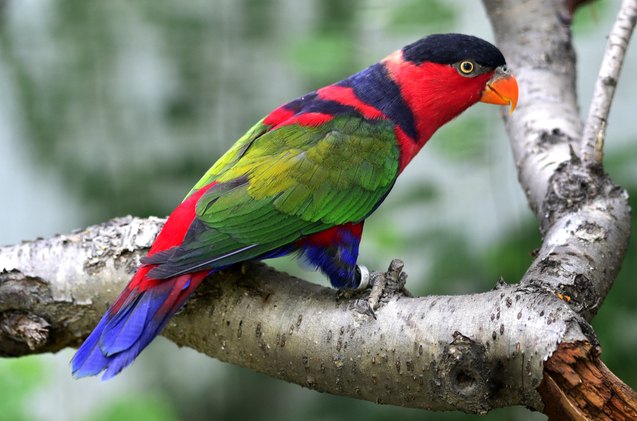
One of New Guinea’s most colorful species, the plumage of the Black Capped Lory is definitely one of a kind.
Native Region/Natural Habitat
These interesting birds originate from New Guinea. The densest populations are found in the Western parts and on the nearby smaller islands as well. They are thriving in the island’s primary forests as well as the surrounding woodlands. They are most often seen in small flocks of 10 birds and are always near fresh water sources and food in the rainforest. During their breeding season, the individual pairs separate from the group to nest and raise their young.
Overall Description
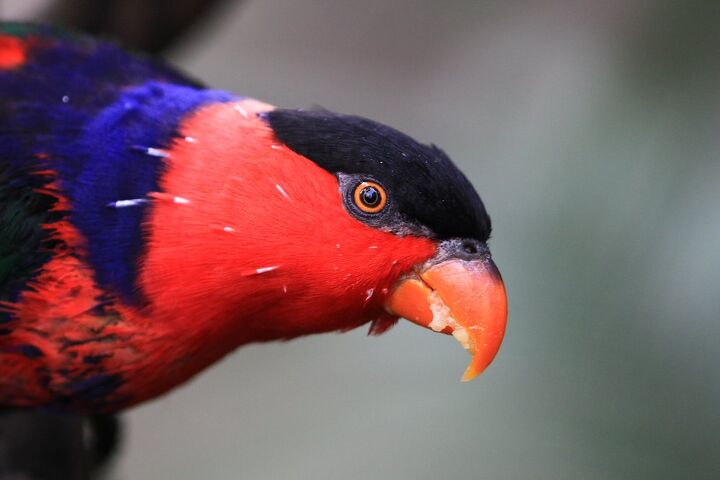
Most lories share a lot of physical similarities, but they are all different and unique when it comes to the colorations. You can easily spot a lory by their stocky build, prominent chest and nape, unique curved beak and the iconic black stripe around the eyes. Adult Black Capped lories can reach an average length of 12 inches (31 centimeters) and can weigh up to ½ pound (260 grams). They are one of larger of medium-sized birds, and, as such, they will require a lot of room. Lories are smart and energetic and have a tendency to play, explore and goof around. So make sure they have the time to move about the house, as well.
Speech and Sounds
Black capped lories have a balanced level of noise, and with a little bit of patience, you’ll quickly get used to it. Even though their natural calls are loud, noisy and similar to a scream, they are not so frequent and won’t be a problem. On the other hand, these parrots can become quite the talkers with just a little training. They shouldn’t find it too difficult to learn quite a few basic phrases and mimic the common household sounds. In any case, keeping a pet lory in a flat might not be ideal- keep that in mind if you live in an apartment building.
Colors
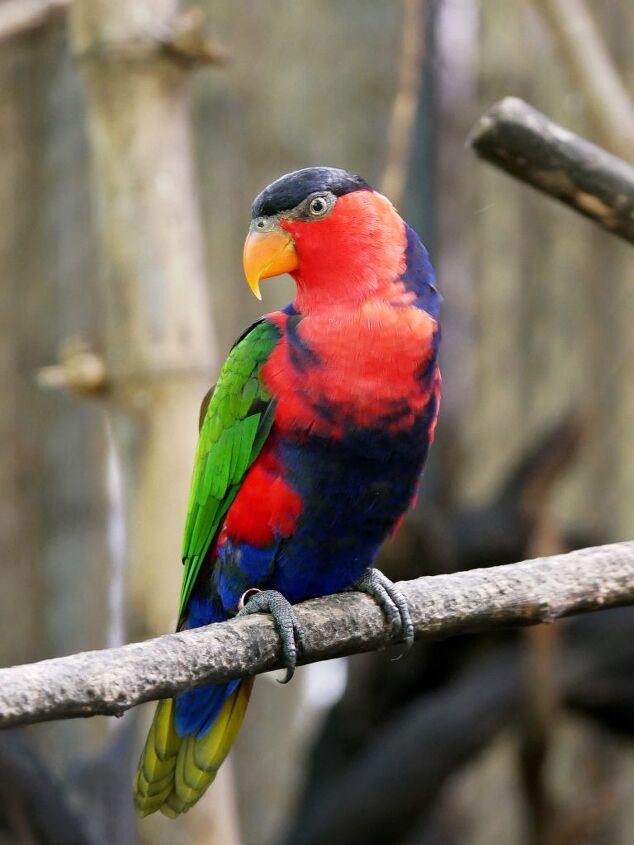
Black Capped Lory is quite different than most other parrots you might come across. As you’ve might have noticed, it is all thanks to their intricate color combinations and strikingly fresh tones. The body is mostly bright red and this bold color is first to catch your eye. Starting from the eyes, the top of the head is black – a detail that gives them their name. Belly (and chest in some subspecies) is dark blue, getting lighter and eventually becoming very light, bright blue on the thighs and underneath the tail. The wings are green, while the nape and back are dark, purplish blue. This extraordinary combination of colors definitely leaves a long-lasting impression.
New Guinea is a place full of wonders and unique species. The strikingly colorful plumage of the Black Capped Lory is proof enough.
Care and Feeding
In the wild, the basis of their diet consists of fruits, pollen, insects, seeds, tree blossoms and sometimes even agricultural crops. This rich diet is best reproduced with a commercial seed or pellet based mix that is designed just for lories. They consist of nutritious foods such as oats, millet, sunflower, and other seeds. You should also add a regular dose of fresh fruits and green vegetables. Keep in mind that Black Capped lories like to chew on things and sharpen their powerful beaks. For this, you can get a cuttlebone or a natural, parrot-safe branch that will serve as both a perch and a chewing toy.
Health and Common Conditions
These robust and stocky parrots are strong and endure most common conditions with ease. Provided you prevent basic threats like too high or too low temperatures, drafty and damp places, but also neglect in the form of lack of social interaction, you will experience little to no troubles with your pet’s health. They have a healthy lifespan of 25 or more years, and they can become quite a dependable companion. This makes them a good choice for older people with the ability to look after their pet.
Lories are stocky and robustly built parrots. They’re generally healthy and adapt easily.
Personality & Behavior
Black Capped Lories are very smart and energetic birds. They become loyal companions and love to be handled by their owners. To satisfy their energetic and playful personality, make sure to allow for enough time for playing during the day. For other times, a good supply of parrot toys should be enough. Their affectionate nature and love of handling make them quite the cuddly parrot and a perfect choice for any owner who loves this. In general, their fun, smart, affectionate and often clownish nature makes them a loved pet worldwide.
Photo credit: Wang LiQiang/Shutterstock; seaonweb/Shutterstock; Marut Sayannikroth/Shutterstock