Blue Winged Parrotlet General Info
If you’re looking for a new feathery friend that will introduce you to a whirlwind of fun, then look no further than the Blue Winged parrotlet. These tiny and endlessly cute birds will open up a whole new look on pet parrots and your relationship with them. Blue Winged Parrotlets are small, easy to care for, cuddly, and incredibly funny. Needless to say, these little feathered goofs will become a favorite in the house in no time. Don’t be fooled by their tiny size – they are full of energy and can be quite mischievous.
There’s a whole lot of fun and energy in such a little bird. Blue Winged Parrotlets are definitely great pets.
Native Region/Natural Habitat
The natural home of these little parrots is in a large part of South America. Most of the countries there have them as a common regional parrot. Their populations are quite stable and best observed in the Amazon River basin. Most commonly seen in savannahs, woodland and tropical forest edge, these parrotlets adapted successfully and are a thriving breed. They were also one of the first parrots to be taken to Europe from South America. They were captured and transported to Portugal as early as 1511. They were called “toim” by the indigenous Tupi Indians.
Overall Description
The first thing you’ll get to notice is how tiny these birds actually are. The nickname “pocket parrots” definitely makes sense. The parrotlet family of birds is very closely related and there is little to no differences in general physical appearance. The adults reach an average length of just 5 inches (12 centimeters) and weigh only 1 ounce (28 grams) on average. These numbers are uncommon and might offer a different experience compared to other, bigger parrot. Still, exercise is important, and a roomy cage (in proportion to the bird’s size) is a must.
Speech and Sounds
Good news for all of you apartment people. The noise levels are noticeably low when it comes to parrotlets, thanks to their size for the most part. Blue Winged Parrotlets have squeaky, piercing natural calls, but the loudness just isn’t too high. They might repeat a couple of simple words in a cartoonish and mumbled way, giving it a healthy dose of hilariousness. This might sound like not too fun, but trust us, a Blue Winged parrotlet will definitely find other ways to bring a lot of entertainment into your home.
Colors
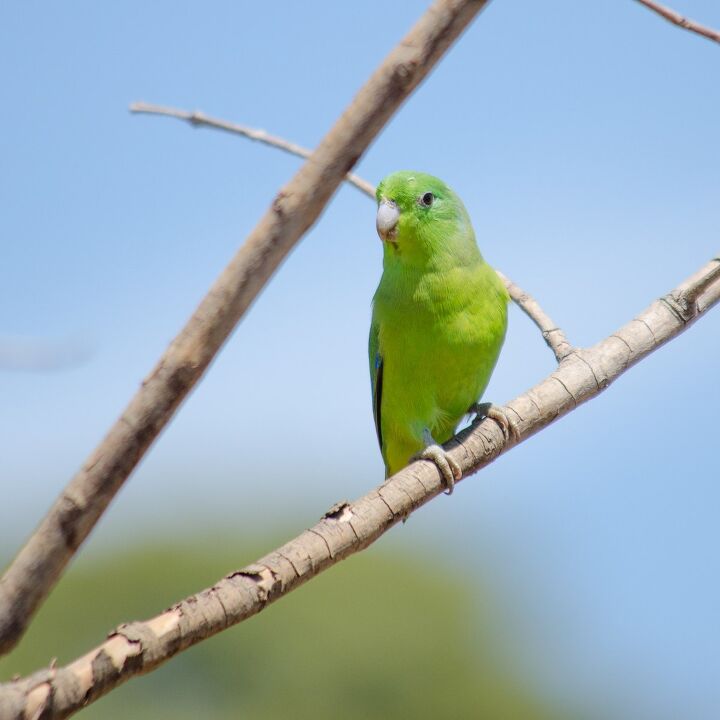
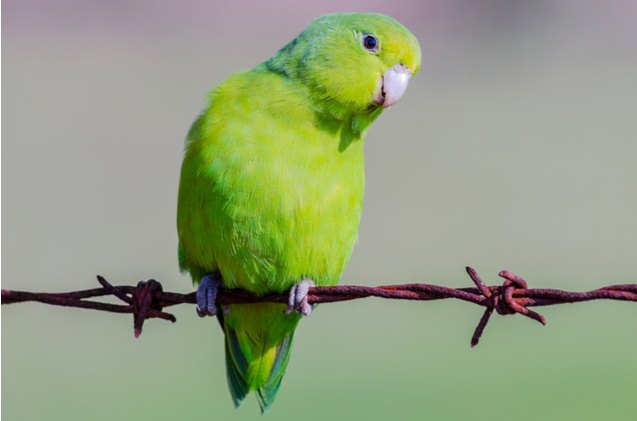
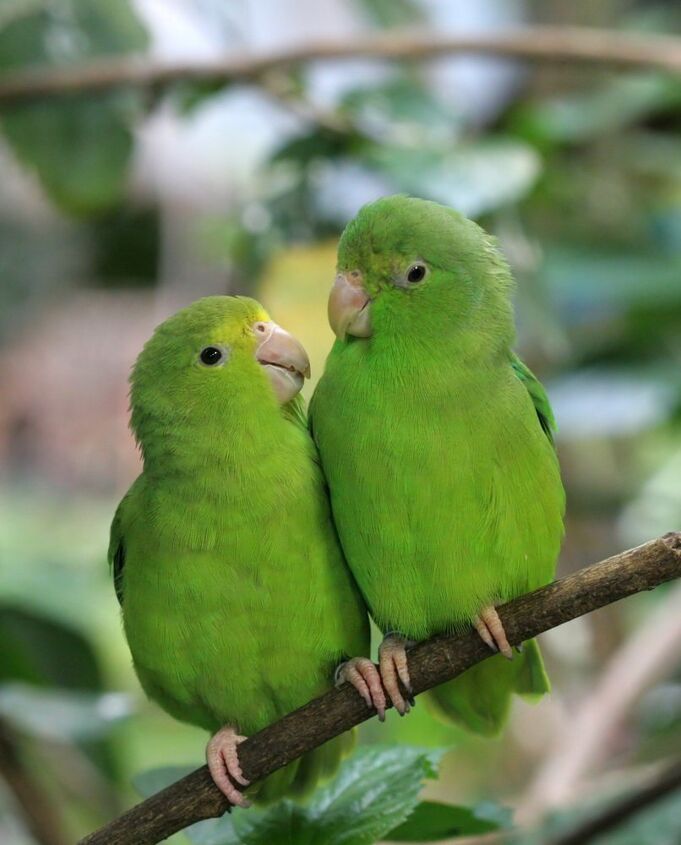
The Blue Winged parrotlet’s name is a little giveaway, but no matter – these are some cute and pretty birds. Although the colors are simple and few, and quite similar to other parrotlet breeds, their unique details make them stand out and captivate with their simple elegant looks. The body is almost entirely light green, with the back darker, and the front considerably lighter. The wings have several deep blue flight feathers and small patches on top. This is a sexually dimorphic breed, and the females have no blue colors. This fact makes them easily confused with the Green Rumped parrotlet. Nonetheless, if you’re looking for a simple and pretty bird without too many details, then these tiny gems are just the right choice.
Blue Winged parrotlets are certainly charming and pretty, even if they’re simple and similar to their cousins.
Care and Feeding
Their natural diet consists mainly of small insects, seeds, crops, and fruits. As a good start of a balanced diet for your pet, you can look for a commercial parrotlet seed mix. This contains all the needed goodies like the millet, canary grass seeds, weed seeds, wheat, and oats. All of these have needed proteins and nutrients your pet need. You should also add a regular dose of fresh fruits and vegetables for added vitamins. Due to the size of your pet, the showers and big baths are out of the picture, so you’ll have to rely on spray baths for good hygiene.
Health and Common Conditions
Small size doesn’t always signify fragile health. Blue Winged Parrotlets are known for their great ability to adapt. Of course, they’ll feel some things much easier than bigger birds, so take care to ensure optimal temperature (not too hot and not too cold), to eliminate draft, and to offer them a lot of interaction and natural sunlight. These friendly little birds absolutely love and need cuddling, playing and goofing around. Just be careful when they’re out and about – pay special attention not to squish them by accident.
Parrotlets are one of the friendliest, cuddliest and most playful pet parrots you can get.
Personality & Behavior
The Blue Winged parrotlet is the perfect pet parrot on so many different levels. Their loving and friendly personality has traits to suit every owner. They can be quite goofy and mischievous little explorers, and they won’t hesitate to snuggle up to you in bed or explore the realm under the blankets. They also adore scratches and cuddles. This great mix of positive traits makes these parrotlets a popular pet with singles and young people. They even find their rightful place in family settings, displaying their comical persona to the entire household. Whatever the case, a Blue Winged parrotlet is more than just a pet – it’s a friend and an entertainer.
Photo credit: Rafael Martos Martins/Shutterstock; Kevin H Knuth/Shutterstock; Joab Souza/Shutterstock