Cape Parrot General Info
The Cape parrot, or Levaillant’s parrot as it is sometimes called, is an exotic and rare parrot breed which captivates with its beautiful looks and temperate personality. One of Africa’s prettiest avians, this rare bird is an all-around great family pet – if you can get one, that is. Their threatened status, protection against illegal trade and a very small habitat, all make them one of the rarest pet parrots in the world. Only around a hundred birds are held as pets.
Cape parrots are rare in captivity, but make great pets. Acquiring one is certainly worth the wait and the effort.
Native Region/Natural Habitat
These parrots occupy some of the smallest regions in Africa, compared to any other parrot species. They are endemic only to South Africa and live in the popular Afromontane forests and woodlands near the South African coastline. These moderate altitude forests are largely full of Yellowwood trees and occur at heights of around 1000 meters above sea level. They are a vulnerable species and are declining rapidly. Stricter laws and various volunteer actions are helping preserve Cape parrots and maintain steady populations despite heavy logging and loss of habitat.
Overall Description
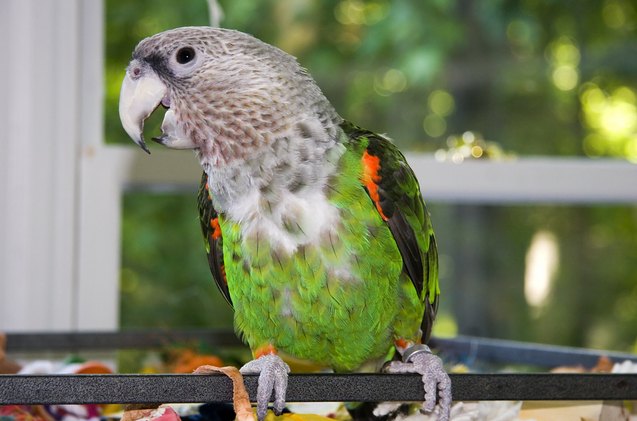
This robust, well-defined parrot is fairly large and has a muscular build. With their short tails and rounded wings, they share some similarities with African Grey parrots. The adults are 13 inches (34 centimeters) long on average, with quite a weight of 10 to 14 ounces (300 to 400 grams). One of the defining features of Cape parrots is the very large and powerful, sharply curved beak, which they use for cracking various nuts in the wild. Females have a single feature that sets them apart from males – a single orange patch on the forehead.
Speech and Sounds
Like a lot of parrots originating in Africa, the Cape parrot is also great talkers. Some even compared their ability with those of the African Greys, which says a lot. Besides the great talking ability, they do have some loud natural calls. But don’t worry, because Cape parrots are generally calm and are not often heard. Most of the time they are content with chatting, either quietly to themselves, or with you. This makes them suitable for apartment settings, but due to their large size and wingspan, they will still need a lot of space.
Colors
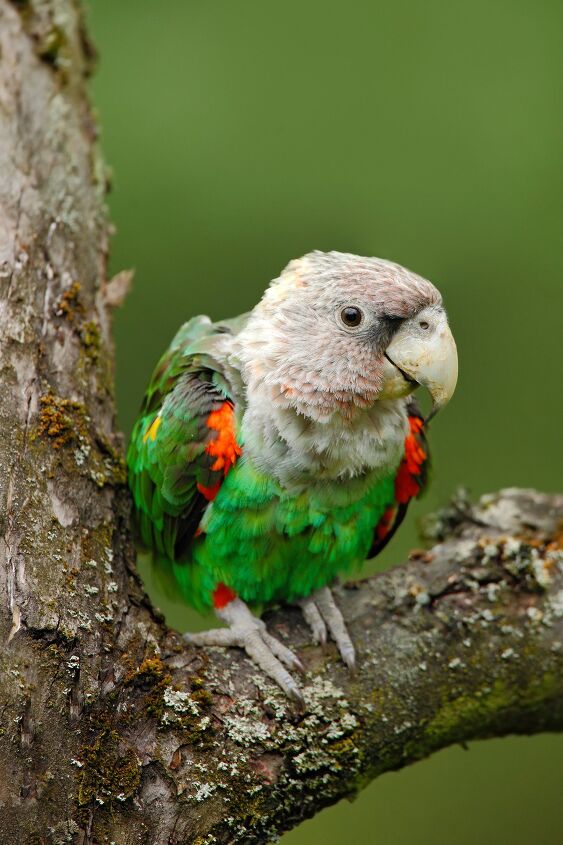
With a combination of a powerful, noble build and a colorful plumage, the Cape parrot certainly captivates with its general appearance. The dominant color is green, and it covers the belly, thighs and center wings. The head, nape, and chest are gray with brown speckles all over. The upper wings are black with the very front edge being bright orange. The flight feathers are gray. Other cute details are the two orange bands on their ankles – like little socks. With this wonderful combination of colors, the little details and their large cream colored beaks, the Cape parrots are definitely pretty birds!
Full of well placed, tiny details, the unique Cape parrots are a rare and beautiful sight.
Care and Feeding
In the wild they evolved to feed on a variety of tree blossoms, fruits, and nuts, utilizing their disproportionately large beaks to crack open all those exotic foods. In captivity, they need a balanced diet which is best compared to that of the African Grey. Specialized seed mixes, fresh fruits, and veggies, as well as cooked rice and chicken, should be the staple of the diet. A cuttlebone is a good choice for birds with large and powerful beaks. It is a natural way to blunt the ends, and certainly a better option than your furniture.
Health and Common Conditions
You can be sure that the health of these parrots is just like their physique – strong and sturdy. These healthy birds reach their lifespan of up to 60 years without much trouble, and they have the lowest chances of skin and feather diseases. With enough basic care and interaction, you will have no trouble keeping your pet healthy. Ensure a lot of exercise – these are large, strong birds with a pretty big wingspan and a lot of energy to spend.
Cape parrots have the lowest chances of feather loss amongst the common parrot breeds.
Personality & Behavior
Cape parrots are prized for their lovely personality. There’s so much to love about these intelligent birds- they are cuddly, playful and all-around gentle giants. These birds have all the desirable pet bird traits. Whether they wish to cuddle, play on their own, talk or goof around, they will do it all in relative silence and with a calm behavior. Pair this with their good talking ability and big intelligence, and you got a wonderful pet and a great friend.
Photo credit: Jill Lang/Shutterstock; Ondrej Prosicky/Shutterstock