Tibetan Terrier Basics
Some folks like a short haired dog with minimal grooming requirements and a slick appearance. For others, that’s simply not enough. They want a dog with some shag. A dog that can feel like a blanket when you get close. It’s no mystery why. It’s pretty hard to resist this shaggy dog! The Tibetan Terrier is an intelligent and mischievous dog that will be fiercely loyal to its family. These compact canines have been selectively bred for the role of companionship for centuries, and they truly excel as family pets. Sweet, lively, and exceptionally affectionate with their owners, Tibetan Terriers will fit in most families. Their innate ability to sense their owner’s moods and adapt to them makes them a perfect match for most people. These are pups who truly care about their humans and know how to read them.
Despite the word ‘terrier’ in its name, this cute dog doesn’t belong to the group nor does he show any of their typical traits. Tibetan Terrier got its name for the similarity in size, but these dogs won’t be hyperactive, have high prey drive, or even the tenacity commonly associated with terriers. In fact, these shaggy pooches are more o the mellow and easy-going side of the spectrum. They provide the adorable aesthetics of a terrier with none of the personality drawbacks.
The soft and double-coated hair of the Tibetan Terrier is thought to be hypoallergenic, so these dogs could be a good choice for people with mild dog allergies despite their shag. Similarly, the activity levels and wonderful personality make this breed popular with seniors, singles, and families with older children. Not sure if the Tibetan Terrier is the right dog for your own family? Read on to learn more about them before you decide. We will provide everything that you could possibly want to know about the Tibetan Terrier. All you need to do is keep your eyes glued to this page. All will be revealed!
The Tibetan Terrier is an intelligent and mischievous dog that will be dedicated to its family.
Origin
Bred and raised in Tibetan monasteries by Buddhist monks (aka ‘lamas’) almost 2,000 years ago. Thatnks to these spiritual beginnings, this breed is also known as the “Holy Dogs of Tibet.” While the Tibetan Terrier originated in the lamaseries of this historical region, it wasn’t for long that they remained companions to the monks alone. The shaggy and friendly dogs were seen as good luck charms of sorts, and were popular with nomads and herdsmen, as the alert little pups would bark to alert their owners if anything’s amiss. Due to their status, Tibetan Terriers were only gifted and never sold. They were considered too special for anything less. The puppies of the breed could be given in return for services or as a sign of respect, especially to officials. It’s through this rich tradition of holy gifts that the Tibetan Terrier grew in stature to become one of the world’s most popular breeds of dog.
Dr. Agnes R. H. Greig, an English doctor, got a Tibetan Terrier puppy from a Tibetan nobleman whose wife she saved. This was a rare honour and the doctor was enamoured by the charming little dogs. So much so that she got a mate for her new pet and immediately started breeding them. This all happened in 1920s India, where the breed’s standard was first created a decade later. From there, the rest is history. The British Kennel Club recognized the breed in 1937, and the American Kennel Club did the same in 1973. It’s not often that the history of a dog breed is so widely known and fascinating. However, with a dog as legendary as the Tibetan Terrier, an incredible history and reputation proceeds them.
Pedigree
Recent DNA analysis has found that the Tibetan Terrier is descended from the most ancient dog breeds. As for the nitty gritty of how the breed actually came to be, the ‘holy dog’ remains a mystery, even millennia after its creation. Perhaps these were magical creatures delivered from a holy source to gift the world with a divine level of cuteness. Or perhaps they were the result of a crossbreeding of a few strays who found a home in a Buddhist Temple. We’ll never know.
The Tibetan Terrier was recognized by the AKC in 1973. It has been a beloved show dog ever since.
Food / Diet
The Tibetan Terrier requires a quality diet that is going to provide the nutrition that it needs, whether it’s commercial dog food or a homemade diet. The first ingredient should always be protein, not byproducts. As well, it should include vitamins and minerals, carbohydrates, and fatty acids. These standards are usually met by high-quality dry food for dogs, which offers complete nutrition in a convenient form. For a Tibetan Terrier, choose kibble that suits their age (puppy, adult, senior) size, and activity levels.
As long as their diet is based on high-grade ingredients and offers all the nutrients they need, Tibetan Terriers won’t need much food to thrive. For a dog of their size, most manufacturers recommend feeding about 2 cups of kibble, but the exact amount will vary. Stick to the feeding guide from the bag, as these dogs can become obese in no time- and that could influence their health.
As always it’s important to consult with a veterinarian before creating or changing any dog’s diet. While pet websites and dog food manufacturers may provide useful feeding guidelines, they should always be treated as guidelines and not gospel. All dogs have different needs, after all. Only a vet who is familiar with your specific dog is qualified to access the dietary needs of your personal pup. So while you should absolutely do your research and find a healthy recommended diet like the one outlined above, make sure to check in with a vet before permanently committing to it.
Gentle and loyal, the Tibetan Terrier makes a great watchdog and is willing to play around in the yard or just nap at your feet.
Training
Because it is so incredibly intelligent, Tibetan Terriers are an ideal breed for training. Just make sure you know what you’re doing, as the dog may use its smarts to get the upper hand and train you instead! These pups are genuinely clever enough to pull off that switcheroo during training. There are a few things in mind when training this breed. Never use negative methods of training, as Tibetan Terriers will ignore you or rebel against the negative methods of training without modifying its behavior (and they are right to do so given that these techniques are closer to abuse than training). You should use positive methods of training, such as treats, affection and play in order to teach obedience.
For training to be successful, you’ll also have to be completely consistent throughout the process. Make sure that your Tibetan Terrier knows what it has to do in order to be rewarded, and don’t let your dog sucker you into giving it a reward without doing the work. They will attempt that tricky behaviour. When you keep your behavior consistent and give your dog achievable objectives every day, your Tibetan Terrier will master the finer points of training. Persistence and patience are to of the most important qualities that any dog trainer can have. Putting in the work and effort will pay off in a big way given that properly trained Tibetan Terriers are amongst the most loving and adorable in the world.
Weight
Both male and female Tibetan Terriers weigh 18 to 30 pounds.
Temperament / Behavior
The Tibetan Terrier is a companion dog, which means it thrives on the presence of people. If you leave this dog alone for too long, it will become unhappy, which can lead to behavioral problems. These pups thrive on being social. They can get up to trouble when left to their own devices.
The Tibetan Terrier is extremely trainable, friendly, outgoing, and adaptable to many living environments. But sometimes, this dog is too smart for its own good. Tibetan Terriers have been known to figure out how to unlock its own crates, how to find its way out of locked rooms, and any number of precocious practices. These dogs are known to outsmart their owners, so never take their intelligence for granted.
It’s important to note that the breed is extremely sensitive, so it’s important to develop a sense of familiarity slowly and carefully. Don’t expect too much from your dog during its first week or so with you. It will take time to warm up to you. Tibetan Terriers mature more slowly than other dogs, so training should continue well past its puppy stage and into adulthood. With enough care and TLC, your dog will come to trust you completely and learn how to behave appropriately. Once they make a connection with their humans, they bond for life.
Common Health Problems
The Tibetan Terrier has thrived for centuries and this speaks well for its overall health. But there are a few possible hereditary problems are known to exist in the breed, which include hip dysplasia, Progressive Retinal Atrophy and lens luxation.
Because of this genetic propensity for eye ailments, anyone who intends to breed a Tibetan Terrier should make sure to have the dog’s eyes checked early and often for signs of potential genetic disorders. It’s always important to maintain regularly scheduled check ups with your vet to ensure that any potential health issues can be identified and treated as early as possible.
Life Expectancy
Tibetan Terriers have a life expectancy of 15 to 17 years.
Exercise Requirements
No matter where you live, your Tibetan Terrier needs to get some form of daily exercise. One walk a day isn’t sufficient for this breed. It needs to get out at least twice a day. It really comes in handy if you have a large and secure yard that your dog can run around in. The important thing to remember is that your Tibetan Terrier needs to release its pent up energy, otherwise the dog may become destructive. They need to burn off all of their excess energy or that energy will be spent in ways that you won’t appreciate.
While walking your Tibetan Terrier, make sure it is always on a leash. Thanks to this dog’s mischievous streak, it may try to escape and explore the great outdoors. And if you chase after it, it’s all a big game to this pooch. They will take you on an adventure that you don’t want if you aren’t careful.
The Tibetan Terrier is extremely trainable, friendly, outgoing, and adaptable to many living environments.
Recognized Clubs
The American Kennel Club says this about the breed: “The hardy Tibetan Terrier is a breed built to withstand the extreme climate and difficult terrain of its home country Tibet. Medium-sized, yet powerfully built and very agile, they possess large, flat, round feet that produce a snowshoe effect and provide traction in heavy snow.”
Coat
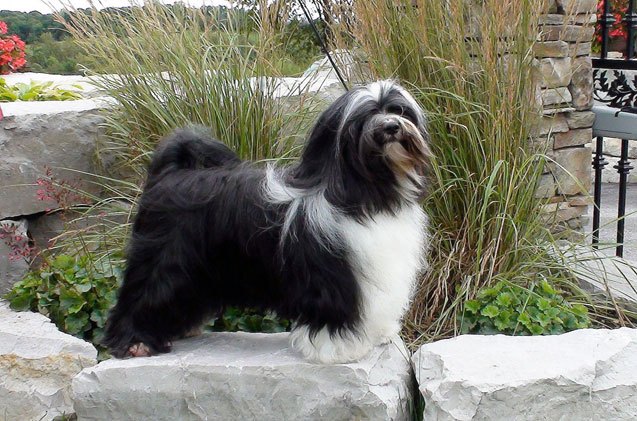
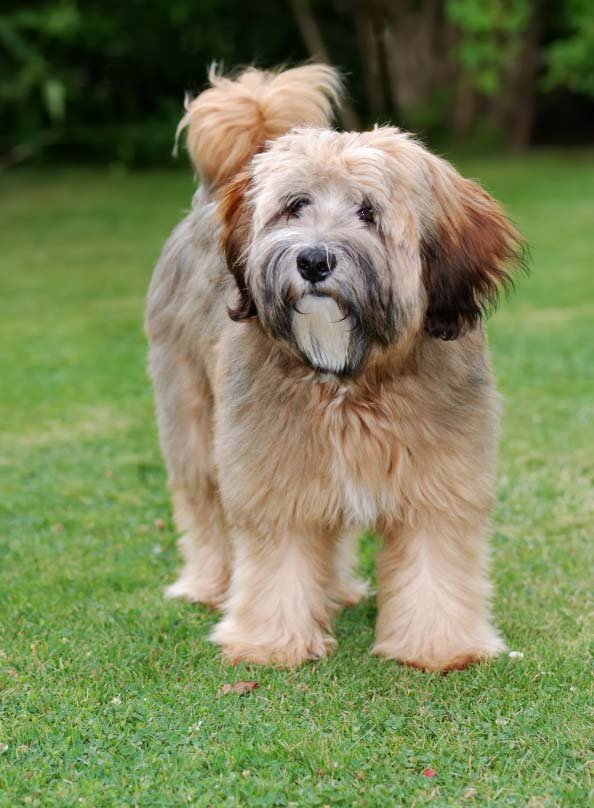
The Tibetan Terrier has two coats – an inner coat that’s short and smooth, and a long, straight outer coat. The coat comes in a variety of colors such as gray, golden, black or cream. However, liver and chocolate are not recognized colors of this breed.
As the Tibetan Terrier has a long and beautiful coat, it requires regular grooming. Its long coat needs to be groomed regularly including daily brushing.
Puppies
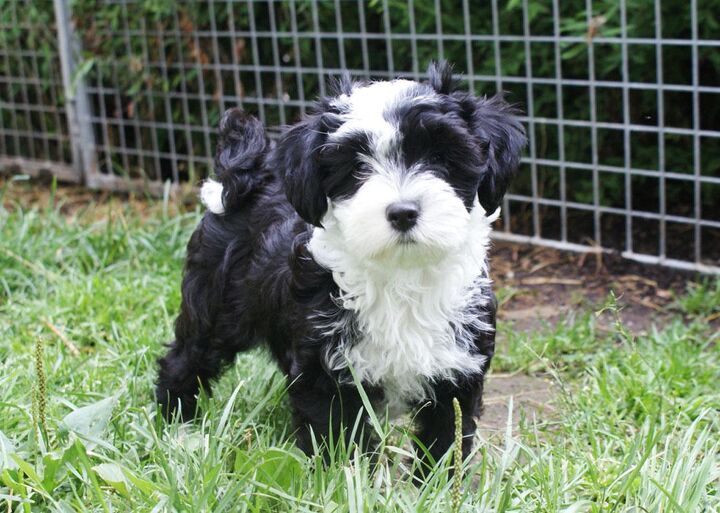
It may take some time for your Tibetan Terrier puppy to warm up and trust you. But don’t worry – with enough time, care and patience, this dog will soon feel like part of the family and become loyal and obedient.