From their distinct short-legged body and fluffy coat to their territoriality and independence, Chorgis are quite distinct in the world of hybrid dog breeds – and will need experienced owners.
Chorgi Basics
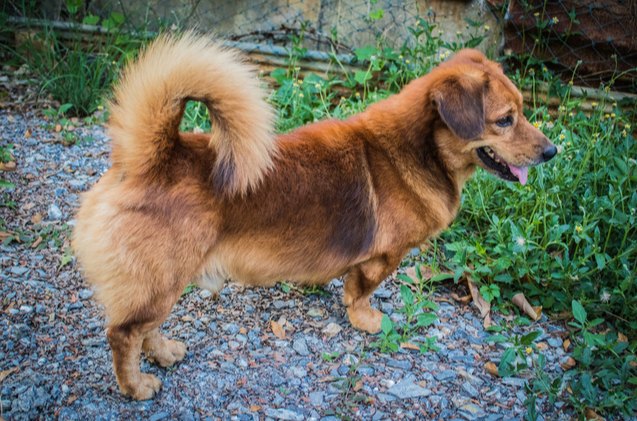
Floof with a big attitude – that’s the best way to describe a Chorgi. A mix between a Welsh Corgi and a Chow Chow, this rare crossbreed has some really unique traits. From their distinct short-legged body and fluffy coat to their territoriality and independence, Chorgis are quite distinct in the world of hybrid dog breeds – and will need experienced owners. They are high-maintenance when it comes to grooming (shedding can get really serious) and need early training and socialization to prevent behavioral issues such as overt defensiveness, resource guarding, and distrust of strangers.
Even so, if you put in the time and effort into training and socialization, having a Chorgi companion is quite rewarding. Not only do they make great pets for singles, couples, and active seniors, but they are also great little watchdogs. With their exercise needs met, they can adapt to apartment living as well as live in a house with a big yard.
Origin
No one can say for certain what’s the origin of the Chorgi. Some Chorgis may have been bred intentionally and others are a product of “happy little accidents” when breeding between a Chow Chow and a Corgi wasn’t planned. In any case, it’s highly likely that any planned breeding happened during the peak of the designer dog craze in the 00s, but even if the Chorgi breed was developed as such during that time, they remain rare to come across. Even with the air of mystery that surrounds the breed, Chorgi’s have two purebred parents with long histories, and are a combination of the two – so you still know what you can expect to a degree.
The first mentions of Welsh Corgi-like dogs were recorded as early as 1107 AD, as it is believed they came to Wales accompanying Flemish weavers that came to these territories. At first, Welsh Corgis were bred as herding dogs or so-called “heelers”. They would nip at the legs of cattle to get them moving and were indispensable helpers on farms. Later on, they took on the role of companion dogs and pets, especially loved by royals, but their herding instincts remain to this day. On the other hand, the Chow Chow hails from China and is considered to be one of the “basal breeds”, e.g. one of the breeds that predate modern dog breeds. They truly deserve the title of an ancient breed as the first recorded mentions of Chow Chows date to the Han dynasty which ruled in the period of 206 BC to 220 AD. Some even believe that Chow Chow is the oldest breed that still exists today! Either way, it’s undeniable that the parental breeds of the Chorgi have an impressive history and tradition behind them, so their offspring definitely has a lot of expectations to live up to.
Pedigree
You might think that coming from two established breeds with a long history would mean that the Chorgi will have an impressive pedigree to boast, but it’s actually the opposite. An official pedigree is given to dogs recognized by the official canine clubs such as the AKC (which doesn’t recognize any mix breeds or designer dogs), and it serves to record the lineage of a puppy, noting every other dog on their family tree as a way to confirm the purity of the breed and the exemplary genes of their ancestors. Needless to say, a Chorgy puppy won’t have pedigree papers, as most of them are found through adoption, as most litters are unplanned. Even in cases where the breeding was intentional, a reputable breeder could only show you pedigree papers of the parents, and won’t give you any official papers that add your puppy to the family tree.
In addition to the papers, pedigree also means that a dog adheres to certain breed standards – for instance, a certain body shape or allowed coat color possibilities. And when it comes to first-generation mixes, such as Chorgi, expecting any traits in a puppy to be predisposed is impossible! When crossbreeding two purebreds, the results are always surprising, in terms that you can’t guarantee which of the parent’s genes will be more dominant in the litter. Sometimes, the puppies will look like a Welsh Corgi, but have a fluffier fur and sport the distinct Chow Chow blue tongue, and in other cases, they won’t have the short-legged look of the Corgi but will have the same head shape. The only thing you can expect is – the unexpected!
Food / Diet
To make sure your Chorgi stays healthy and has enough energy to go about the day, you’ll need to pay attention to what you’re feeding them. A complete and balanced diet is the foundation for their wellbeing, so don’t grab the first pet food bag you come across and call it a day – carefully check the formula to ensure it is suitable for your pet’s unique needs. If you opt for dry dog food, as most do, make sure it is made from wholesome, natural ingredients, with meat being the first ingredient – protein-packed formulas are also great for the Chorgi. Avoid foods with fillers such as unhealthy carbs (corn, wheat, soy, etc), meat meal and by-products, and artificial flavors, colors, or preservatives.
Thanks to his parents’ genes, the Chorgi is prone to obesity as both the Chow Chow and the Chorgi gain weight easily, and it can seriously affect their health and quality of life. Instead of free-feeding your pet, create a routine with one or two daily meals, sticking within the recommended portion size (either served at once or split into two meals). Don’t overindulge them with treats, and when giving out occasional snacks or training, use healthy low-calorie treat alternatives.
Training
Training and socialization are essential for the Chorgi – it will help remedy some behavioral issues they are prone to and ensure your puppy grows into a well-behaved, friendly dog. These dogs tend to be very territorial and can have a stubborn streak, so the way you approach training will play an important role in the process. First, you should establish yourself as an “alpha” in the relationship, with an assertive and firm attitude – they have to know they are not the boss of you, otherwise they will exploit it. Next, rely on positive reinforcement techniques, using praise and treats to motivate your dog to repeat wanted behaviors. Punishing them when they do something they shouldn’t is cruel and will damage your relationship, plus it won’t have any effect but the opposite one.
Chorgis are very distrustful of strangers, which makes them good watchdogs, but it can also be a hindrance when they start barking at every “suspicious” person from your living room window, or even worse, develop some aggressive behaviors and start nipping at strangers. To remedy this, socialize them from a young age, making sure they are exposed to different people and environments, giving them the chance to get used to new situations and grow into a more easy-going dog, despite their territorial nature.
Weight
While the Corgi is a small breed dog, the Chow Chow falls into the medium-sized breed category, so there can be a big difference in the eventual size of your Chorgi. The expected weight for this breed ranges from 20 to 60 pounds, depending on which parent they favor more – if they take up after Corgi, they will be closer to the lower end of the weight range, and if they look more like a Chow Chow, you can expect them to get bigger as they grow.
Temperament / Behavior
Put together the Corgi’s playfulness and love for mischief and the Chow Chow’s aloof and independent spirit, and you get a pooch with a big attitude and a big heart. These dogs are not for everyone – they don’t usually mix well with kids, and need a dedicated owner that has patience and appreciates their unique personalities. They are fiercely loyal and protective of their families, which makes them great watchdogs and companions. Affectionate with people that are close to them, Chorgis are playful and can even be a bit goofy – you’ll never have a boring day with your Chorgi, that’s for sure.
Common Health Problems
Even though mixed breed dogs have a reputation of being healthier than purebred dogs, that doesn’t mean that the Chorgi can’t inherit a predisposition for certain health issues from either one of their parents. This includes hip and elbow dysplasia, intervertebral disc disease (especially if they have the Corgi body type), patellar luxation, eye issues, and obesity. Take your Chorgi to regular vet checkups in order to catch any of these issues on time, if they appear – it will make treatment easier and more effective. Overall, Chorgis are considered a stout and robust breed, if they are provided with proper care throughout their life.
While the Chorgi remains too rare for any data to be amassed about their longevity, we can estimate their lifespan based on their parents’ life expectancy. This would put the Chorgi’s life expectancy anywhere from 9 to 15 years. A healthy diet, plenty of exercise, and regular vet visit can go a long way in helping you ensure your dog is closer to the higher number of that range.
Exercise Requirements
Although undeniably vivacious, Chorgi is moderately active when compared with some large or working breeds. They will need around 60 minutes of exercise a day, which includes long walks, hiking, playing in the dog park, or chasing after a Frisbee in your backyard – it’s up to you to fit the recommended exercise into activities you know your pet enjoys. Chorgis are also quite intelligent, so don’t forget about mental exercise, either – lest they start thinking up ways to entertain themselves. Offer puzzle toys or interactive toys to keep them occupied and hone their skills.
Recognized Clubs
As a mixed breed dog, the Chorgi is not recognized by any official canine clubs or organizations, including the American Kennel Club.
Coat
There's no sugar-coating it – Chorgis are heavy shedders. With both the Chow Chow and the Welsh Corgi being big shedders, it’s only natural that their mixed offspring will be the same. Their coat might be a dense, shorter coat like the Corgi’s or a fluffy, lion-like mane that Chow Chow has, but in either case, be ready for daily brushing sessions and pet hair all over your furniture and house. But, hey, they do make up for it with their cuteness! In addition to brushing, you should give them a bath once a month or every two months, to keep them clean and fresh-smelling.
When it comes to coat colors, there are a few that are most common – fawn, black, red, blue, sable, or even black and tan if they take up after the Corgi.
Puppies
Due to size differences, it’s usually the Chow Chow that gives birth to the Chorgi, which puts the litter size at 4 to 7 puppies. As these are crossbreed dogs, there can be puppies that look completely different from one to another within the same litter – which is just one part of their charm. But don’t let that cuteness cloud your judgment: training and socialization are essential for Chorgis and you should start early on.
At around 8 weeks of age, you can start with the very basics, such as commands “sit” and “stay”, before progressing to potty training at around 14 weeks, and finally formal training at 6 months of age. Socialize your Chorgi with other dogs and strangers as soon as they are fit for company, which starts at around 2 to 3 months of age, depending on the puppy.