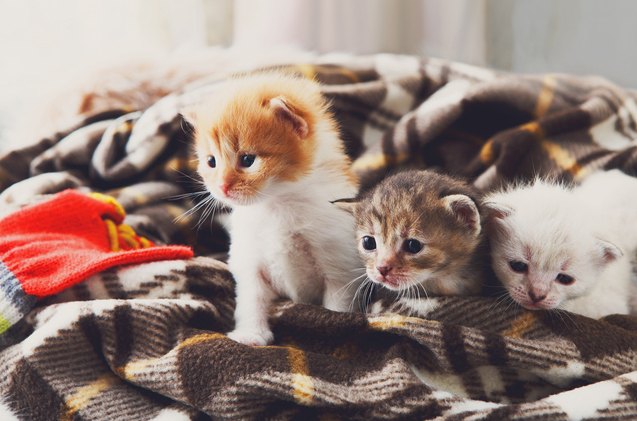
When you first bring home a kitten, you may not know if he’s starts to get sick. Be on the lookout for these common health issues in kittens.
Bringing a new kitten into your family is exciting, but you should be aware of some of the health conditions that your furbaby may be diagnosed with. In this way, as soon as you see something is amiss, you can take action to get your pet the best treatment possible.
Upper Respiratory Infection
Also known as a URI, an upper respiratory infection can be caused by bacteria or viruses like the feline herpes virus or feline calicivirus. These are spread from one cat to another when they’re in close contact or when they sneeze on each other.
Related:How to Kitten Proof Your Home
Symptoms of upper respiratory infection in kittens include sneezing, a yellow discharge from the eyes, and a runny nose. Kittens with serious infections may also have difficulty breathing and may refuse to eat.
Caught early and treated promptly, your pet can recover, but if a kitten is only a few weeks old and gets infected, the condition could turn fatal without veterinary care. Therefore, if you notice these symptoms, take your kitten to the vet as soon as possible. An emergency visit is warranted if your pet isn’t drinking or eating or is unable to breathe.
To prevent infection, there are vaccines that protect against some of the viruses responsible for URIs.
Intestinal Worms and Parasites
In addition to external parasites, such as fleas and ear mites, there are several types of intestinal worms and parasites that can affect kittens, and all of them need to be treated promptly to avoid complications.
Related:The Stages of Kitten Development
A kitten may become infected with whipworms, hookworms, or roundworms, which will live in the intestines, resulting in weight loss, diarrhea that can be bloody, and an inability to thrive.
Bring your kitten to the vet if you notice these symptoms or if you notice worms in the pet’s stool or vomit. Your vet will prescribe the appropriate deworming medications after testing a stool sample to determine what worms are present.
In addition to worms, kittens can also become infected with parasites like coccidia and giardia. Watch for symptoms like diarrhea, lack of appetite, dehydration, and vomiting.
Again, having the stool tested will allow your vet to determine what parasite is causing the symptoms so you can give the right medication to clear the infection as promptly as possible.
Feline Panleukopenia
Panleukopenia is also referred to as feline distemper. Even though it’s quite rare, it’s a dangerous virus that could kill a kitten because it attacks the immune system. It’s also challenging to treat, so knowing about it is important if you’re planning on bringing a kitten home.
Kittens with panleukopenia will be extremely ill, exhibiting symptoms that include lack of appetite, vomiting, diarrhea that can be bloody, fever, and dehydration. If your kitten exhibits these signs and is diagnosed with feline distemper, your vet may recommend isolating and hospitalizing her so she doesn’t transmit the virus as they attempt to get her better.
Treatment needs to be given as soon as possible, and it includes the use of antibiotics to try to prevent secondary infections, along with the administration of fluids to prevent dehydration.
The best way to prevent infection is to vaccinate your kitten.
A Few Final Tips
Remember, if you’re bringing home a kitten who’s a stray, quarantine her and practice good hygiene, especially if you have other cats already, until she has seen a vet and received a clean bill of health. On the other hand, if you’re adopting a kitten from a shelter, ask for her medical records, as she may have already been dewormed and vaccinated, and you’ll need to show your vet the records so s/he knows how to proceed.
Being aware of at least some of the conditions that can affect kittens is definitely helpful, but always talk to your vet for advice on how to provide your new furbaby with the best care.