Cornish Rex

Published A Few Days Ago
ADVERTISEMENT
fast facts

About Cornish Rex

Weight
6-10 lb
Physique
Curved body, huge ears
Lifespan
12-14 years
Temperament
Households with children, singles with other pets
Temperament
Active, affectionate, curious, intelligent
Comparable Breeds
Singapura, Munchkin
Height
12-14 inches
ADVERTISEMENT

Cornish Rex Breed History

The Cornish Rex breed originated from a litter of five kittens born in Bodmin Moor, Cornwall, England in 1950. One of the males, later named Kallibunker, looked like a little red and white lamb. He was covered in rows of tight curls. As he grew, he took on all the characteristics of the Cornish Rex breed. With his fine-boned, slender body, long legs, and huge ears, Kallibunker was a true mutation. He was bred back to his mother, a tortoiseshell named Serena, a pairing that produced three offspring. Two were males with curly coats. One, Poldhu, survived to adulthood. Kallibunker and Poldhu were then bred to Siamese, Burmese, and British domestic shorthairs. This gave the Cornish Rex breed a strong genetic base in which to cultivate the recessive gene for the distinctive appearance and curly coat. Unfortunately, the breed almost went extinct in Great Britain until one of Kallibunker’s great-great-great grandsons was imported to Canada in 1965 and a North American line was established.

The Cornish Rex is very much a people cat.

Breed Traits
ADVERTISEMENT

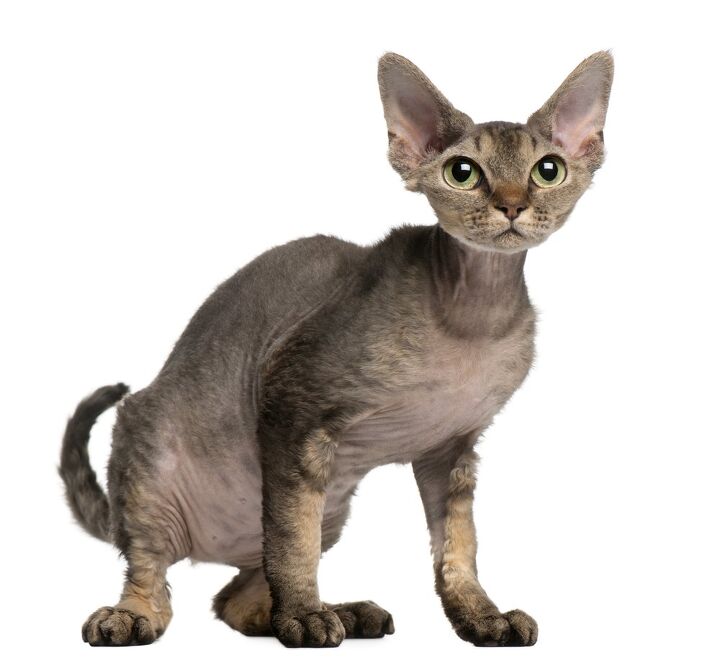
The Cornish Rex is very much a people cat. They may look elegant, even aloof and dignified, but in reality they are active and affectionate. Throughout its life, a Cornish Rex will engage in kitten-like antics and is always up for games of fetch and even catch. Their paws are extremely agile, and the breed is known for picking up and tossing small objects. The Cornish Rex is a great addition to the family, and happily puts itself right in the middle of whatever is going on, but they are not great talkers.

Overall Description

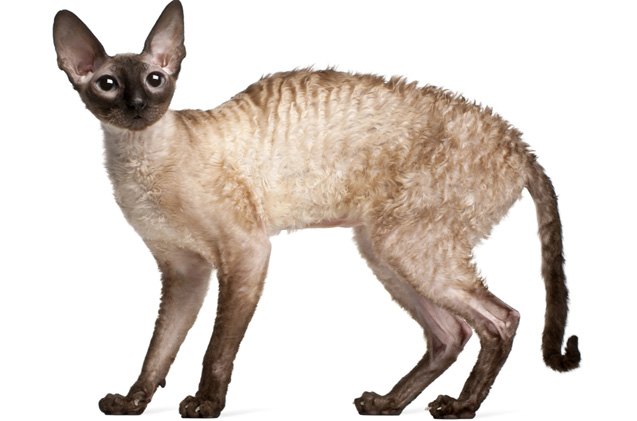
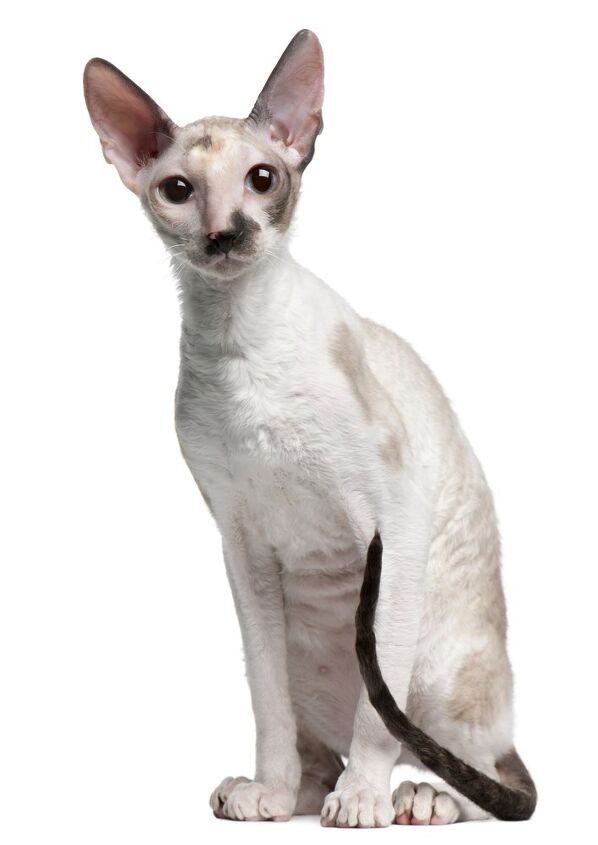
The Cornish Rex has a lovely, curved profile reminiscent of a Whippet. The distinctive head is egg-like in shape, with prominent, high cheekbones, which gives the face an “otherworldly” look. The cheeks are hollow, and the nose is strongly bridged between large, high-set ears. Although this cat has a long, narrow body, the Rex is also barrel chested, narrowing significantly at the waist. The legs are long and fine. The seemingly delicate appearance of the Rex does not betray just how muscular these animals really are, or how well nature has designed them for the high jumps and quick turns for which they are known. The Rex has a tight, curly coat lying close against the body. It falls into wavy rows and is sumptuously soft to the touch.

Colors
ADVERTISEMENT

The Cornish Rex can be found in all recognized colors and coat patterns. The only real requirement is that the cat’s curls lie in “marcel” waves.

Grooming Requirements

The Rex has a short, tight coat that is fine in texture, but they do shed (minimally), and they are not hypoallergenic cats. They have no special grooming requirements, and rarely require bathing. Because they are social and outgoing, they do enjoy being brushed, and they don’t object to the process. Care should be taken to make sure their large ears remain clean and free of debris.

Photo credit: Eric Isselee/Shutterstock
ADVERTISEMENT

ADVERTISEMENT

You May Like

Everything You Need to Know About Ear Mites in Dogs

Just as nasty as ticks and fleas, ear mites can cause just as many problems for your dog. Know what to watch for and how to get rid of ear mites in dogs.

Gar

Characterized by their long bodies and similarly elongated jaws, gar are kept in large aquariums and require very specialized care by experienced aquarists.

To Your Cat, You’re Just Another Cat

You''re more than your cat''s best friend - you''re another cat! Here''s what research has to say about the relationships and humans.

Lancashire Heeler

The Lancashire Heeler a skilled drover and an excellent companion pet, as well as a wonderful herding dog, though considered a rare breed.

Upside Down Dog Of The Week – Blue

Are you feeling down? Because Blue, our Upside Down Dog of the Week from Upsidedowndogs.com, will turn that frown upside down! Blue is a 2-year-old male Pitb…

Pitsky

The Pitsky is a handsome, muscular cross between an American Pitbull Terrier and a Siberian or Alaskan Husky. They do best in high energy households.

How to Make Sure Daycare is a Pleasant Experience for Your Dog

Dog daycare can be a wonderful experience for your pooch, but you have to do your part to ensure a good time is had by all Sure, daycare might seem like a fu…

How to Make Time for Volunteering With Animals in Need

You''d love to help out with your local animal shelter, but you''re just too busy. There are ways you can include volunteer work in your balanced life.

Morgan Horse

The Morgan Horse is one of America''s first native equine breeds. This breed is known for its pleasant personality, willing attitude, and cooperative nature.

Adoptable Dog of the Week

Meet Reno, our Adoptable Dog of the Week from Adoptapet.com. This Labrador Retriever mix is a young fella from Tucson, AZ. He is already neutered, housetrain…

Bambino

The Bambino is one of several dwarf feline breeds that are also known as miniature cats. They are known for being mischievous, outgoing, and rambunctious.

Tiffanie

The Tiffanie is an active breed with a curious frame of mind, but gentle and affectionate. They don''t get along with other cats and are given to jealousy.

Obesity Treatments: Tipping The Scale For Fat Dogs

Obesity is a growing problem with pooches and even a few extra pounds make a difference. Here are some ways you can treat this weighty issue for fat dogs

Adoptable Dog of the Week – Lori

Our Adoptable Dog of the Week is Lori, a 1.5 years old Great Pyrenees mix from Minneapolis, Minnesota. She is spayed and vaccinated.

Italian Greyhound

The Italian Greyhound is gentle, reserved, sensitive, and are often timid with strangers. A devoted and loyal companion, it is wonderful with children.