Dusky Billed Parrotlet General Info
These tiny and incredibly cute parrots are one of the rarest parrotlet breeds in aviculture. Still, these lively birds never fail to bring a smile to our face. Their friendly and cuddly personality, a love for playing and great characteristics make Dusky Billed Parrotlet more than just a great pet – they are also friends and family members. Every owner quickly bonds with their pet parrotlet and easily learns their habits and needs. Being low-maintenance, miniature parrots, they have entertaining traits of big birds, trapped in a small body. This is why all parrotlet breeds make very popular pets around the world.
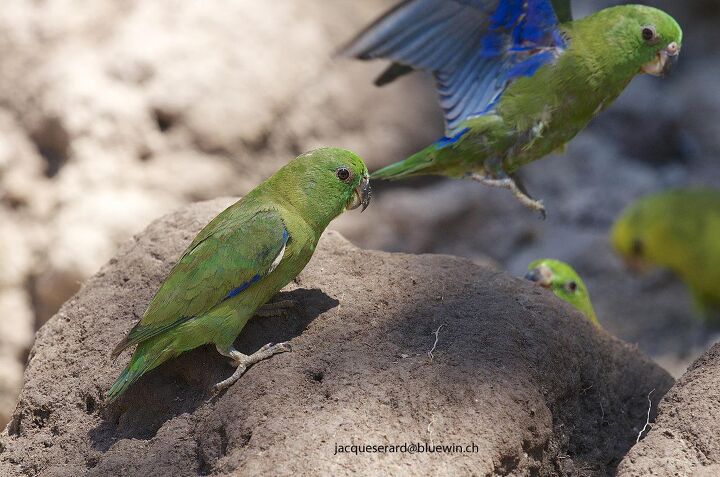
These parrotlets are the so-called “geophagic” birds. They take their minerals directly from clay found on riverbanks.
Native Region/Natural Habitat
These tiny parrots are found in a big region in South America, mostly in the Amazon Rainforest, its foothills, Amazon River basin as well as the Andes. Dusky Billed Parrotlet is a fairly common sight, and their big flocks of up to 100 birds are unmistakable. When still, they camouflage easily into the Amazonian greenery, but on the move, they are clearly visible and resemble a big cloud. They nest in tree holes which sets them apart from other species in their habitat. A noticeable decline of their populations in Eastern Amazonia has been observed.
Overall Description
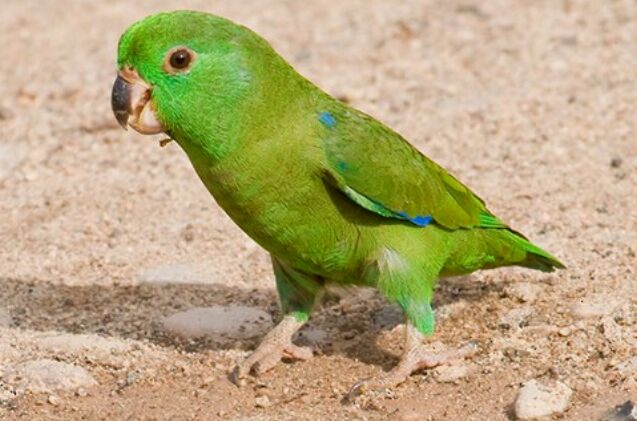
Most parrotlet breeds are quite similar in their appearance, and the Dusky Billed Parrotlet is not an exception. With just a couple of distinguishing features, it takes a skilled eye to quickly identify them. The adults reach an average length of just 5 inches (12,5 centimeters) and weigh around one ounce (35 grams)! This makes their nickname “pocket parrots” easily understandable. One of their iconic features is a black beak, giving them their name. As most other parrotlets have light, yellow beaks, this detail makes Dusky Billed Parrotlet stand out.
Speech and Sounds
Small birds like these tend to be less noisy and less talkative than their big counterparts. A lot of their noise is directly connected to their mood, so be careful not to make them angry. Their natural calls consist of melodic and pleasant chirps and tweets, and sometimes they can get loud. If something is not as they want it to be, you can bet you’ll hear about it! But in general, the noise is quite acceptable and Dusky Billed Parrotlet should be fine in an apartment setting. You should keep in mind that they are not talkers or mimics since tiny birds usually don’t have this ability.
Colors
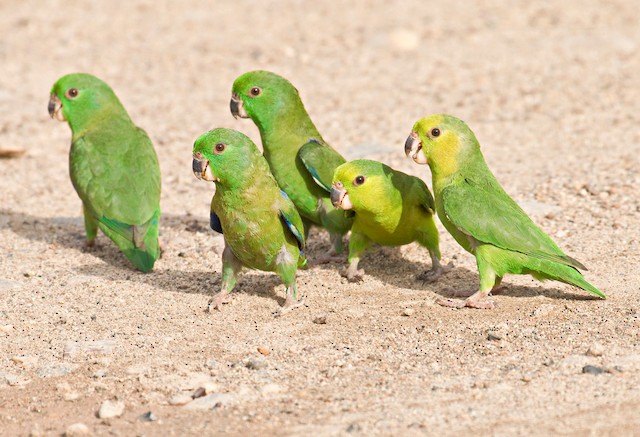
Parrotlets are known for their extremely simple colorations and a noticeable lack of variety. In fact, the lack of variety is why the breeds get easily mixed up at first glance. The Dusky Billed Parrotlet, also known as Sclater’s parrotlet, has a few key details to set them apart from closely related breeds such as Mexican parrotlet or Pacific parrotlet. They are mostly bright green, with lighter shades on the breast and abdomen. Some lighter tones are also on the cheeks. Tips of the wings are darker in color, bordering on blue. The key feature to set them apart is their black beak. This simple look leaves a lot to be desired. But their cuteness definitely makes up for it- these petite birds are hard to resist!
Dusky Billed Parrotlet looks very similar to other parrotlet breeds. It takes a lot of attention to properly identify them.
Care and Feeding
Commercial seed mixes for parrotlets or small parrots are readily available and will work as a great beginning diet. They simulate their diet in the wild which consists of seeds, fruit, and insects. Some fresh fruits and vegetables, cut small or made into a pulp, serve as a good addition of vitamins. Spray baths should be offered and if your pet likes them, repeat it on a regular basis. It keeps their hygiene at the highest level and prevents feather diseases.
Health and Common Conditions
Although small, parrotlets easily adapt to most conditions. Make sure to keep everything in optimal condition, especially the house temperatures. These tiny birds are not especially long-lived, but will still reach a lifespan of 25 years if properly cared for. Dusky Billed Parrotlet is known for their liking to nibble and chew, so provide a lot of parrot toys to help them exercise their beaks.
Dusky Billed Parrotlet is very rarely seen as a pet. This is due to their rarity on the market and the overall similarity with other parrotlet breeds.
Personality & Behavior
One of the big reasons for the popularity of parrotlets as pets is their incredible cuteness. These pocket parrots are just goofy in whatever they do. Dusky Billed Parrotlet is also quite playful and friendly- when it all boils down, they are just an all-around great pet parrot. One of their biggest positive traits is their cuddly nature. They just love to snuggle with you and expect some scratches and petting. In general, this should be a clear choice for anyone who wants a low maintenance, silly little pet, and a great feathery friend.
Photo credit: Dusan Brinkhuizen/ Macaulay Library at the Cornell Lab; jacqueserard/ The Internet Bird Collection