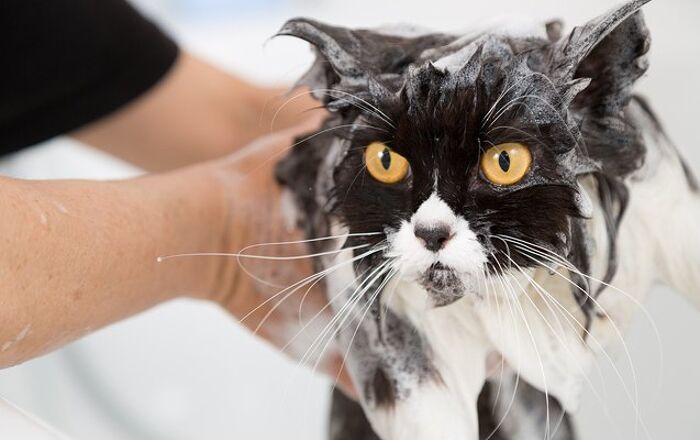
Splish, Splash, How Often Should Your Pup Take A Bath? Unfortunately, there’s no snappy answer that can rhyme in the same satisfying way, but that’s only because it’s complicated enough to justify an entire article. So read on to find out all about puppy baths!
If your dog has sensitive skin and you don’t feel comfortable washing her with a shampoo that contains potentially dangerous ingredients that you can’t even pronounce, there is another option. You can always make your own at home! We found a wonderful dog shampoo recipe that will have your pooch smelling her best and will leave her fur huggably soft.
Obviously, if your dog has gotten into something revolting (or deliciously aromatic in his book), you’ll want to clean him up so you can get back to snuggling without wanting to vomit over the deer poop smell that he purposely acquired. That’s just common sense. Dogs have smells, but they don’t have to be revolting. In fact, it’s a pretty easy fix all things considered.
On the other hand, if your little pupster is suffering from some skin issues, you may need to use medicinal shampoos according to your veterinarian’s directions and frequencies. Sometimes it’s just a cycle or two with a medicinal routine that will make all the difference your dog needs to get his skin back in tip-top shape. Sometimes it takes a little more. It will depend entirely on the issue that caused the prescription, which is why it is important to follow the directions provided by your vet to the letter.
For the most part, experts suggest that a once-a-month or so schedule is pretty good, and especially if your dog’s skin tends to be a bit drier. As your dog goes from bathtime to bathtime, his skin and hair chemistry will reset and this is good for an overall healthier coat. As important as it is to bathe your dog, it’s also important not to overdo it. Too much of anything is never a good thing.
Additionally, it’s important to have regular baths so that your dog’s skin doesn’t get irritated and/or infected and his hair stays easy to manage and untangled. Double-coated breeds like Golden and Labrador Retrievers, Newfoundlands, Australian Shepherds and Pomeranians might not need baths as frequently as once-a-month, but they’ll definitely need more brushing to help keep their luxurious locks clean and healthy. It all depends on the pup and no too dogs are alike. If you’ve got a particularly stinky furbaby or one that tends to find new and exciting ways to get filthy everyday, then it’s probably a good idea to increase their number of baths.
If you have an oily-coated breed like a Basset Hound, Yorkshire Terrier, Lhasa Alpso or Shar Pei, you might find you’ll be bathing your doggo as much as once a week, depending on the oil and matting. Many retrievers also have oily coats as well as a double-coat, but they tend to stay on the drier end of their skin so you’ll want to be sure they need it if you decide to bathe more frequently than once a month, as more than that can irritate their skin. It all comes down to the dog. There are few rules that apply to every single doggo out there (well, other than the rule that they are all adorable and deserve love, of course!).
My, What Great Ingredients You Have
More grooming product companies are realizing that just like in humans, a dog’s skin is an important body organ. What goes on your dog’s skin is just as important as what goes on yours, so ingredients really do matter. You’re going to need to read those ingredient lists and stay educated on which chemicals are safe to lather into fido’s fur. For example, many dog shampoos contain ingredients like parabens or methylparabens, phthalates, sodium laureth sulfates, formaldehyde, isopropyl alchohol or cocamidopropyl betaine. (Gezheundheit!)
These aren’t great ingredients to use in your own grooming products, and they’re certainly not any better for your pup (one of them is really only good for your corpses). You also most likely want to stay away from ‘fragrances’ that are chemically or synthetically created. They can irritate your pup’s skin just as they could yours, and there are many plant-based and essential oil options when it come to helping your dog put his best smells forward.
The big difference to remember when looking at why you might want to make your own shampoo for dogs (aside from the cost-saving benefits) is thinking about where your dog’s tongue goes. Yes, that’s right. Your dog cleans and grooms himself on a regular basis in between your ‘spa’ treatments and you don’t want anything on his coat that you wouldn’t feel comfortable with him ingesting. That can turn cleaning into poisoning if you aren’t careful. Nobody wants that, least of all your pup!
That’s why more pet parents are turning to homemade dog shampoo recipes. That might sound a little intimidating, but don’t worry it’s actually quite easy to make an excellent puppy shampoo at home. In fact, we’ve taken some of the pressure off by coming up with an easy peasy shampoo recipe that anyone can make at home with a few simple ingredients. Give it a shot! You might be surprised by the impressive results. We’ve even come up with a catchy name for it that’s ready to be marketed to all of your friends.
‘Gee, Your Fur Smells Terrific,’ A Dog Shampoo Recipe
The Ingredients:
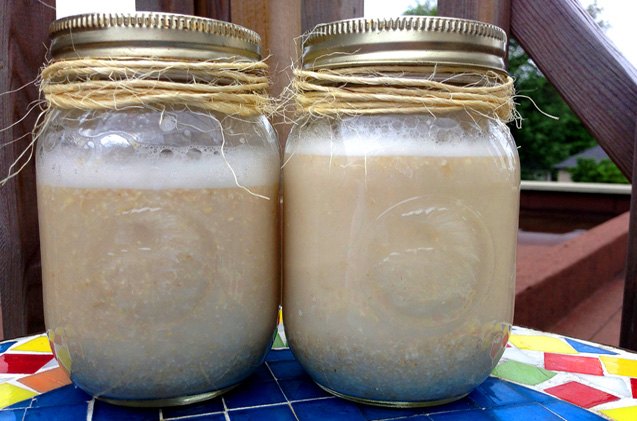
1 of cup ground oatmeal 1 of cup baking soda 4 cups of warm water 1 tsp of dishwashing liquid (I used method’s clementine dishwashing liquid, because it’s natural and biodegradable. Pretty much any dishwashing liquid will do, but sticking to an organic brand obviously prevents any unpleasant chemicals from slipping into your pup’s fur.) 5 drops of lavender oil (or peppermint oil, your choice)
Directions:
Oscar is not a huge fan of bath times, so I only give him one every couple of months or so. This dog shampoo recipe not only left him smelling terrific, but his fur was really soft too. Because Oscar is a little fellow, I cut the recipe in half, as he didn’t need all that shampoo. Feel free to add or cut the amount according to your dog’s size. As we all know, every dog is different. So you’ll have to find the shampoo routine that works for you and your pooch. There are no rules. Whatever it takes to keep your dog clean and your home stink free!
So, that’s our recipe and suggestions for how to keep fido well shampooed. What about you? Do you have any specific bathing methods that we may have missed? Perhaps you have your own homemade shampoo recipe? If so, we’d love to hear all about it! Please leave absolutely any thoughts that you have about shampooing dogs in the comments below. Let’s keep this conversation alive!