
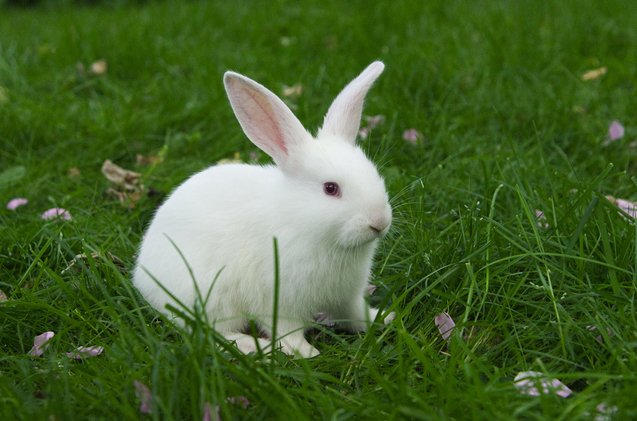
Florida White Rabbit Breed History/Origin
Judge Orville Miliken wanted to develop an “all-purpose” rabbit, which meant the rabbit had to be show-worthy, have a high-quality coat, ample meat as well as have the docile qualities of a good pet rabbit. Another reason for the breed’s creation is that Mr. Miliken realized that laboratories that were using New Zealand rabbits as test subjects would prefer their rabbits to be smaller, so he tried to meet their need by creating a new breed of rabbit. The judge mated an albino Dutch, a red-eyed-white Polish rabbit and a white New Zealand rabbit back in the 1960s in order to create a new breed he aptly named after his home state of Florida. It was accepted into the American Rabbit Breeders Association (ARBA) in 1967 and ten years later, the Florida White Rabbit won its first “Best in Show” (BIS) at an ARBA convention.
While primarily developed for its potential commercial purposes, the Florida White Rabbit quickly became a popular pet. Today, the majority of these bunnies live in homes, as family members and cherished companions. Read on to find out if the Florida White Rabbit is a good choice for you!
The Florida White rabbit is a wonderful pet for practically any stage of a person’s life.
Overall Description
The Florida White rabbit is a relatively small rabbit with a round, compact body and a short neck. Their body type is commercial and the appearance of their body is the most important for show judges. A Florida White Rabbit should weight between 4 and 6 pounds, be fine-boned buy with a well-developed body. Their thick ears are not large and generally stand upright, but can fall on either side of their small, round heads. Hindquarters, back, and shoulders are well muscled, especially for such a small rabbit. The hind part of their body is somewhat wider than it is at the shoulders.
Coat
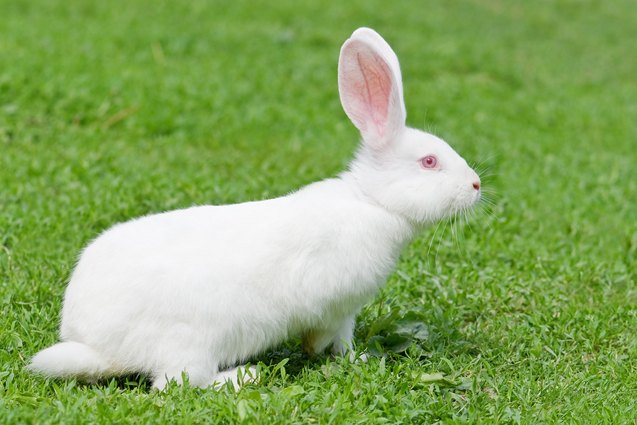
This rabbit’s coat is short and soft, and they do not tend to shed much, so weekly grooming with a bristled brush should be fine. If you find your Florida White rabbit is shedding more than usual, it may be because it is shedding season. If this is the case, increase your brushings to twice or three times a week.
Colors
The only coat color this rabbit comes in is white, with its eyes a bright red hue. There are no markings or patterns.
Florida Whites are perfect pets for singles, couples and seniors who would like some furry company.
Care Requirements
One of the primary reasons the Florida White Rabbit was created in the first place is to have a rabbit for commercial purposes that would be less demanding than other similar but bigger breeds. Needless to say, the breeders developing the breed managed to achieve just that. When fully mature, the Florida White weighs between 4 and 6 pounds, so unlike their New Zealand cousins, they won’t need a very big enclosure to feel comfortable. For a rabbit of their size, a good rule of thumb is to get a cage that’s 24″ by 36″ in size. Your bunny should be able to comfortably stretch, hop, and sit up in an enclosure of the dimensions.
Rabbits are chewers, so it’s important to have a cage that’s made from rabbit-safe and sturdy materials. Usually, powder-coated or galvanized wire make a good choice. However, make sure that the bottom of the cage is not naked wire as it can hurt your bunny’s feet and cause sore hocks. Instead, cover it with bunny-friendly bedding that would make the surface softer. Shredded paper, sawdust, wood pellets or hay are all good choices. The bedding should be regularly replaced to keep everything clean and smelling fresh. This is especially true if your bunny isn’t litter trained and goes potty right on the bedding of their cage.
If you plan on keeping a Florida White Rabbit as a pet, it is preferable to place their habitat inside your home, so they could socialize and become a part of the family. They can live comfortably in a spacious hutch that’s placed in a shed outside, but this could make them less accustomed to interaction with family members.
In any case, you will have to make sure they also spend some time outside their hutch or cage. Let them hop about a bunny-proofed room and explore their environment at their own pace. Some people give their rabbits the freedom of the room with their cage being a place to retreat to for sleep or eating rather than full time home. Also, if you have a securely fenced backyard you could let your bunny play outside, too. Just make to supervise them as they could easily get hurt or lost if left to play on their own.
Their diet should consist of high-quality hay (70 percent), rabbit pellets, leafy greens and fresh veggies (30 percent). Fresh, clean water should always be provided, as well.
Health
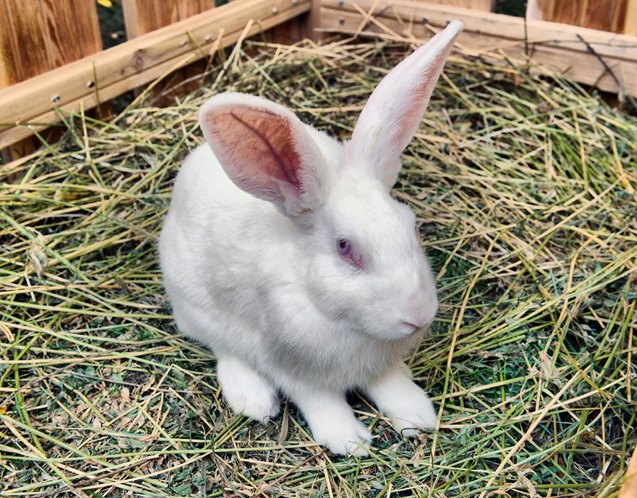
The Florida White rabbit is not susceptible to any particular health problems, but as with any animal, preventative measures must be taken to ensure they are happy and healthy. Rabbits that are indoor for most of their lives sometimes develop Vitamin D deficiency, which can lead to a host of problems. To ensure your rabbit doesn’t develop this deficiency, either take them outdoors for some fresh air and sunshine or bring them to an indoor room that has plenty of windows where they can roam in the sunshine.
Be sure to check out rabbit’s ears for any earwax buildup and/or mites, and bring them to the veterinarian should you see anything worrisome or out of the ordinary. Also monitor the inside of their mouth for overgrown teeth, as this can happen when a rabbit does not have a proper hay diet (hay is important not only to their general health, but also because it wears down their teeth which continuously grow throughout their entire lives).
Most Florida Whites are docile, laid-back animals who like to check out their surroundings on their own clock.
Temperament/Behavior
Be sure to socialize your rabbit as soon as you can, preferably when they are still young kits. Socializing animals means taking the time to bring them out of their enclosures, petting them and introducing them to young children and other animals. Because of the sweet, docile natures, rabbits tend to do best when they are the only animal in the house.
The Florida White rabbit is a wonderful pet for practically any stage of a person’s life. Parents can teach their young children how to care and love for a small animal, as they learn what it means to responsible for a pet. This rabbit is relatively quiet and depending on their personality, may be on the slightly lazier or slightly more active side. Florida Whites are perfect pets for singles, couples and seniors who would like some furry company. While they do not require an abundance of toys like other pets, they do enjoy the occasional play thing to chew on.
Rabbits tend to be a little harder to litter train than other animals such as cats, dogs and birds, however it is possible. Unlike cats, rabbits may need to have a few litter boxes spread out across the house but with some patience and rewarding, they should be able to understand that there are some places where it is acceptable to do the deed.
Photo credit: chelmicki/Bigstock; mr. Smith/Bigstock; nikitos77/Bigstock