Great Dane Basics
It’s hard to argue about the quality of a breed when you’re talking about a dog that has “Great” in its description. But that’s what Great Danes have – even if the “Great” in this case might simply be referring to its size. As some Great Danes can resemble small horses rather than what might otherwise be known as “Danish Hounds,” the Great Dane has a name as big as its breed.
But what really distinguishes a Great Dane from other breeds… aside from its obvious size? This working breed of dog could be considered one of the noblest breeds in existence and its general loyalty and friendliness also contribute to making these Danes “great.”
The Great Dane could be considered one of the noblest breeds in existence.
Origin
Although they’re known as “Danes,” the origin of the Great Dane is a little less secure than the name of the breed might suggest. Some people suggest that Great Danes bear a resemblance to the types of dogs that Egyptians recorded encounters with thousands of years ago. Ancient Chinese descriptions of dogs similar to Great Danes exist.
The breed, however, was originally developed more into its modern form by the Germans, who are also responsible for large dogs like the Rottweiler and the German Shepherd. Great Danes were developed to hunt boar, an obviously ferocious animal, which might suggest that Great Danes would have a propensity to aggression and hunting tendencies. But in modern times, Great Danes have evolved to become companions rather than pure hunters.
Pedigree
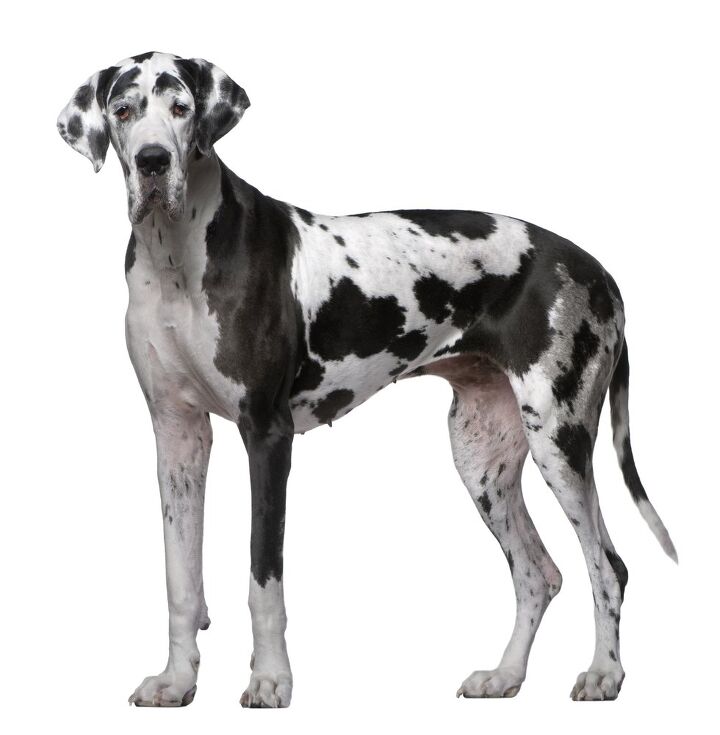
Although Great Danes can trace their roots back to ancient times, a Great Dane as we know it today bears resemblance to breeds like the Irish Wolfhound and the English Mastiff. As mentioned, Great Danes were developed much into their current form in Germany and have a background in hunting.
Great Danes of today can still have a tremendous pedigree. It’s very easy to see this kind of purebred ancestry simply by looking at the unique breed.
Food / Diet
Although Great Danes can appear quite large, they often don’t weigh as much as other big breeds because of their general elongation and tall stature. Great Danes should usually weigh in excess of 100 pounds, especially the males, but like any large dog, there is always a danger of overfeeding simply because Great Danes appear to require a more human-like diet. A generally lower metabolism means that you will not have to feed your Great Dane as much as you always think you should.
People who are looking to raise Great Danes for competition will want to ensure proper nutrition and healthy amounts of feeding so that it never comes in underweight or grows too short. Great Danes are often judged on having a proper height because it is one of the distinguishing characteristics of their breed – a short Great Dane is often not a great competing Great Dane.
The Great Dane’s easy-going temperament makes it responsive to training.
Training
Great Danes can be very athletic. The breed makes excellent runners and can be trained athletically, but in general its easy-going temperament makes it responsive to training that involves other people. Great Danes can be trained to be receptive to visitors and will usually not require a lot of training to curb aggressiveness.
Weight
Great Danes should typically weigh over 100 pounds in both genders – the males should usually weigh a minimum of 120 pounds. Though these are indeed large animals, they are not quite as heavy as other large breeds because of its height and length, so it’s important this in mind when feeding your Great Dane.
Temperament / Behavior
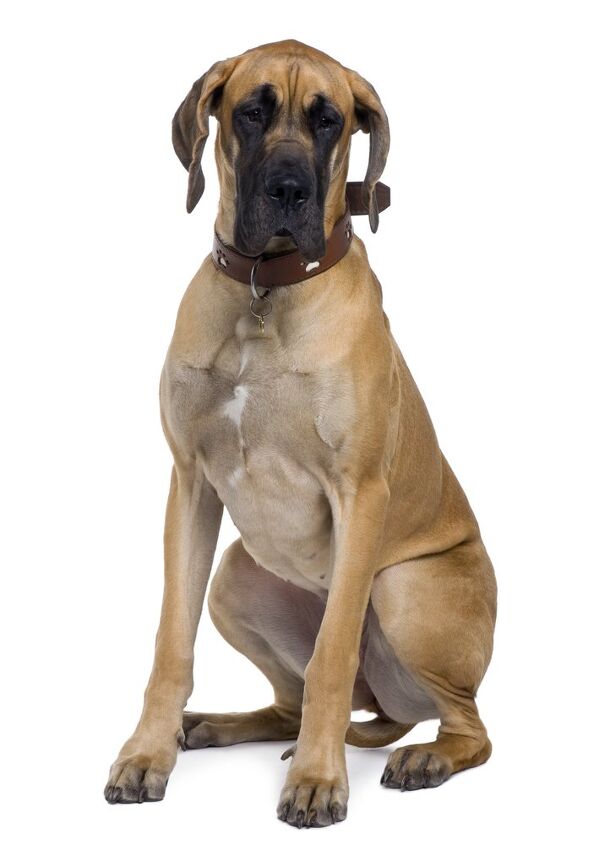
The temperament of this breed is often described as noble.
Great Danes, though large, are the classic “gentle giant” among dogs. They can look quite intimidating because it is so tall and can often reach eye-level with humans depending on the circumstances and seating. But Great Danes can be quite friendly and quite receptive to social situations where there is more than one person involved. Great Danes, however, should not be timid – it should be willing to accompany you to a variety of places without looking worried or becoming intimidated by other breeds of dog.
Common Health Problems
A lower metabolism than smaller dogs can mean a Great Dane likes to rest more than you think it should. This is not always indicative of a health problem but is simply a characteristic of the breed itself.
Great Danes have been called the “Heartbreak Breed” because of its propensity for heart-related problems – its hard-working hearts have a lot of ground to cover. Due to this general condition, the breed typically doesn’t live quite as long as other large dog breeds.
Life Expectancy
Speaking of life expectancy, the “Heartbreak Breed” often only live about seven to 10 years. If you’re considering raising a Great Dane, this shorter lifespan is something to consider, as other dog breeds will be able to live longer.
Exercise Requirements
Great Danes do require daily walks like most breeds, but over exercise is an issue. Great Dane puppies in particular should not be over exercised as they are quick to grow and you don’t want to aggravate the joints. Great Danes might look like fine physical specimens and athletes, but you don’t want to exercise them into being underweight or into eating more than they should.
Great Danes, though large, are the classic gentle giant among dogs.
AKC
The American Kennel Club is not short on praises for the Great Dane: “Sometimes referred to as the ‘king of dogs,’ this extremely large dog breed is known for being strong yet elegant, with a friendly, energetic personality.”
Coat
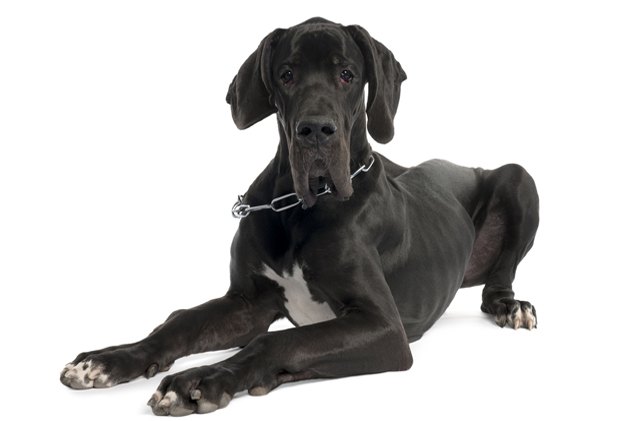
A short coat for Great Danes is good news for owners as it requires very little maintenance. Coats in Great Danes will achieve a variety of colors including Fawn, Blue, and Black.
Puppies
Great Dane puppies can be very cute and friendly, but they will grow extremely quickly, especially given the relatively short lifespan of the Great Dane (6-8 years). Consequently it’s important not to over exercise Great Dane puppies as they grow, as this could lead to hip and joint problems.
Photo credit: Eric Isselee/Shutterstock