Hamiltonstövare Basics
Though this breed has a unique name, his appearance is quite familiar – he looks like any other large-breed hound with a short, close-lying coat and a tricolor appearance. Developed as a hunting hound in Sweden, the Hamiltonstövare remains a popular scenthound in its homeland, though it is gaining popularity in the United States after its admission to the AKC’s Foundation Stock Service. With his noble appearance and even temper, this breed makes a wonderful addition to an active family.
Developed as a hunting hound in Sweden, the Hamiltonstövare remains a popular scenthound in its homeland.
Origin
The Hamiltonstövare is more commonly known as the Hamilton Hound or the Swedish Foxhound. Developed in Sweden by the founder of the Swedish Kennel Club, Count Adolf Hamilton, the breed gets its name from his developer. This breed was developed primarily from various German hounds with Harrier and English Foxhound blood as well. It was bred to be a hardworking hunter, known for its outgoing personality and excellent work ethic.
Pedigree
The Hamiltonstövare is a native Swedish hound breed developed from various German hounds as well as Harriers and English Foxhounds.
Food/Diet
As a medium-sized dog, the Hamiltonstövare should be fed a high-quality dry food formulated for adult dogs. Because the breed was developed for hunting, he may do well on an active or working breed formula as long as you are careful about overfeeding to prevent obesity.
As a hunting breed, the Hamiltonstövare generally responds well to training.
Training
As a hunting breed, the Hamiltonstövare generally responds well to training. Even so, they are best kept by experienced dog owners who will train the dog with consistency. Though they are generally friendly and easygoing, the Hamiltonstövare can sometimes be stubborn or independent, as is often the case with hounds. For this reason, it is recommended that you start training and socializing your Hamiltonstövare from as early on as possible. Regular exercise will also be important for preventing the development of problem behaviors.
Weight
The Hamiltonstövare is a medium-sized dog, standing between 19 to 22 inches tall and weighing 35 to 50 pounds at maturity. Females of the breed tend to be a little smaller, standing 19 to 21 inches tall, but both breeds usually stay within the same weight range.
Temperament/Behavior
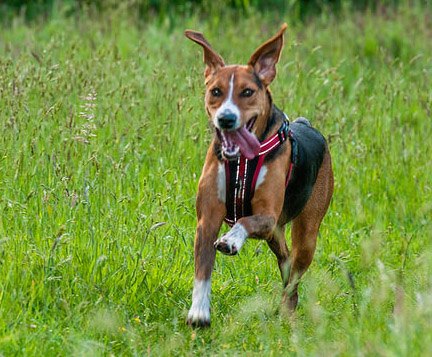
The Hamiltonstövare is an adaptable breed, as long as his needs for exercise are met. These dogs are friendly and even-tempered by nature, in keeping with the typical hound temperament. While these dogs may be content to spend time with family, they also love having a job to do – they are born hunters and are skilled at it. In the home environment, however, the Hamiltonstövare is an enthusiastic and energetic pet, though he can sometimes be a bit stubborn at times. A firm and consistent hand in training is required for this breed, as is early training and socialization.
Common Health Problems
The Hamiltonstövare is generally a healthy breed, though all dogs are prone to certain health conditions. In addition to field injuries, some of the health problems to which the breed may be prone include ear infections, hip dysplasia, elbow dysplasia, bloat, and epilepsy.
Life Expectancy
The average lifespan for the Hamiltonstövare is thought to be about 10 to 13 years which is about average for a breed of its size.
Exercise Requirements
As a hunting breed, the Hamiltonstövare has high exercise requirements. This breed needs more than 30 minutes of brisk exercise per day and he will appreciate having a fenced yard in which to run and play. Hunting training can also provide some additional exercise.
The Hamiltonstövare is an enthusiastic and energetic pet.
AKC
The Hamiltonstövare is not currently recognized by the AKC but it is a member of the Foundation Stock Service (FSS). Additionally, the breed is recognized by the FCI, the Kennel Club and the UKC. The FCI classifies him in Group 6 as a Scenthound and the UKC as a Scenthound. He is recognized by the Kennel Club in the UK as a Hound.
Coat
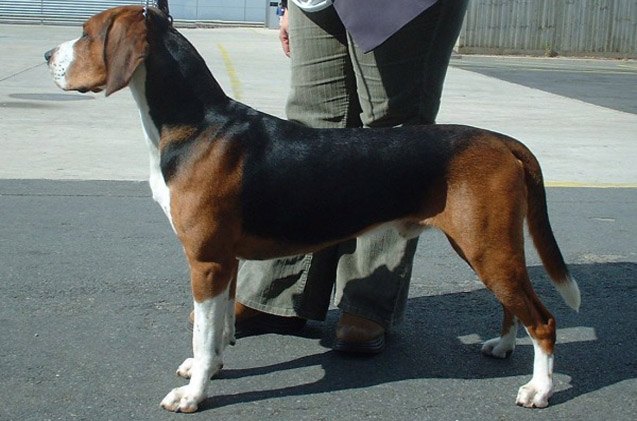
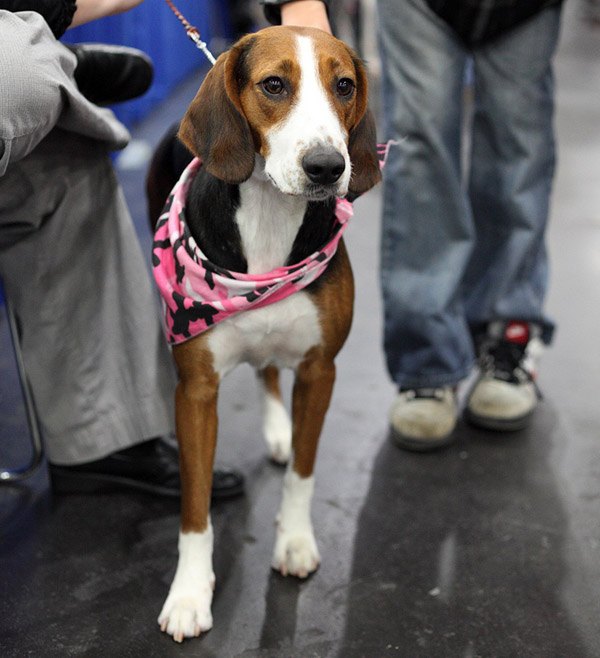
The Hamiltonstövare has the typical hound coat which is fairly short, close-lying, and harsh in texture. The hair on the ears, head, and front of the legs is short and smooth, while it is longer on the back of the thighs and under the tail. The Hamiltonstövare is a tricolor breed with tan coloration on the head, ears, and legs as well as a black mantel and white markings on the face, throat, neck, and collar.
Puppies
The average litter size for the Hamiltonstövare is about 4 to 8 puppies. Because this breed is primarily used for hunting, it is important that you start your puppy with training as soon as possible – early socialization is also recommended. This breed grows to more than 50 pounds at maturity, which classifies him as a large-breed dog. This being the case, you should feed him a large-breed puppy food to keep him from growing too quickly, as excess growth can increase his risk for bone and joint problems as an adult. Once he reaches about 80% of his maximum size you can switch to a large-breed adult recipe.
Photo credit: Sannse/Wikimedia; ccho/Flickr; Antoine Debroye/Flickr