Hap Cichlids General Description
Malawi Cichlids are those endemic to a rift lake in Africa called Lake Malawi. There are a number of different genus of cichlids that can be found in Lake Malawi but one of the largest is the Haplochromis genus – fishes belonging to this genus are commonly called Hap cichlids. Though many of the species that were once categorized in this genus have since been recategorized, the name Hap cichlid is still used as a general term for any non-Mbuna cichlid from the African Rift Valley. These cichlids are generally moderately aggressive and somewhat territorial, especially for males of the same species, though they can sometimes be kept with large, non-aggressive species.
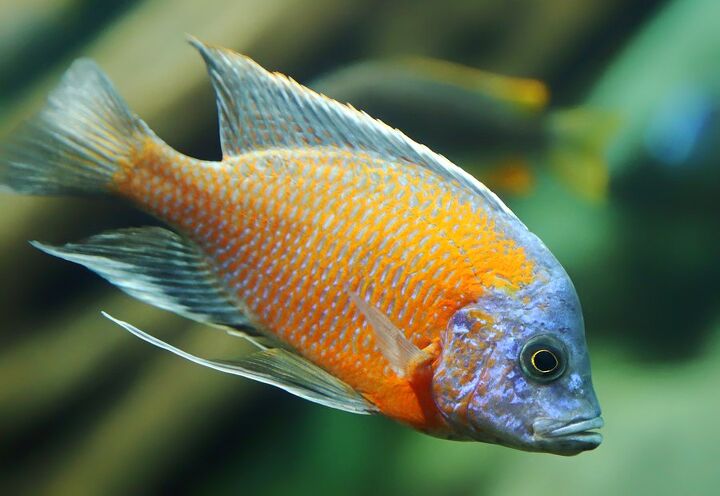
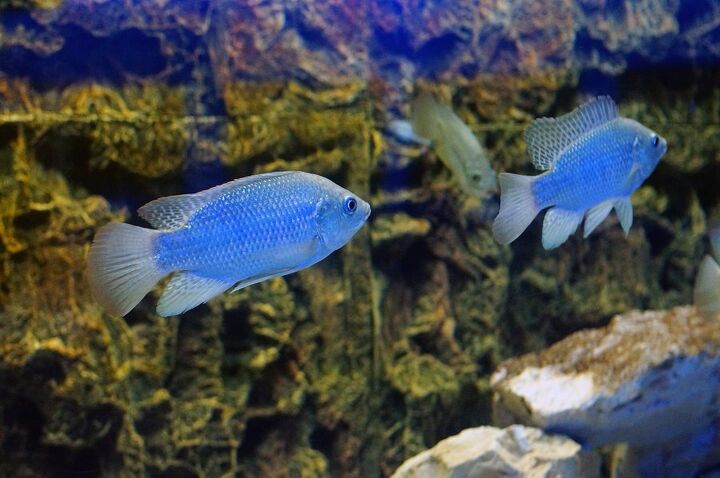
Hap cichlids exhibit a wide variety of colorations and patterns ranging from solid blue to multicolored combinations of red, orange, and purple.
Origins
Lake Malawi is located in Southeastern Africa and it is the second largest and the second deepest of all of the African Rift Valley lakes. It is the ninth largest lake in the world and home to more species of fish than any other lake, including an estimated 1,000 species of cichlid – approximately 230 of these species are Hap cichlids.
Color
Hap cichlids exhibit a wide variety of colorations and patterns ranging from solid blue to multicolored combinations of red, orange, and purple. Many Hap cichlids exhibit stripes or bars of color as well as mottled or spotted patterns in some species. Hap cichlids are generally silver or gray when they are juveniles – they do not develop their color until later. Females are generally more dull in coloration than males.
Maintenance and Care
Because Hap cichlids are endemic to Lake Malawi, they all have very similar requirements for water conditions. The pH of Lake Malawi ranges from 7.8 to 8.6 and the water is fairly hard with a hardness level of 4 to 6 dH. At the surface, the temperature for Lake Malawi ranges from 76°F to 85°F while a lower temperature around 70°F is common for the lower levels of the lake. Though Lake Malawi is very rocky, especially along the coastline, Hap cichlids are open-water fish – they should be kept in a tank that is sparsely decorated with rocks and moderately planted.
Malawi Cichlids are those endemic to a rift lake in Africa called Lake Malawi.
Feeding
Different species of Hap cichlid have different dietary needs but most of them are piscivores which means that they eat small fish. Some Hap cichlids will accept commercial foods designed for carnivores, but you should be prepared to offer fresh and frozen foods as well.
Also read:Cost-Cutting Tips and Tricks for Aquarium Enthusiasts
Breeding Info
Cichlids exhibit a wide variety of breeding habits but most Hap cichlids are polygamous mouth brooders – this means that a single male will maintain a harem of several females. After spawning, the female will gather the fertilized eggs in her mouth and incubate them until hatching. Upon hatching, the fry will be left to fend for themselves among the rocks. Broods for Hap cichlids can be as high as 250 fry.
Aquarium Varieties
There are an estimated 230 species of Haplochromis cichlid, but not all of them are popular in the aquarium trade. Some of the species you are most likely to see available for the home aquarium include the following:
Photo credit: Chiffanna/Bigstock; henner/Bigstock