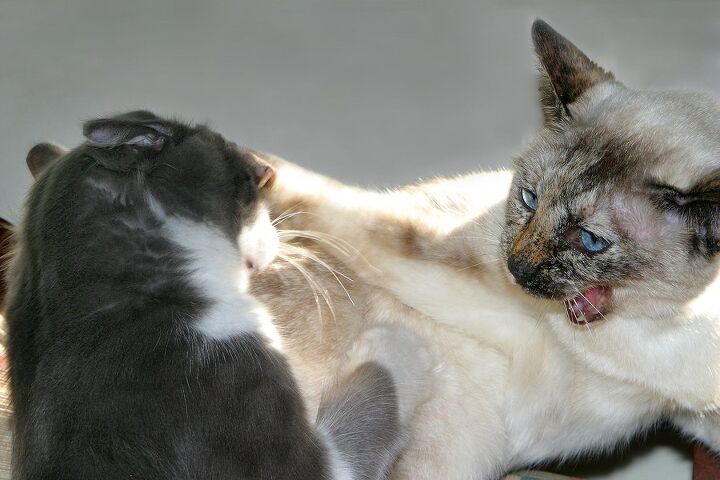
Why can’t we all just get along? If your kitties don’t see eye to eye, do you know what to do to stop cats from fighting? Try these harmonious tips for a peaceful household.
If your cats aren’t getting along, it can be extremely stressful for you, as well as for them. The last thing that you want is for your feline family to constantly fight and hurt one another, but there are steps you can take that will help you harness control over the situation and teach your kitties to get along – or stop cats from fighting and at least tolerate each other in the same space.
Reasons Why Cats May Not Get Along
Just like people, cats sometimes don’t like one another, and there are quite a few reasons why this might happen.
Related:Top 8 Kid-Friendly Cat Breeds
Most of the time, under-socialization is to blame. This basically means that a kitten didn’t get enough fun, safe interaction with other cats and kittens. So, for example, if you adopted your feline friend when he was a kitten and he grew up as an “only child,” he likely won’t be thrilled when you introduce a new cat to the family. Negative behaviors can occur as a result of being uncomfortable with the change in his routine (cats are creatures of habit, after all), or he may simply lack the social skills necessary for felines to get along with each other.
Another problem is territory. Introducing a new cat into a home where another kitty had already established his territory could make your resident feline angry and upset.
And yet another cause for feline fights could be clashes in personalities. Some kitties may not like each other because they have opposite personalities. An older cat may not be happy with a young rambunctious kitten bothering him to play.
But even cats that previously got along fine may end up unhappy with one another. This can occur if one cat associates an unpleasant or frightening experience with the other cat. Or it could simply be the result of attitudes changing as cats mature.
Expected Forms of Aggression
There are a couple of instances in which aggression between cats should actually be expected. For example, a mother cat may be aggressive towards another feline if she’s protecting her kittens. This aggression should go away once her babies are weaned, especially if she was typically a friendly kitty prior to having her litter.
Related:Why Do Cats Purr?
Playful aggression can also be expected, especially amongst kittens and youngsters. As they learn and grow, cats will play in a manner that mimics a hunt, so they’ll often sneak up on each other, stalk and chase each other, and even kick, swat, pounce, bite, and scratch each other. If they’re playing, you’ll probably notice that they switch roles when it comes to pretending to be the predator and the prey.
Stop Cats from Fighting
To help your cats get along, try to pinpoint the cause of the conflicts by paying attention to when your cats fight. Doing so will help you come up with the best solutions to remedy the problem.
You can also take the following steps:
When in Doubt, Ask Your Vet
If you can’t stop cats from fighting, you can ask your vet or a feline behaviorist for advice. Also, be aware that you should consult your vet if you notice any sudden behavioral or physical changes in a kitty, as these might be symptoms of an underlying condition that needs to be treated.