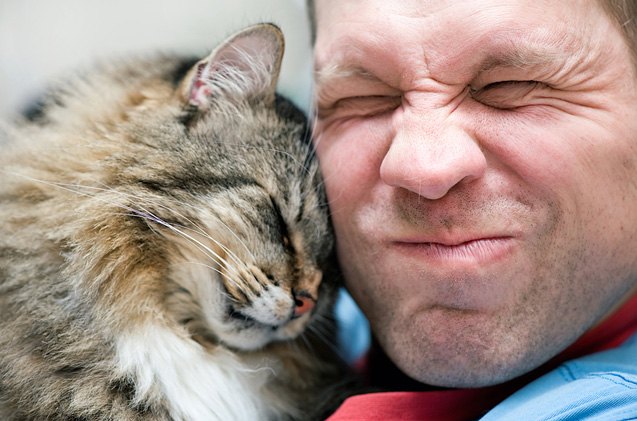
Have you ever thought: “How do cats show affection?” Here’s how to pick up on all the affection your kitty is throwing down!
Although there’s an incorrect stereotype out there that says cats are aloof and don’t really care about their human companions, cat owners are well aware of the fact that felines are able to exhibit affection in myriad ways.
Ever wonder how you can tell when your cat is letting you know how much he loves you? We answer the “how do cats show affection” question with some of the ways kitties show you they really do care.
Head Bunting and Cheek Rubbing
Head bunting occurs when a kitty gently presses his forehead against your body, hand, or face. You’ve probably seen cats do this to one another to show affection, but it’s also one of the ways that your cat will let you know that you’re important to him.
Related:How To Understand Cat Body Language
Combine this with cheek rubbing, and you definitely know that your kitty’s in love with you. In addition to leaving his scent behind to claim you as his own, he’s telling you that you’re one of his favorite humans and he never wants to part ways.
Softening the Gaze
Cats are usually on the alert, especially when they’re around people that they don’t know well or that they don’t feel comfortable around. But your cat knows you better than anyone, so he’s comfortable enough to relax his gaze and maintain eye contact with you. If your cat’s eyes soften and he blinks slowly at you, think of it as your kitty blowing you a kiss. Return the gesture by slowly blinking in return.
Related: CFHS Is Out To Prove That Real Men Love Cats
Grooming You
When a mother cat grooms her kittens, she’s teaching them a very important sign of affection, which is why cats who love one another will groom each other even into adulthood. So consider yourself lucky if you have a cat who enjoys grooming you. He’s telling you that he feels connected to you and that he totally trusts you.
Spending Time with You
If your kitty spends time near you, sits in your lap, or follows you around the house, you can rest assured that you’re a great pet parent who has acquired the special love of a feline.
Wagging the Tail
Like dogs, cats can communicate their emotions with their tails. For example, when your cat is really scared, he will puff out the fur on his tail. But if his tail is held high and twitching at the tip as he approaches you, he’s letting you know how much he cares about you. Another way cats show affection through their tails is by resting their tails on you while sitting or lying down with you, as well as wrapping their tails around your arm.
Giving You Love Bites
Love bites typically aren’t painful because they’re gentle in nature, though it may hurt a bit if your kitty goes for your nose or chin. The reason for this behavior is that cats nip one another as a sign of affection, and when your cat considers you one of his own, he’ll exhibit the same behaviors towards you that he would to his feline friends.
Exposing the Tummy
A cat who loves you will be so comfortable around you that he’ll be willing to lie down on his back with his belly exposed. Why is showing you his belly such a big sign of affection? As a highly vulnerable area of his body, he’s proving that he knows you won’t hurt him, and he loves you for that.
Even though cats can’t speak like humans, they do have a variety of ways to show you how much you really mean to them. If you thought your cat was just being a cat by grooming you, head bunting, or biting, it turns out that there was a lot more meaning behind his actions after all!