Indian Ringneck Parakeet General Info
Ever since ancient Greeks began admiring their beauty and intelligence, the Indian Ringneck Parakeet has been a popular and loved pet all around the globe. With their charming looks, talking abilities and fun, intelligent persona, these parrots can make a wonderful family pet. Thanks to their popularity, they are not hard to acquire and are reasonably priced. With a long lifespan of 30 years, they can become a friend for life!
Even the ancient Greeks loved the fun and intelligent behavior of the Indian Ringnecks.
Native Region/Natural Habitat
Just as the name suggests, the Indian Ringneck Parakeets are mostly found in the south of the Indian subcontinent, as well as Ceylon, Nepal, and Tibet. They are close relatives of the African Ringneck, who they’re often confused with. Interestingly, these parakeets spread to many parts of the world as a feral bird, where they’re a common but cherished sight. This occurrence established it as an abundant breed with a “least concern” conservation status.
Overall Description
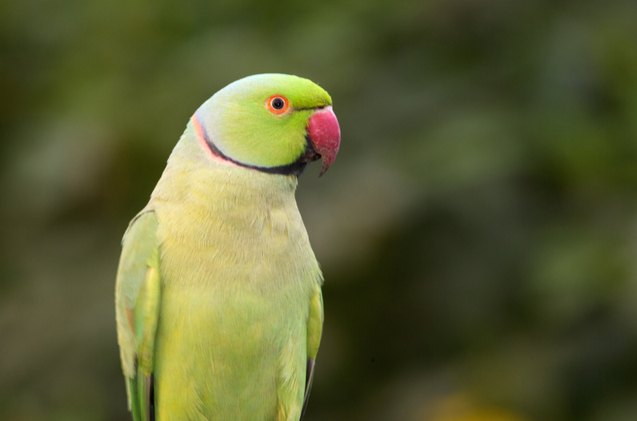
Indian Ringnecks are large birds. As adults, they can reach an overall length of 16 inches (40 centimeters), which makes them larger than most parakeets. Males have a unique black collar around their neck, a trait that sets them apart from the females. With their large size and elegant, sleek body form, these pet birds earned the nickname of Noble Parakeet.
Speech and Sounds
These parakeets are amongst the best talking birds. Indian Ringneck Parakeets are quick learners and will memorize plenty of words and phrases. And of course, these chatty birds won’t hesitate to show off their impressive skills. This makes them endlessly fun and interesting companions, but fair warning: sometimes they might talk a bit too much. Asides from chatting, Ringnecks will often whistle and produce pitched tones. And in case they’re afraid, angry or disturbed, they might signal with a loud scream.
Colors
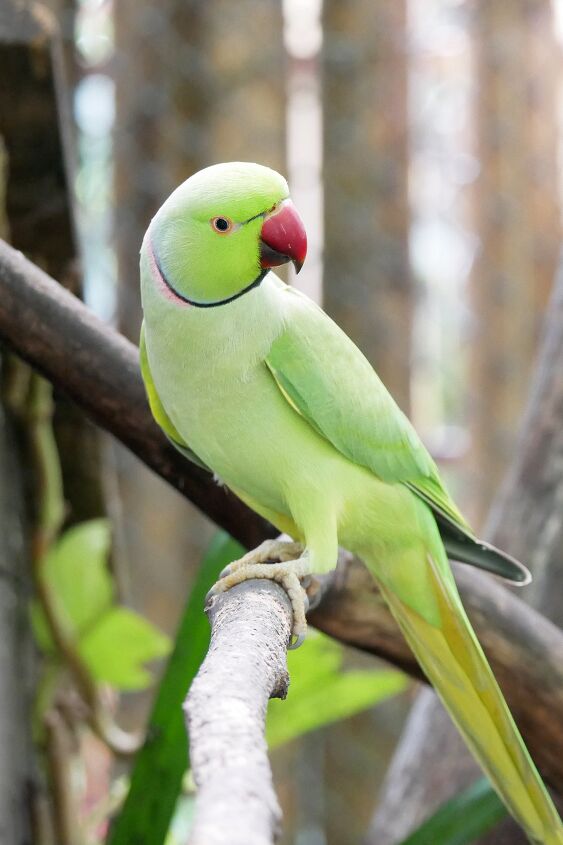
The Indian Ringneck Parakeets are almost entirely colored in a temperate shade of green that is unique to them. The males have a distinctive black collar that also covers the chin – like a little parrot beard. And combined with their prominent red beaks, we get a bird that is a perfect example of an exotic and vibrant appearance. In captivity, several different colors have been created. We can see blue, yellow-headed and grey-green Indian ringnecks, but their natural, green look remains the most popular.
Feathers in an elegant shade of green and their sleek black collars give these parakeets a sophisticated and noble look.
Care and Feeding
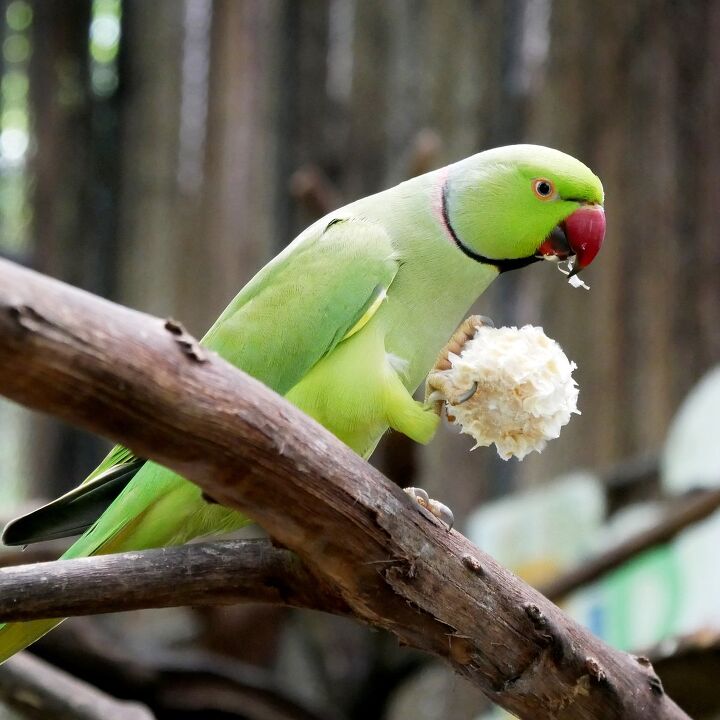
Like most other big birds, they will enjoy some basic foods that we eat, but it shouldn’t be their main diet. Cooked rice, corn, chicken or beans are a perfect treat for them. The basis of their diet, however, should consist of seeds, nuts, and fruits, most of which are covered by the commercial seed mixes. Offer regular supplements of fresh veggies and fruits, and take good care of their water source.
Every Indian Ringneck Parakeet loves bathing so make sure to take them along for a shower on occasion or provide them a birdbath of their own.
Health and Common Conditions
These large pet birds are stout, strong, and known to have good health. With enough care and attention, all the bigger issues should not be a problem. You need to make sure they have a lot of room. They are big, and with their long tails, they will need a spacious and roomy cage, as well as enough exercise outside of it. Poor hygiene, cramped conditions, and coldness are main threats to the health of an Indian Ringneck Parakeet.
Don’t neglect your companion’s need for exercise. With its large size, it will need to spend time outside the cage.
Personality & Behavior
Intelligent, willful and energetic – the perfect words to describe an Indian Ringneck Parakeet. Aside from being talkative, they are also stubborn and inquisitive. Sometimes a bit too much. If given permission, they will not hesitate to explore every nook and corner, especially if it’s forbidden- these are curious birds.
But it’s not all about mischief and playfulness with these smart birds. Your avian companion will also have a cuddly, affectionate side which they’ll show by nudging you for some head scratches and belly rubs.With their complex but lovable personalities, one thing’s for sure: you’ll never have a dull day with an Indian Ringneck Parakeet!
Photo credit: David Steele/Shutterstock; Marut Sayannikroth/Shutterstock