Did you know that there’s such a thing as miniature cats? Before choosing one of these mini kitties, read up on the big facts, tips and scams.
In addition to their over-the-top level of cuteness, kittens are adored because they’re so tiny. So it’s no wonder that many people are interested in miniature cats, or cats that remain small their entire lives.
These breeds can be sorted into the categories of miniature, dwarf, and teacup. Bear in mind that the selective breeding necessary for these types of cats is a highly controversial issue. Reputable breeders who sell these cats should be able to ensure that the animals are healthy, and inbreeding should be avoided as well.
Related:How To Choose A Reputable Cat Breeder
Miniature, Teacup, and Dwarf Cats
: The Basics
Put simply, a miniature cat will typically be around half the size of what a normal cat of the same breed would be. But not every small kitty you encounter is actually a miniature cat. Even the Singapura, which is the smallest feline breed, isn’t considered “miniature.”
Teacup kitties can be found throughout a variety of breeds, and they’re typically only around 9″ high at full maturity. But because of this tiny size, these animals are also vulnerable, so you’ll usually need to wait until a kitten is around six months old before taking him home from a reputable breeder.
Related:Why Do Cats Like Boxes?
Remember, “miniature” and “teacup” are not actual breeds. Teacups are bred in a way to create a mini version of a particular breed. This is why it’s imperative to purchase one from a registered breeder who can ensure the cat is healthy and not inbred.
Dwarf cats, on the other hand, have very short legs. Unlike teacups, these animals are bred in a way that will allow a natural mutation to shorten the long leg bones, leaving the cat short his entire life.
Dwarf Cat Breeds
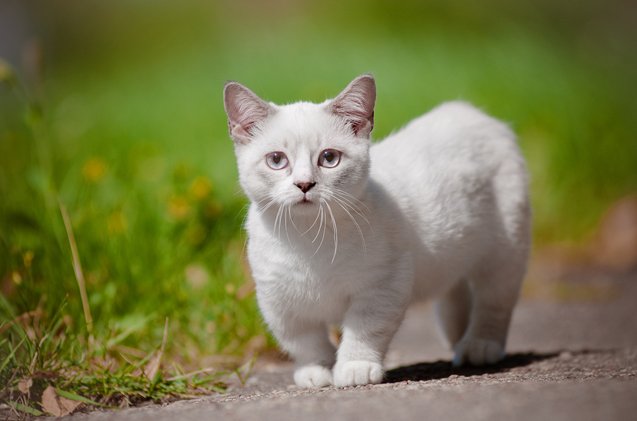
The founding dwarf cat breed is the Munchkin, which weighs an average of 5-9 pounds. These tiny, active cats have short legs because of a natural genetic mutation, and they have been bred with a variety of other breeds, such as the Sphynx, American Curl, and Persian, to name a few.
Again, dwarf cats have very short legs. They range from five to nine pounds and, despite their short legs, manage to remain playful and active. However, they are limited from jumping like other cats do.
Some dwarf breeds include:
Teacup and Miniature Cat Breeds
Teacups and miniature cats have normal proportions. They’re born smaller than average as a result of environmental, hormonal, or genetic factors. Some breeds in these categories are the result of a spontaneous mutation, while others are born as a result of breeders selecting the smallest cats from every generation to create progressively smaller cats. You can find mini cats in breeds that range from Siamese and Persian, to Ragdoll and others.
But teacups are even smaller than what would be deemed a miniature cat. So, while a mini cat is typically about 1/3 or ½ the size of a normal cat in the same breed, a true teacup will be smaller in every regard as a result of genetic dwarfism. It will have shorter legs, like dwarf cats, but the rest of the body will also be smaller, so everything will be in proportion.
What to Consider Before Purchasing a Miniature Cat
Mini cats are quite popular, so some breeders will take advantage of this by selling “miniature cats” who are actually runts, or who were born early or were emaciated as kittens. Also, some breeders may try to pass off a normal yet petite cat as a miniature to make a higher profit.
But in addition to being wary of scams, bear in mind that dwarf felines are often born with serious health issues. These include, but are not limited to, misshapen and soft bones from growth retardation; a slower rate of muscular growth that leads to weakness; enlarged heart and heart murmurs; neurological problems, including seizures; misshapen legs and jaw; and shortened life spans.
If you do decide you want a miniature cat, purchase from a breeder who limits the amount of litters to ensure the queen remains healthy. The breeder should also take steps to ensure inbreeding doesn’t occur. Ask for a health certificate, as well as a contract that includes a guarantee that the animal doesn’t have genetic defects.
Also remember that you can find a variety of feline breeds in animal shelters and within foster networks, so consider adopting a miniature kitty before shopping for one so that you can save a life.
What About Petite Cat Breeds?
Just as there are feline breeds that are distinguished by their large size (a great example is the Maine Coon), there are those that are sought after because of their small size too. So, if you want to add a kitty to your family, but you would prefer one that is likely to remain small even into adulthood, there are several breeds that tend to remain petite. These aren’t dwarf, miniature, or teacup cats; instead, they are simply cats that are generally smaller in size than others.
Whether you plan on shopping from a breeder or searching for a small cat from a breed-specific rescue or a shelter so you can adopt, here are a few of the breeds that stay petite and have an affectionate personality as well:
- Singapura – As mentioned above, the Singapura is a breed that’s known for remaining small even after growing out of the kitten stage. When you search for the smallest cat breeds, this one is usually on the list. Lightweight, coming in at an average of 4-8 pounds, these adorable kitties are described as intelligent, playful, curious, and social. But in addition to their adorable size and endearing personality, these cats are also stunning in appearance, so they have it all if you want to stick with a more petite kitty for any reason.
- Devon Rex – On average, the Devon Rex will weigh 5-10 pounds, making it another option when you want a small cat but you don’t want to go the mini cat route. These cuties have curly fur, and they typically don’t shed much either. Plus, they thoroughly enjoy being around their family, and they’re known for a friendly disposition, so they make wonderful companions.
- Cornish Rex – If you are searching for a cat breed that sheds less and also remains small, check out the Cornish Rex. These kitties have soft, curly fur and a playful personality, and they’re also known for looking like kittens even as adults. Plus, they only weigh, on average, 6-10 pounds when fully grown. So, if you really want a cat that will look and act like a kitten throughout life, this breed is worth considering.
- American Curl – Who could resist the super cute curled ears of the American Curl? We certainly can’t! But, in addition to having that unique trait, this is also a good breed to look into if you are hoping to find a kitty that will be rather small even when fully grown. These fur babies weigh an average of 5-10 pounds, and they are known for their affectionate, loyal, and outgoing personality, as they enjoy spending a lot of time with their humans.
Mini or Large, a Cat Can Make a Loving Companion!
There are many reasons why some people may gravitate toward cats that remain tiny, but regardless of what size your kitty is, you can count on your fur baby loving you, keeping you company, and making you smile.