Pocket Pitbull Basics
If you are looking for an active and friendly breed like the American Pitbull Terrier but prefer something smaller, like a Patterdale Terrier, the Pocket Pitbull may be the perfect breed for you. As a mix of the two breeds, these designer dogs bring together the best traits of their parents into one hybrid dog. Owing to their unique lineage and traits, these miniature Pitbull mixes are a good choice for people who live in an apartment or active owners looking for a unique pet to be share adventures with.
The Pocket Pitbull is an intelligent and active breed that maintains a small but stocky stature. This breed is loyal and affectionate with family and, when properly trained and socialized, they do well with children. One thing to be wary of with this breed is that they need a lot of mental and physical stimulation to prevent the development of problem behaviors. All things considered, the Pocket Pitbull has a lot to offer to an experienced and dedicated owner. Are these dogs the right choice for you? Read on to find out.
If you are looking for an active and friendly breed like the American Pitbull Terrier but prefer something smaller, like a Patterdale Terrier, the Pocket Pitbull may be the perfect breed for you.
Origin
There might be a growing interest for miniature Pitbull mixes, but that doesn’t mean that this breed has a long and established history. In fact, there’s not much we know about the origin of the Pocket Pitbull. The main reason for this is the mixed breed lineage of these hybrids. Even though they have a “fancy” name and there’s a renewed interest in them, designer dogs are still simply mixed breed dogs to many people. Either way, this is a relatively new crossbreed, and wasn’t really established prior to the late 1990s.
The Pocket Pitbull might sound like an exotic breed that just got its start, but there have probably been many Patterdale Terrier and Pitbull mixes throughout history. The only difference is that those crosses weren’t intentional- but rather a product of accidental mating between the two purebreds. No breeder claims that he or she were the ones to first breed the Pocket Pitbull, so there is no clear data about the breed’s origin. The best guess anyone can have is that these crossbreeds had a start similar to many other designer dogs- they were bred in the last 20 years somewhere in the United States. Nevertheless, them being relative newcomers does not make them any less unique or fun. Pocket Pitbulls were quick to win over the hearts of many owners across the world, thanks to their positive attitude, their energetic behavior, and the endless fun that they bring.
Pedigree
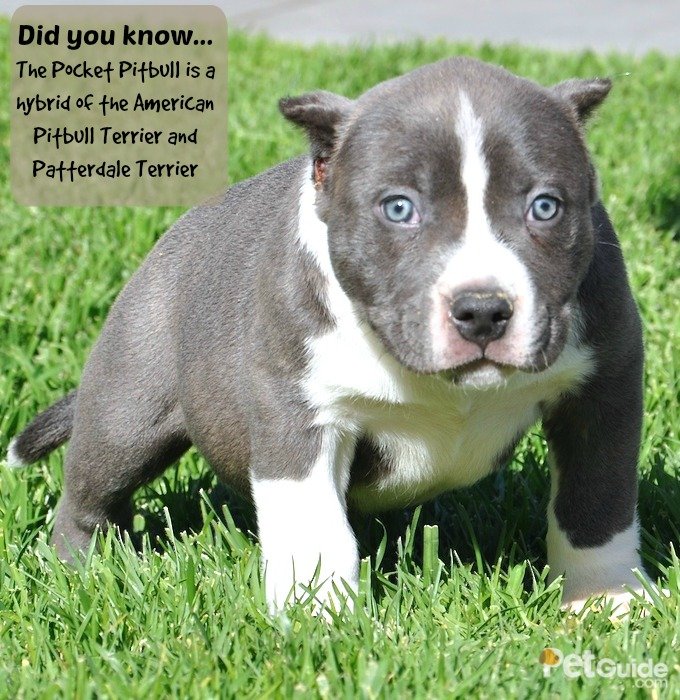
Pocket Pitbull is not a purebred dog. It is a hybrid of the American Pitbull Terrier and the Patterdale Terrier. Owing to the difference in size, the mom is always the Pitbull, and the dad is the smaller Patterdale Terrier. The Pocket Pitbull is a 50/50 cross of these two breeds, though it is possible to have a greater percentage of one breed if a first-generation breed is bred to either an American Pitbull Terrier or a Patterdale Terrier.
However, most breeders don’t do multigenerational breedings of Pocket Pitbulls, as it puts them at risk for certain breed specific health issues. If you are buying a multigenerational Pocket Pitbull puppy, make sure to ask for a health guarantee- good breeding will have a significant impact on your pet’s health throughout life. In any case, it is essential to make sure that you deal with responsible, ethical breeders that follow a close standard when producing their litters.
As a mix of two different breeds, a Pocket Pitbull doesn’t qualify for an official pedigree in terms of papers and set standard. But if you want to learn more about the breed’s history, you only need to look at the parentage – and all will be revealed. You can tell a lot about a designer dog based on their lineage and traits of their parents.
Food/Diet
All dogs need a high-quality diet that meets their nutritional needs. Providing proper food for your dog could significantly improve the quality of their life and promote good health overall. For the Pocket Pitbull, the best option is premium dry food for dogs. Kibble that’s made from high-grade ingredients and formulated to meet your dog’s unique needs will be all they require to thrive and live a long and happy life. In the case of these mixed breed dogs, you will have to pick kibble that is suitable for their age (puppy, adult, or senior), size and activity level. These dogs might be small but they are very energetic and their choice of food should accommodate for these traits. In the end if you are still confused about the proper type of food that your pet should receive, do not hesitate to get in touch with your vet. Based on a quick check up, the vet will be able to guide you towards the very best diet for your pet.
The Pocket Pitbull does have a tendency toward being confident and independent, so early socialization and training is recommended.
Training
Training is the vital part of upbringing - no matter the dog breed. It lays down the path towards a healthy and normal adult doggo. No training process is the same, however. The Pocket Pitbull does have a tendency toward being confident and independent, so early socialization and training is recommended. This breed is intelligent, so positive reinforcement methods are typically very effective as long as you maintain a firm and consistent hand in training. Training will also help to keep this dog’s energy and activity level under control and to prevent him from developing problem behaviors related to boredom or inadequate training. Just keep in mind that you will need to adopt a clear routine, have an assertive attitude and provide plenty of positive reinforcement. With all this in place, the training process should not be all that challenging.
Weight
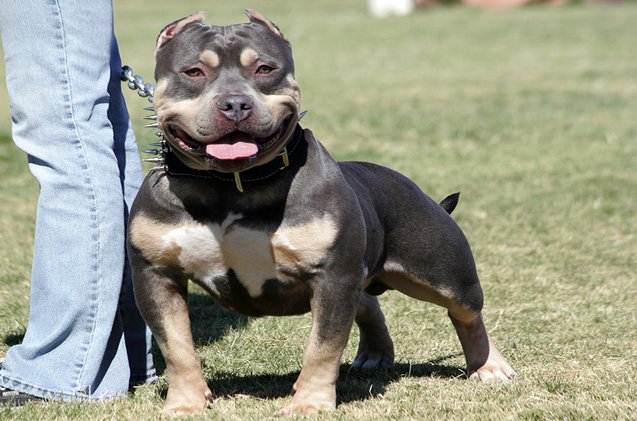
The Pocket Pitbull is a fairly small dog with a stocky build. These dogs tend to stand between 12 and 16 inches tall, weighing about 11 to 22 lbs. at maturity. All this makes them somewhere between small and medium in size. And as the name suggests, they are a pocket-sized pitbull, so you know they won’t grow all that big. This means that they need a little less space to roam around than a regular-sized Pittie. Still, don’t mistake them for a Chihuahua – tiny homes and confined spaces simply won’t do. But something more in the middle will be just fine – both a small home with a backyard or a city apartment will be quite fine for a Pocket Pitbull.
Temperament/Behavior
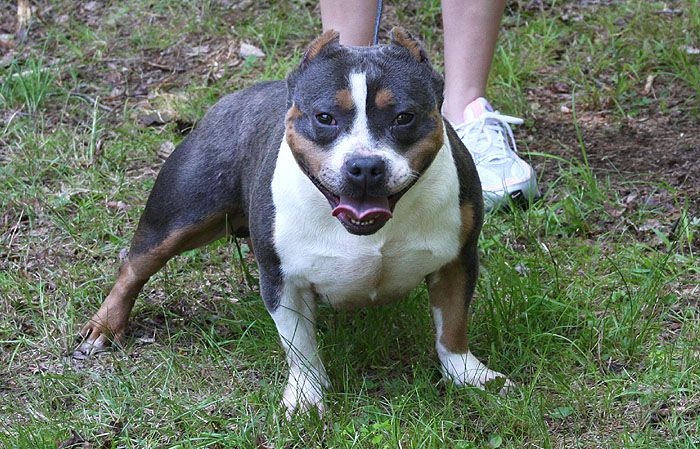
The temperament of the Pocket Pitbull may vary according to breeding because it is a hybrid of two purebred dogs. For the most part, however, the dog is a friendly breed that can be very loyal and affectionate with family. These dogs are confident and intelligent so they require some level of mental stimulation in addition to regular physical exercise. In some cases, these dogs tend to take on a pack-leader-type role, so early socialization and training is mandatory. When properly trained, these dogs can get along well with children and they generally make good family pets for active families. These dogs also make great watch dogs because they are naturally protective of their territory and family. The Pocket Pitbull will establish a strong bond with its owner, which only adds to their loyal and loving character.
Common Health Problems
The Pocket Pitbull is a hybrid breed and many people believe that these dogs tend to be healthier than their purebred parents. Unfortunately, this is not always the case. For the most part, Pocket Pitbulls are a hardy and healthy breed but they may be prone to developing certain health problems related to their short faces and stocky body structure. Their signature compact build might be attractive to people, but it can exacerbate certain health issues, especially those related to the respiratory and skeletal system.
As the offspring of two purebred dogs, the Pocket Pitbull Stands to inherit breed-specific health problems from both parents. These include hip dysplasia, hypothyroidism, heart issues, allergies, and various problems with their eyes.
Life Expectancy
The average lifespan of the Pocket Pitbull is between 11 and 13 years. That’s quite a good number of years, considering that this is a relatively new crossbreed. Keep in mind that the average maximum lifespan of most dogs is up to 15 human years. So, the Pocket Pitbull is somewhere near the far end of that spectrum. And that’s great news! It means that you and your four legged furry friend will be able to make the most of it, without thinking about the years. That means a lot of fun and many loving memories that you will make together.
Of course, don’t be fooled and think that this lifespan will come all on its own - because it won’t. You will have a lot of work in this: your pet needs great care throughout its life in order to be healthy and reach the maximum potential lifespan.
Exercise Requirements
The Pocket Pitbull is a fairly active breed and requires plenty of daily exercise in addition to some active play time. These dogs are surprisingly energetic for being such a short, stocky breed and they are also highly intelligent. This being the case, they need plenty of mental stimulation in addition to physical stimulation to prevent the development of problem behaviors due to boredom. Robust, stocky, and muscular, the Pocket Pitbull is quite a strong and powerful breed. You can be surprised at the amount of energy and power that they have, so be prepared for some tough and rough playtime! Still, once all the energy is spent, this muscular dog will love to snooze and rest. That’s the best way to recharge the batteries!
Of course, being so short and stubby, these dogs can be prone to obesity. If you neglect their needs for exercise and their diet, they can quickly become fat. Obesity for this breed can be very debilitating. Not only will it contribute to numerous health problems, but can also affect their mobility to a great extent. Their legs are slightly bowed and short, and any extra weight and fat can limit their use and put further strain on them. This can result in arthritis, pain, and limited mobility. To keep that in check, you will need to focus on their diet – it is one of the foremost aspects of caring for a Pocket Pitbull. Balanced, healthy food in measured amounts is a sure recipe for a muscular and healthy doggo.
The Pocket Pitbull is a friendly breed that can be very loyal and affectionate with family.
AKC
Because the Pocket Pitbull is technically a hybrid and not a purebred dog, it is not recognized by the American Kennel Club. It is recognized by the Dog Registry of America, Inc. Of course, the Pocket Pitbull has quite a large following of fans and is popular around the world. This means that there are quite a few clubs and organizations that are dedicated solely to this crossbreed. These are always run by fans and owners of the breed, and that makes them the ideal place to find out all sorts of useful tips and tricks related to Pocket Pitbulls. What are their likes and dislikes? What food suits them? What is their temperament like? Get this information first hand directly from the caring owners that already got to know the breed. Best of all, you can get a lot of information about their pedigree – the ideal looks and dimension that the Pocket Pitbulls need to have.
Coat
The Pocket Pitbull has a very short, smooth coat that is fairly easy to care for. You should expect some level of shedding, as is true with nearly all breeds, but it is easy to control with regular brushing. These dogs typically don’t require frequent grooming or bathing. This comes as great news for owners who do not want an overly shedding dog, or hairs all over the furniture. Pocket Pitbulls really shed as minimally as possible. Just an occasional brush to keep everything smooth and nice, and you’re set. Of course, proper hygiene is still a must, as it does a lot to benefit your pet’s health. If you don’t want a smelly doggo roaming around the home, an occasional bath is a must.
Puppies
Early socialization and training is a must for the Pocket Pitbull breed because they are very smart and energetic. Socialization will help to ensure that the puppy does not become aloof around strangers and it will also help to ensure that they get along with other dogs. Proper training will help to prevent the development of Small Dog Syndrome and regular exercise will help to prevent boredom which could lead to destructive behaviors.
People often misjudge all pitbull breeds as aggressive or unpredictable. This isn’t always true. A lot of it depends on their training, upbringing, and the owners themselves. This is why it is crucial to train Pocket Pitbull puppies early on and to ensure that they are not neglected and that they are socialized. Make sure you introduce them to a loving and caring environment, to new friendly dogs, children, and people. This will undoubtedly help your pet to grow up into a loving and caring pet, with zero aggression or anxiety.
Photo credit: feeferlump/Bigstock.com