Pugalier Basics
The friendly little Pugalier is an affectionate, playful companion dog that makes a great addition to any family. He brings together the bold personality of the Pug and the gentle nature of the Cavalier King Charles Spaniel for a pooch that gets along well with kids of all ages, other pets and dogs. His inquisitive nature and eager-to-please disposition makes him a highly entertaining dog that thrives on human companionship and does well in both apartments or houses.
The friendly Pugalier brings together the bold little Pug and the gentle Cavalier King Charles Spaniel.
Origin
The Pugalier’s Designer Dog status means he likely dates to around the 1980s or 1990s when the crossing of pure-breds to produce an often healthier, sometimes non-shedding or smaller variation on a popular breed, first began. In this instance, the Pugalier was bred to have a slightly longer nose than the Pug, which helps alleviate respiratory issues. Now although this little Pugalier goes back just 30 or 40 years, his parental lineage is pretty impressive. The Pug was a favorite lapdog of Chinese emperors around the 5th century and was later discovered to have been a much-loved pet of Buddhist monks, strutting his stuff in the monasteries of Tibet. Around the 16th century, this little world traveler appeared in European courts and his grinning mug was captured on canvas by artists such as Goya. It wasn’t until the late 19th century that this gregarious pooch first arrived to North America and quickly became a household favorite. The Cavalier King Charles Spaniel has a rather convoluted history, having originally been a favorite pet of King Charles I and King Charles II of England back in the 1600s – hence the name. Over time, the breed was crossed with the Pug and even the Japanese Chin to develop a dog with a shorter stance and flatter face than the original Cavalier King Charles Spaniel. It wasn’t until the 1920s that an American sought to restore the original breed appearance by running a competition at Cruft’s with a monetary reward for whoever could produce a spaniel that featured the longer face and original features of the images he had seen from the 1600s. Eventually, a dog named Anne’s Son was developed and not only won the £25 booty but set the breed standards we know today. Its rumored he had a little Cocker Spaniel, a dash of Papillon and some Welsh Springer added to his breeding to bring him back to his former glory. This handsome boy arrived to North America back in the 1950s and since that time has proven to be a loving and loyal family pet.
Pedigree
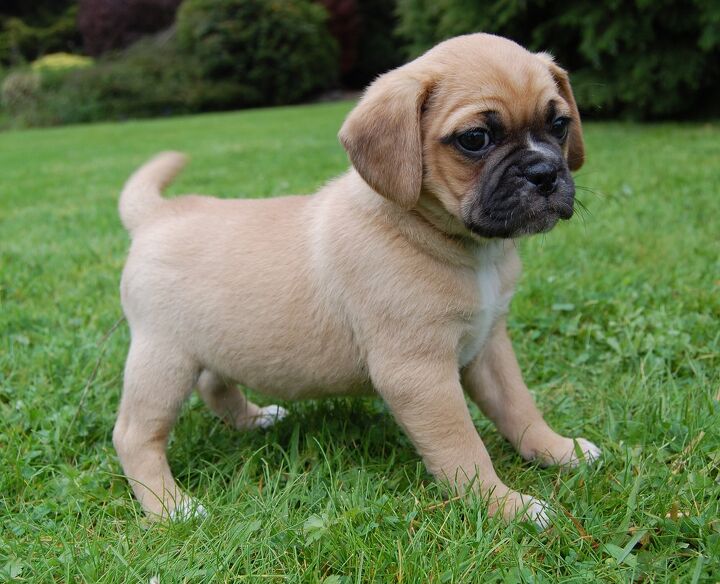
The Pugalier is a cross of pure-breds which means he cannot join the American Kennel Club (AKC) however both of his parent breeds are members. The perky Pug joined the “toy” group back in 1885 and is described as being a charming, mischievous and loving dog while the sweet little Cavalier King Charles Spaniel became a member of the “toy” group in 1995 and is considered affectionate, graceful and gentle.
Food/Diet
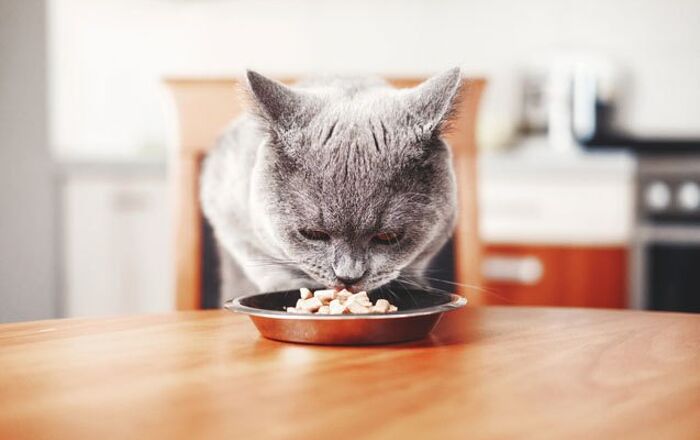
The Pugalier is a small dog that needs a nutrient-rich kibble designed specifically for his age, size and activity level. Always opt for a food that is higher in protein and lower in fillers such as carbs that will cause him to constantly feel hungry and want to over-eat – particularly given his propensity to suffer from joint issues later in life. Plan to feed your new family member 2 to 3 smaller meals throughout the day versus allowing him to free-feed and because this little guy may inherit the Pug’s brachycephalic facial structure which means he will have to press his entire face into his dish in order to eat, consider investing in bowls that are designed for flat faced dogs and cats. A slight tilt allows them to eat and breathe at the same time, eliminating his gulping air and the resultant flatulence Pugs are known for.
The Pugalier is a friendly, loving dog who thrives on human companionship.
Training
The Pugalier brings together the willful, often stubborn Pug and the people-pleasing Cavalier King Charles Spaniel for a bright little dog that will pick up commands quickly however may not always feel like responding to them. Take a firm, consistent approach that offers rewards as an incentive and because this dog has been known to become distracted and lose focus, keep him engaged by ensuring training is a fun, interactive process with treats doled out as earned. Even friendly dogs benefit from socialization so ensure your Pugalier is introduced to new faces, sights and sounds from an early age.
Weight
The Pugalier comes from two similarly sized small breed dogs and regardless of gender or which side of the gene pool he leans towards, he’ll likely weigh somewhere in the range of 14 to 18-pounds.
Temperament/Behavior

The Pugalier is a friendly, loving dog who thrives on human companionship. While he may inherit some of the Pug’s spunk and willful nature, he most certainly will gain the sweet, gentle characteristics and calm demeanour of the Cavalier King Charles Spaniel. He is known to get along with everyone including kids, other pets and dogs and loves nothing more than to spend time with his family. This pooch is an outgoing, intelligent little dog with a curious nature and a love of play that makes him a highly entertaining companion for young and old. Both the Pug and the Spaniel are known to suffer from separation anxiety when left on their own and this can result in destructive behaviors including incessant barking, chewing and urinating throughout the house. While de-sensitizing him to your departures is one option, a home where one family member is present during the day would be ideal.
Common Health Problems
As a Designer Dog, the Pugalier has been bred with the goal of reducing or eliminating many of the health issues that can pose problems for his parent breeds. But while he may well be healthier than his parents, you should always take the time to learn what your new family member may inherit down the line. With the Pugalier that can include the respiratory issues common with the flat, brachycephalic structure of the Pug as well as skin infections that come from the heavy facial folds if they are not cleaned regularly. Cataracts and dry eye can also occur if your pooch inherits the characteristic protruding eyes of the Pug. From the Cavalier King Charles Spaniel, your pup could be prone to joint issues including patella luxation and dysplasia as well as congenital heart problems. While it seems like an overwhelming list of issues, fear not because the Pugalier is considered a hale and hearty pooch and he could well live his entire life without serious health concerns.
Life Expectancy
The Pugalier is a healthy dog and if provided with a top-quality diet that is appropriate to his breed and size, regular exercise as well as annual check-ups with your vet to monitor his health, you can expect your little companion to live between 11 and 14 years.
Exercise Requirements
Pugaliers require very little activity to meet their exercise needs and will benefit both physically and emotionally from interactive playtime with their favorite pet parent. This need for moderate activity makes him an ideal fit for either house or apartment living and because all dogs require a certain amount of exercise, you’ll find that 1 or 2 short daily walks will be sufficient to meet his physical needs. Off-leash parks are a great way for him to burn off a little steam and interact with other dogs but keep in mind his smaller stature and friendly nature might pair him up with boisterous, larger dogs so activity should be monitored. Because he may still inherit the flatter, brachycephalic facial structure of the Pug, the Pugalier may experience respiratory issues if he is pushed beyond his comfort level during warmer weather. Shorter walks (or even indoor playtime) on hot days, plenty of fresh water that’s available to him as needed and shady breaks to help him cool down, will be important.
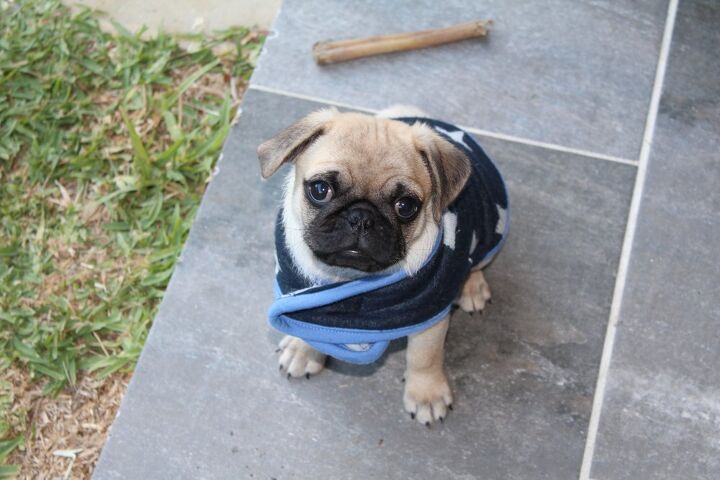
This little dog is outgoing, playful, gets along with kids of all ages and other pets.
Recognized Clubs
The Pugalier (also known as the Cavapug, Puggalier and Puglier) is a cross of two different pure-breds which means he will never qualify to join the American Kennel Club. That said, he is recognized by several lesser known organizations including the American Canine Hybrid Club (ACHC), Designer Dogs Kennel Club (DDKC), Dog Registry of America, Inc. (DRA) and the International Designer Canine Registry (IDCR).
Coat
Your cute little Pugalier puppy may inherit the short, double-coat of the heavy-shedding Pug or the longer, silky coat of the heavy-shedding Cavalier King Charles Spaniel. You get the idea… you’re going to be brushing your pooch at least 2 to 3 times a week to keep hair in check and loose fur from covering your home and clothing. If his coat is of the longer version, you may find that you need to brush daily to eliminate the matts and tangles that can come with long-haired dogs. While his facial structure will probably be more pronounced than that of the flat-faced Pug, he will likely still have some facial folds that require daily cleaning (particularly after meals) to prevent bacteria from accumulating and resulting in smelly yeast infections. Similarly, with his floppy ears where a weekly inspection and cleaning with a damp cotton ball can help stave off infections brought on by a build-up of dirt and bacteria.
Puppies
The Pugalier is a fun-loving, playful little dog who will respond best to training and socialization that takes place when he is still young and more inclined to pay attention. Obedience that addresses the 5 key commands as well as gradual exposure to new sights, sounds and situations will help acclimatize him to new faces and be less reactive / suffer from separation anxiety when you have to leave him for periods of time. Because this little guy can be prone to obesity and ultimately joint issues later in life, get him on a healthy diet that helps you achieve and maintain his ideal weight. Like all dogs, he’ll love his treats – which should be a top-quality and doled out only as earned. If you get him into a routine while he is still young of not begging for food or mooching from other pet food bowls, you will be one step further ahead in keeping his weight in check. And because joint issues can be a problem later in life, take it easy on his playtime and leash lessons. Injuries that happen now can plague him into old age.
Photo credit: Andrew Richard Keighley/Shutterstock; JAC07/Shutterstock