Cockatiel General Info
One of the world’s most recognizable birds, Cockatiel is the go-to ideal choice for an avian family pet, due to their friendly and easygoing personality. Of course, considering that they have a lovely temperament, a knack for learning, and flashy looks – it’s no wonder they’re so popular! These cockatoos are well known as the ultimate pet bird, well suited for the beginners or as a children’s pet. With these traits, training them will be a simple and fun task. Their hilarious antics, intelligence, and an outgoing character make them loved all across the world. Cockatiels are amongst the most loved parrots and are one of the most popular pet parrot breeds around. And here are the most important things you need to know about these adorable avians.
Cockatiels are fun and friendly- a perfect bird for children and beginner pet owners.
Native Region/Natural Habitat
Like many of their cousins, Cockatiels originated in the Australian continent, thriving in the arid scrubland of that nation’s hinterland. Coming from those harsh conditions, cockatiels adapted perfectly to the milder climates all over the world, quickly becoming the perfect image of a hardy and healthy pet, requiring very little in order to be happy and strong. In the wild, they can be spotted roosting en-masse in large tree canopies, where their raucous singing creates a proper chaotic symphony of parrot lingo. These parrot flocks are often found near water sources, and can number several hundred at any given time. Sadly, wild cockatiels can be considered as pests – these huge flocks can often decimate crops and cause great damage for the farmers. They are found over most of the Australian continent, with the exception of the most arid deserts towards the south.
Overall Description
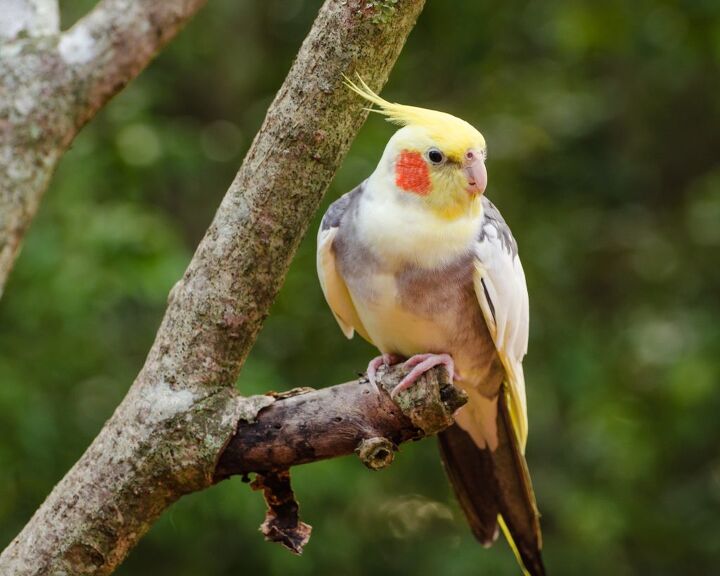
Cockatiels have a very showy appearance and are treasured for it. One of their distinctive markings is their crest. Many of its different positions will signify your pet’s current mood. When your cockatiel is angry or scared, their crest will be flat, and when they’re excited, it becomes pointy and vertical.
They grow in length to about 13 inches, and their long tail feathers make for a good part of their size. With proper care, healthy diet and exercise, these birds can reach a lifespan of up to 25 years. Another distinct feature of a basic, natural cockatiel appearance is their coloration and the various little details on their plumage. Also, cockatiels are not very large – a fact that might be attractive to owners with little free space around the house. At 30 to 33 cm (12 to 13 inches), the cockatiel is the smallest of all the cockatoos – but has plenty of spirit to boot. In the wild, cockatiels display a pronounced sexual dimorphism – meaning that the males and females tend to look totally different, mainly in the coloration.
Speech and Sounds
These cockatoos love to express themselves vocally! With plenty of room and natural light, they’ll soon liven your house up with their familiar and subtle melody. Don’t hesitate to put on some music or whistle melodies yourself if you want to expand their repertoire. They’re very inquisitive and will soon pick up simple tones and voices to repeat. You should try teaching them, as they are sure to love the interaction. It shouldn’t come as a surprise to realize that your little cockatiel is a true music aficionado! They can memorize moderately complex melodies and tunes and repeat them in a melodious style at their leisure. In a musical home, a cockatiel will feel thrilled – their natural desire to sing will be all the more accentuated!
Colors
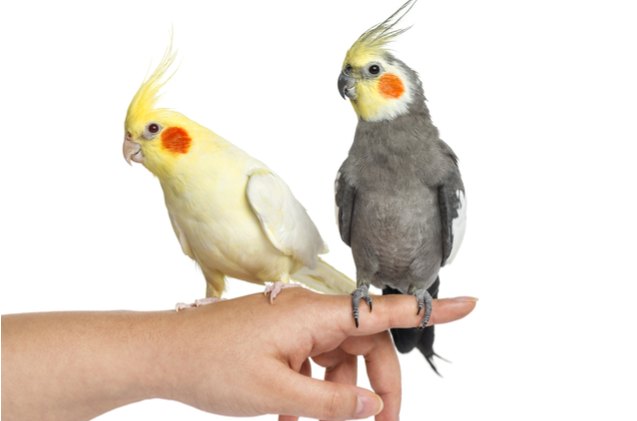
Cockatiels are known for their coloring, which is one of the many small details that make them unique.Cockatiels are usually grey on their body, with white wing feathers to complete that balanced and dashing look. Of course, cockatiel breeders managed to create a string of unique color combinations in captive birds. Today there is an almost endless choice of colors, with pure yellow, platinum, pied, lutino, and white being the most popular. Still, you can’t beat the charm of a cockatiel’s natural colors. You can easily spot which bird is the male and which the female, as males have a yellow head. Another unique and cute mark of cockatiels are the red circles on their cheeks – as if they are blushing! The unique and cute looks, complete with distinct “blushing” cheeks, might be Cockatiel’s best-known trait.
The unique and cute looks, complete with distinct “blushing” cheeks, might be the Cockatiel’s best-known trait.
Care and Feeding
You should provide a source of fresh water each day where they can stay hydrated and take a bath. Cockatiels will absolutely love it! Ruffling their feathers in water and taking little goofy baths is a delight for these parrots. It is also one of their daily activities in the wild, so consider it a natural need. Of course, this water will have to be replaced very often. When diet is considered, most of their food needs will be taken care of by the usual Cockatiel seed mix found in pet stores. It is balanced and provides all the essential nutrients your pet bird needs. You can also include additional vitamins and proteins in their diet with an occasional piece of apple, banana, or carrot.
And don’t forget to surprise them with a cuttlebone, which will help them sharpen their beak and replenish their intake of calcium. Don’t be fooled by their diminutive stature and a small beak – they can be quite strong and that beak will need the exercise.
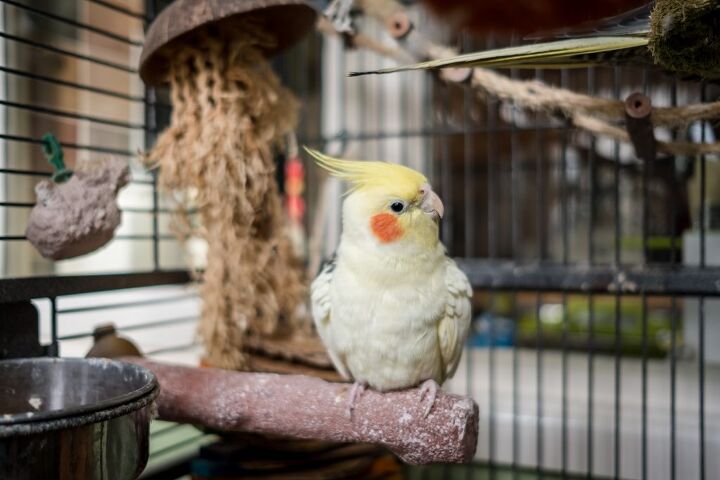
As it is the case with all pet birds, Cockatiels need a spacious cage to call their home, preferably one with sidebars, as these birds love to climb. The cage should be kept at room temperature and in a draft-free, dry space. Don’t make the mistake and get a cage that is too small, thinking that a cockatiel is small as it is. Parrots – no matter the size – need as much space as possible. Otherwise, they can become a depressed and unhealthy bird, picking out their feathers and developing health issues.
Health and Common Conditions
In general, these are strong and resilient birds, with longevity to boot. However, some key clues that indicate something is wrong should be remembered. These include apathy and overall lack of activity, puffy and ruffled feathers or loss of appetite and weight. Although these symptoms are rare, they can still occur. In general, cockatiels are strong and adapt easily to common surroundings. With just the basic effort and care, your pet will thrive and be happy! On average, cockatiels can live between 16 to 25 years, making them great companion pets. The record holding cockatiel in captivity lived for an amazing 36 years.
Take care of your cockatiel’s needs – interaction and plenty of space are important for its health.
Personality & Behavior
Cockatiels are friendly and social, playful birds. A wide and spacious cage will do them good, as they require plenty of exercise and room to play. Perches and parrot toys will help keep this smart bird entertained, but it’s best to get a pair of Cockatiels to keep each other company while you’re at work.
These affectionate birds also love to socialize and interact. Devote a bit of your time to play with your pet, teaching them new tricks or simply giving them attention- without your company; your feathered pet is bound to get moody and aggressive. Either way, if you opt for a cockatiel pet you are opting for a goofy and affectionate friend that will never fail to make you smile!
Photo credit: Eric Isselee/Shutterstock; pinkjellybeans/Shutterstock; Nick Beer/Shutterstock