Red Capped Parrot General Info
One of the earliest members of the Australian grass parakeets to become a widespread pet bird in aviculture, the Red Capped Parrot is a breed with a rich history and great qualities. While they’re recognizable for their colorful and vibrant appearance, they also have a lovely personality. Docile and friendly, they are good pets, especially when kept in pairs as aviary birds.
A pet Red Capped Parrot will love to play and will show their energetic side during playtime.
Native Region/Natural Habitat
Grass parakeets are certainly a popular and easily recognizable species in Australia. They thrive in the southwestern corner of the continent, from the Moore River, all the way to the coast. Mostly found in sparse growth, Eucalyptus woodlands and mallee, they are also a common sight in certain urban areas, like parks and gardens. They have been introduced into aviculture fairly early – huge numbers of these parrots were exported, and were successfully bred in England in 1909. Today, they are widespread and a species of least concern, with numbers always increasing.
Overall Description
Most of the Australian grass parakeets are similar in their physical appearance. Red Capped Parrot is a distant cousin of Rosellas and shares a few of their features. You will notice the small head and a short, almost tiny beak, as well as the long and broad tail. The adults reach an average length of 15 inches (37 centimeters) and will weigh around 5 ounces (155 grams). Keep in mind that the greater part of their length is reserved for the tail, which can often be equal or even longer than the body. This family is well known for their extreme sexual dimorphism, meaning that the males and females are completely different- mostly in their colors.
Speech and Sounds
This family is not very famous when it comes to speaking. Small birds such as the Red Capped Parrot do not have the ability to talk very well. Mimicry is possible but rare. All they have are their natural calls. These are not always harsh or intolerable, especially when the birds are hand raised. They consist of high pitched and sometimes shrill melodious chirps and tweets, or their unique alarm calls. When feeling danger, they will let out a series of shrill beeps. Although not overly loud, they still might be the best solution for households or aviaries.
Colors
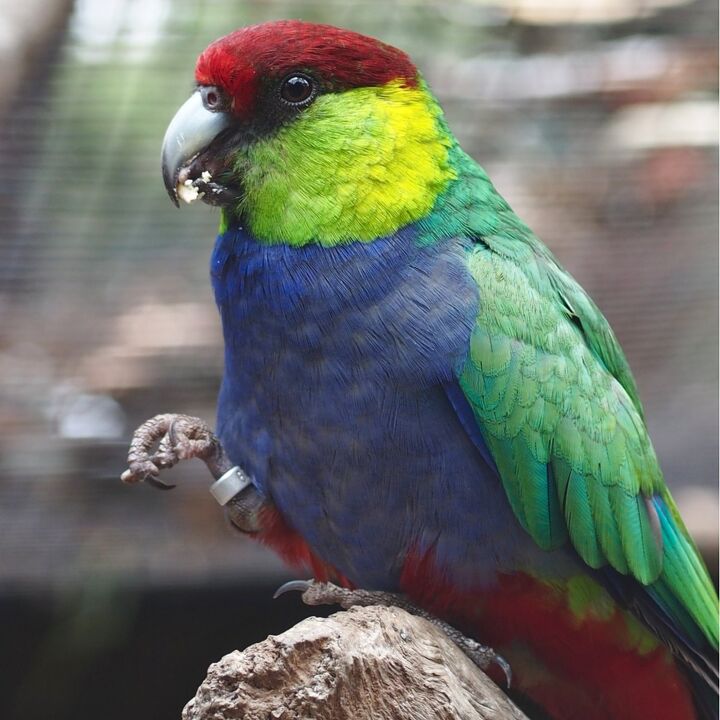
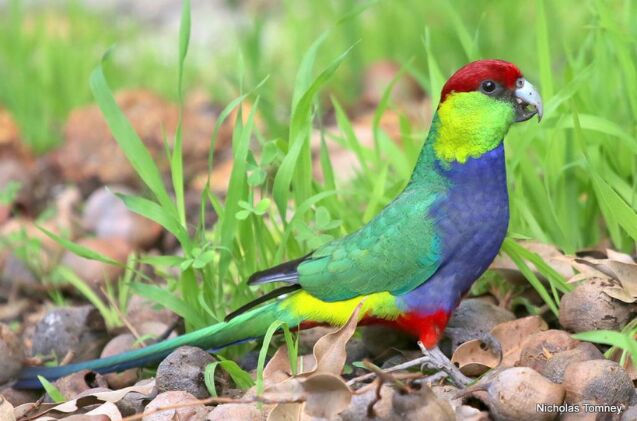
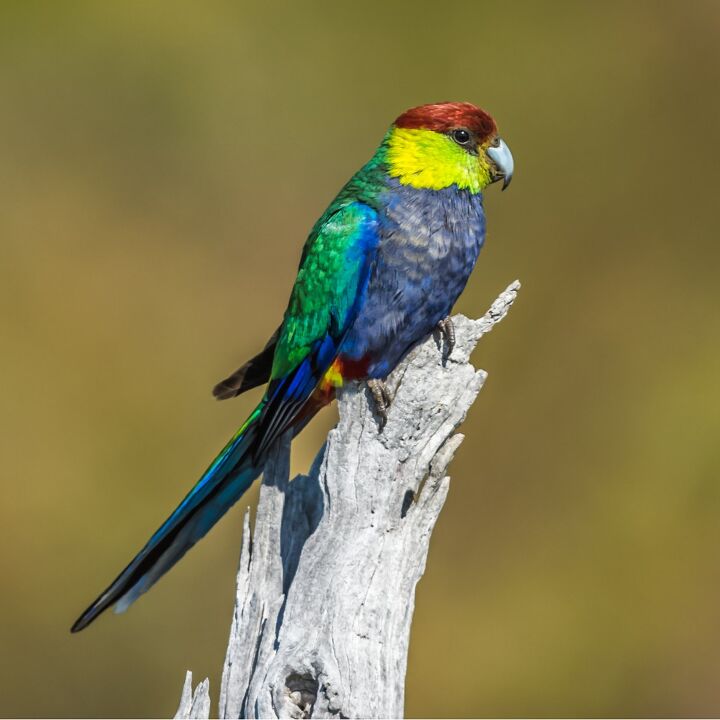
The appearance of the Red Capped Parrot is definitely striking. Such a vibrant and varied combination of colors is rarely seen and makes these birds unique and captivating. The males have a mellow green back, tail and wings, and a lime green rump. The chest and the belly are bluish purple, while the vent is red. The cheeks and the lower half of the head are yellow or lime green and the top half is bright red, giving them their name. The females are generally similar, but with obviously duller colors, and a green line above the eyes. This helps with identification. Without a doubt, these parrots are one-of-a-kind and charming in every aspect.
These birds might be recognizable for their colorful and vibrant appearance, but they also have a lovely personality.
Care and Feeding
There’s not a lot of differences or special requirements when it comes to the diet of grass parakeets in general. The main part of your Red Capped Parrot pet’s diet will be seeds. A common commercial seed mix with oats, millet, and canary seeds, will be a great start. You can add some finely chopped green leafy vegetables such as chard, lettuce, sowthistle and chickweed. These parrots enjoy bathing, so you will need to provide them with some overhead sprays, or bathing dishes. To help your pet adapt and socialize more, you should offer them various parrot toys to keep them stimulated and entertained.
Health and Common Conditions
The main threat for a Red Capped Parrot is confined space. Avoid cramped or overly small cages as they can lead to a host of problems. What they need instead is plenty of space, room for free flight and exercise. For many owners, an aviary or a bird room are the best solutions for this, as this gives the bird a more natural environment. A Redcap will need an aviary, bird room, or a very spacious cage to thrive as a pet.
Personality & Behavior
These lively little parrots have maybe the best traits of all the grass parakeets. They boast a lovely temperament and a charming appearance. A pet Red Capped Parrot will love to play and will show their energetic side during playtime – which comes with their slender size. In general, most owners will be surprised by the entertaining nature of these Australian parrots. They can also be a fantastic aviary addition, owing to their social nature. As long as you provide good care and living conditions for your new pet, you can count on having a feathery friend for years to come!
Photo credit: Nicholas Tomney/The Internet Bird Collection; Willem Heyneker/Shutterstock; Andreas Ruhz/Shutterstock