Red Rumped Parrot General Info
One of the most common parrots in Australia, and also one of the most interesting, the Red Rumped Parrot is full of surprises! Quite widespread, regular as pets and easily bred, you’d think they were an ordinary sight. But these parrots are so much more. With their stunning looks, their extreme sexual dimorphism and a long lifespan for a bird of this size, the Red Rumps offer a ton of good traits that will cater to most owners. They are also the only member of their genus, or family, which makes them even more unique. Let’s meet one of Australia’s most popular pet and aviary breeds!
These lively little parrots can be a great pet for every owner, and a good introduction into the world of aviary pets.
Native Region/Natural Habitat
These parrots are considered as a common bird of southeastern Australia. They are found in many regions, including southern Queensland, Victoria, the Lake Eyre basin, and the Murray-Darling Basin. Red Rumped Parrot thrives in a variety of habitats, most of which are grasslands, which gives them the nickname of Grass parrots. Their large numbers also make them a very common sight in urban areas, like gardens, parks, golf courses, and roadsides. Luckily, their numbers are on the increase. This comes from their ability to easily adapt, and even when their natural habitat was threatened and destroyed, Red Rumped Parrot adapted and continued to thrive.
Overall Description
Even though they are the sole members of their species, these parrots share a few similarities to Mulga Parrot, Hooded Parrot, and a few of the Rosella breeds. Still, they are unique in their own way, all the way from the combination of colors, to the small beak and a very long, tapered tail. In some of their traits, these parrots are even similar to Budgies. The adults reach an average length of 11 inches (27 centimeters) and weigh just around 3 ounces (80 grams). Keep in mind that a significant part of their length is the very long tail and that these parrots will be dependent on a lot of free space. This species displays extreme dimorphism, making males and females completely different.
Speech and Sounds
Like most of the grass parakeets of this size, the Red Rumped Parrot is neither too noisy, nor totally quiet. In other words, they have very balanced noise levels, which are mostly centered on their natural calls. These consist of melodic chirps and series of tweets, both of which are considered pleasant. Red Rumps are not skilled talkers or mimics, and they make up for this with their song. They become most vocal at dawn and dusk, or during feeding time and courting.
Colors
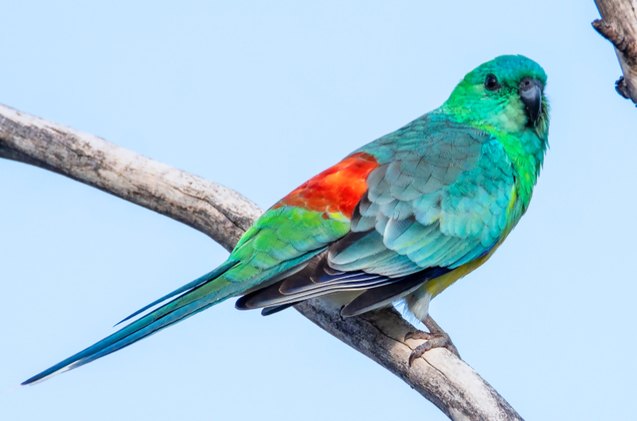
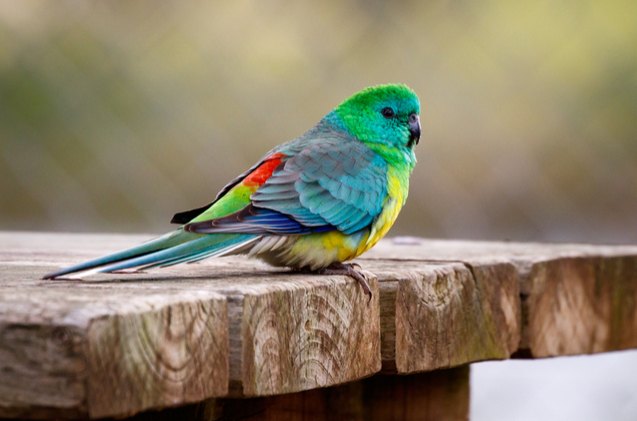
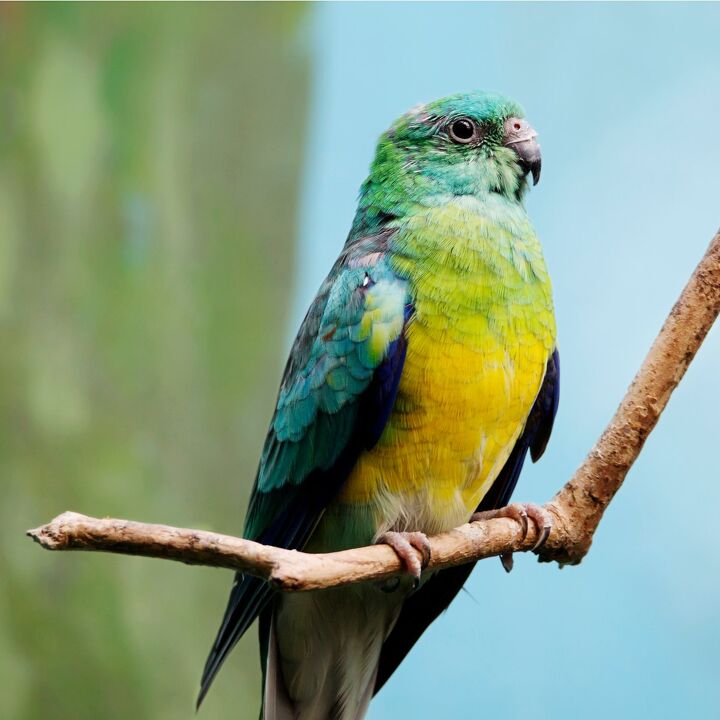
One of the first things you’ll notice about these parrots is their incredible appearance, as well as the complete difference between the sexes. The flamboyant ones are the males, with a whirlwind of soft, pastel colors that form an incredible combination. Their body is mostly emerald green, or even teal, with various subtle gradients throughout. The lower back is bright green, while the upper back is red, giving them the name. The chest is bright green, with turquoise mixes on the head. The belly and the lower parts turn more towards yellow. The wings are darker, with mixes of teal and green, and small blue and yellow patches on the shoulder.
The females are a different story altogether. They lack the vibrant appearance of the males and are mostly olive green, with darker shades on the wings. This color makes them almost invisible in the tall grass. Needless to say, this showy appearance makes these parrots quite popular on the pet market.
This breed displays extreme sexual dimorphism. Males are colorful and flamboyant, and females have a dull olive green feather color.
Care and Feeding
Considering that these are grass parrots, their primary source of food in the wild consists of grass seeds. It also includes herb seeds, blossoms, fruits, and insects. In the wild, they also perfected a special method of feeding on taller flowers.
For your pet, a high-quality commercial seed mix will be the basis of a balanced diet. When you combine it with some fruits and veggies for the intake of vitamins, you’ll make sure your pet gets all the nutrients they need.
Health and Common Conditions
Despite its size, Red Rumped Parrot is surprisingly hardy. With their incredible ability to adapt to most common conditions, you’ll have little to no troubles raising a healthy and happy pet. In general, Red Rumps are well known in Australia as easily bred parrots that do very well both as aviary and house pets. Just avoid placing them in crowded bird room environments with a lot of other breeds, to avoid injury.
As pets, these parrots can reach an impressive age of more than 30 years.
Personality & Behavior
Red Rumps have many lovely traits- it’s what makes them popular. When kept in pairs, they are considered affectionate only to their mate and can be somewhat territorial. But on their own, they quickly display their inquisitive and energetic nature. Remember that Red Rumped Parrots are avid bathers and also great flyers. You will need to satisfy these needs. But all in all, most owners agree on the wonderful personality of these birds, and the great ease of caring for them. These lively little parrots can be a great pet for every owner, and a good introduction into the world of aviary pets.
Photo credit: Luke Shelley/Shutterstock; Galina Savina/Shutterstock; David Roy Carson/Shutterstock