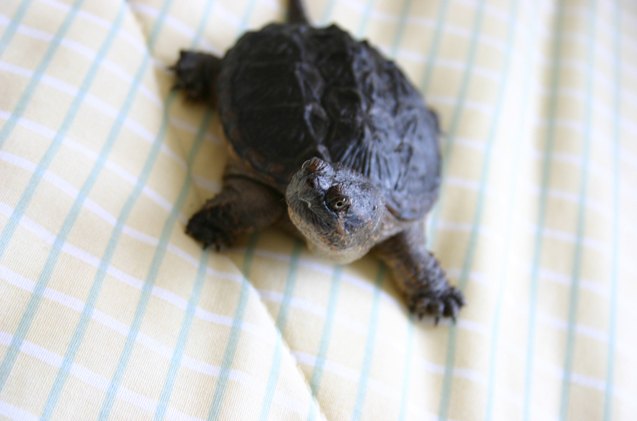
Snapping Turtle General Info
You can keep a Snapping Turtle as a pet, but you should be prepared to put in a lot of effort and time in order to properly care for your turtle.
These animals can be difficult to keep at home, particularly when they get older and can weigh as much as 40 pounds, so being aware of what to expect is an important step in determining if this is the right turtle breed for your family.
You can keep a Snapping Turtle as a pet, but you should be prepared to put in a lot of effort and time in order to properly care for your turtle.
Native Habitat
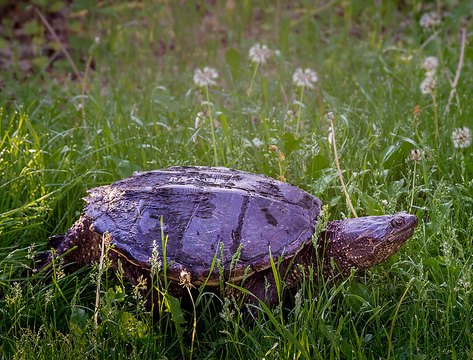
Common Snapping Turtles are found throughout the eastern portion of North America, from Quebec and Ontario all the way down to Florida. They are also found in habitats that are farther west into Kansas, as well as all the way to Central America.
These turtles prefer freshwater environments like marshes, ponds, swamps, and lakes, as well as slow-moving rivers and streams. Adults may go into brackish water as well.
Snapping Turtles are also known for sometimes walking long distances on land, with females often seen crossing roads from May to June, which is their nesting season.
Overall Description
It is easy to recognize a Snapping Turtle when you see one. You will notice the rough shell that has ridges and peaks, and you will also note that the head is large and the jaws are muscular. These turtles also have a beak that is pointed and sharp, and they feature a muscular, long tail.
A large enclosure with deep water is a must for your Snapping Turtle.
Colors
These large turtles can showcase various colors, including different shades of olive, brown, and black, as well as a cream.
Environment
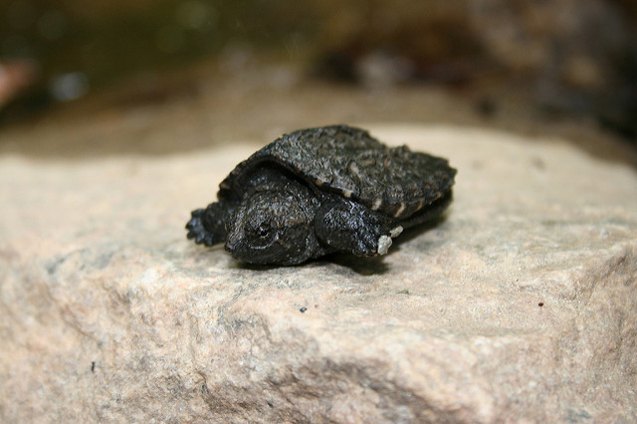
A large enclosure with deep water is a must for your Snapping Turtle, so if you do not have the space to accommodate this animal, it is best to go with a smaller turtle breed.
These turtles will do well in a big outdoor pond with a high quality filtration system that will keep the water clean. You should also provide your pet with plenty of non-toxic aquatic plants and driftwood in order to make the enclosure as natural looking as possible. A large enclosure with the right décor will provide your pet with space to swim and stay active, and that will help maintain your turtle’s health and happiness.
If you are planning on housing your Snapping Turtle indoors, you can use a stock tank or a large tub to create a basic setup for your pet. You will need to add a high quality filtration system to keep the water clean, especially since these turtles are messy eaters that need high-protein foods. Also add a UVB light bulb over the enclosure, along with a 100-watt spotlight over one end. Even though your Snapping Turtle will rarely get out of the water to bask, a basking area is recommended just in case he does decide to climb out and dry off a bit. You can set up the basking area by positioning the lamp over a shallow area in the tank that has a flat stone or similar object for your turtle to rest on. Doing so will create a slightly warmer area for your turtle to bask in while staying in the water. And, as with an outdoor enclosure, your indoor enclosure should also have a variety of submerged and floating aquatic plants.
For substrate, you can use gravel and rocks. The water should be maintained at a temperature of 75-86°F by day, but it can drop by 10° at night. You can use a water heater to keep the water temperature at the right level.
To keep the water clean and free of contamination, you can change 50% of it twice weekly.
Be aware that Snapping Turtles are feisty and aggressive.
Care Requirements
Snapping Turtles are omnivores, so they will eat a wide array of floating aquatic plants and live prey. You can feed your pet a commercial pelleted diet for turtles, along with crayfish, insects, worms, and fish.
Just make sure that you don’t overfeed your pet, as these turtles will have a big appetite and could become overweight. You can feed your turtle at least once a week, but remove any food that hasn’t been eaten in order to keep the water clean.
Behavior
As with all other turtle breeds, make sure you purchase a Snapping Turtle that was born in captivity rather than taken from the wild. However, be aware that Snapping Turtles are feisty and aggressive, even when they are bred in captivity. They are known for viciously striking at their owners, and they should not be housed in a community tank because they will kill and consume other animals, including other Snapping Turtles. These turtles should be housed alone, and they should be admired from a distance, as they are not the types of animals that can be held.
If your Snapping Turtle grows too big for you to handle, never release him into the wild. Instead, seek out a turtle rescue or adoption group or a local turtle club who can help.
Photo credit: jofo2005/Flickr; schwa021/Flickr; mrdorkesq/Flickr