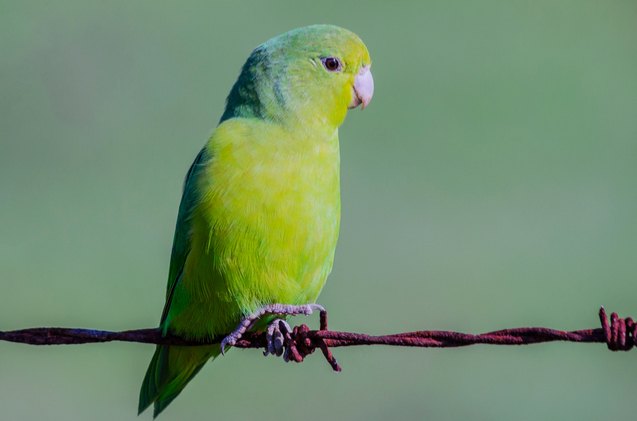
Turquoise Rumped Parrotlet General Info
One of the best examples of the popular “pocket parrots”, the Turquoise Rumped Parrotlet is a cheerful, tiny parrot that is quick to charm with its goofy personality and incredibly cute looks. These parrotlets are becoming increasingly popular in aviculture thanks to their fun personalities and ease of care. For anyone on the lookout for a small, affectionate and silly parrot that is full of tricks, one of these “pocket parrots” is the best choice.
A little bird that offers a lot, the Turquoise Rumped Parrotlet might weigh just an ounce, but it has a TON of loveable traits.
Native Region/Natural Habitat
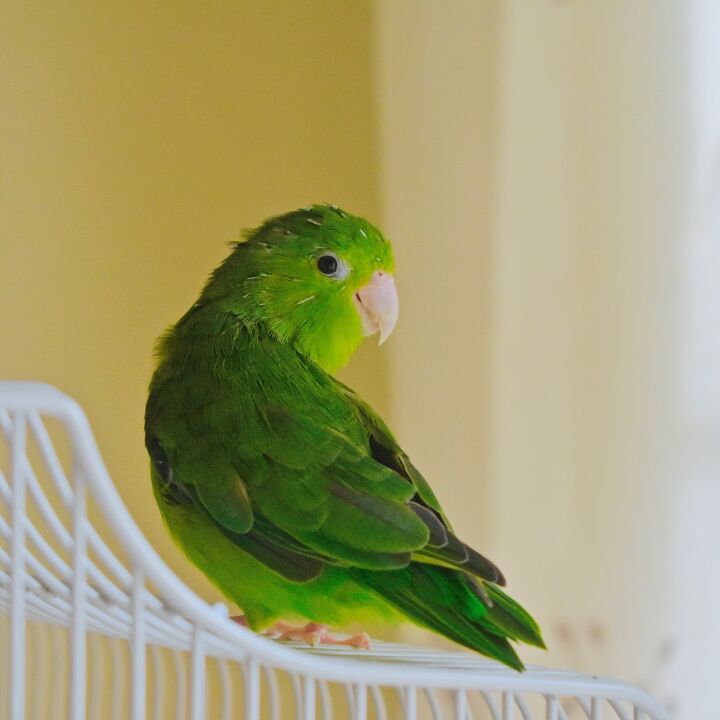
One of the easily recognized birds of Central America, these tiny parrots are found in Mexico, Panama, Sinaloa, and the Tres Marias Islands. They thrive in sparse growth, forest gallery, and lowland woodlands up to 1300 meters above sea level. They often wander on cultivated areas and plantations in search of fruit and crops. Turquoise Rumped Parrotlet is a near threatened breed, with numbers decreasing due to increasing industrialization and deforestation of their habitat.
Overall Description
These little parrots live up to their nickname, with a truly pocket size. Also, they share a lot of physical traits with other closely related parrotlets, and a trained eye is needed to confidently tell them apart. The adults reach an average length of about 5 inches (12 to 13 centimeters) and weigh only one ounce (30 grams). This tiny size makes Turquoise Rumped Parrotlet an ideal pet for apartments or small homes since even moderately sized cages will be roomy and spacious for these birds. They are energetic due to their light weight and small size, so ensure a plenty of room around the home- as well as enough playtime to spend all that energy.
Speech and Sounds
Turquoise Rumped Parrotlet is not too noisy, making them ideal pet birds for apartment dwellers. Loudness, mimicry, and speech are all traits of larger parrots, so all you can expect from these tiny birds is their natural chirps and tweets. An occasional mimicry can be achieved with a bit of training, which only adds to the cuteness of these parrotlets. They are most vocal and noisy when they require something – be it food, company, or playing.
Colors
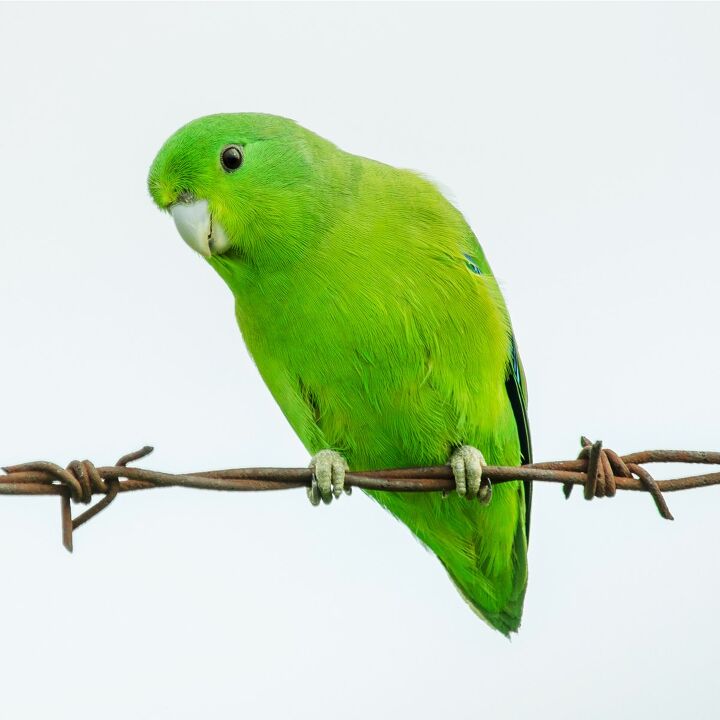
Almost all parrotlets are known for their similar, simple and mellow colorations. They lack any exotic colors or patterns, which might leave a bit to be desired. But for such a small bird, simplicity might be the best. They are still charming with what little variety of color they have. The body is entirely light green, with slightly darker shades on the upper body. Turquoise Rumped Parrotlet gets its name from the light blue on their lower back and rump, as well as underneath the tail.
The best way to recognize a Turquoise Rumped Parrotlet is the blue color on the lower back.
Care and Feeding
In the wild, these parrotlets thrive on a select diet of fruits, seeds, and tiny insects. They also frequent agricultural crops in search for various seeds or nuts. The best choice for your pet is a commercial seed mix for parrotlets. This is a balanced mix of oats, millet, weed seeds, and sunflower, and is full of good nutrients. You can add finely chopped fruits such as pears, apples, mango, and kiwi. This balances the diet and adds important vitamins to the mix. Hygiene is also important, but being so small, Turquoise Rumped Parrotlet can’t effectively bathe. That’s why you should use a water spray to offer your pet some well-deserved showering.
Health and Common Conditions
Although they are tiny and lightweight, this doesn’t mean they have a fragile health. A Turquoise Rumped Parrotlet that is properly cared for and gets enough attention, will easily live 25 years or more. You should optimize your household conditions and pay extra attention to the draft, damp and extreme temperatures. But social interaction might be most important. Don’t neglect your pet and provide a lot of toys and swings. You can also provide some willow branches, as Turquoise Rumped Parrotlet loves to hide and snuggle in the foliage.
Real willow or elder branches will be a favorite for your pet parrotlet. They have a natural urge to hide and snuggle in the thick foliage.
Personality & Behavior
Turquoise Rumped Parrotlet is a real sparky parrot and will offer a lot of fun to its owner. When you combine their cute looks and a goofy personality, the result is a parrot that will definitely brighten your day. A smile and a hearty laugh is a guaranteed thing when you get a pet as silly as a Turquoise Rumped Parrotlet. They can also be very affectionate, as they have a big love for cuddling and snuggling. Crawling beneath the blankets is a favorite of theirs, so enjoy it – but be careful not to squish them in the process. In general, a Turquoise Rumped Parrotlet pet is a really great choice. Expect a whirlwind of fun, laughs, and love from your feathered friend.
Photo credit: Rafael Martos Martins/Shutterstock; Amdezigns/Shutterstock