Stichelhaar Basics
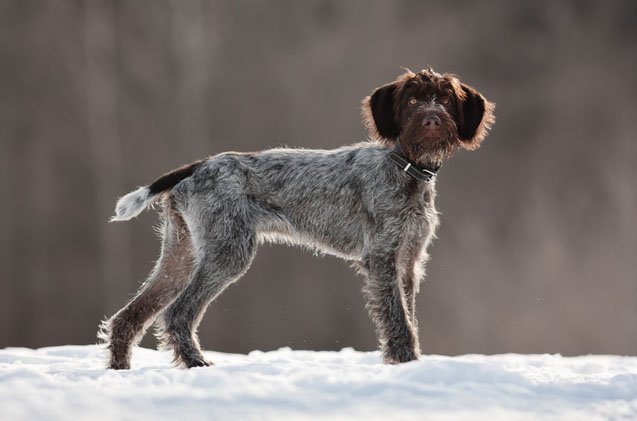
All it takes is one look to know that the Stichelhaar is a German pointing breed. With his brown coloring, his wiry coat, and facial furnishings, this breed is similar in appearance to other pointers. What sets this breed apart is his versatility as a hunting dog combined with his aptitude as a companion pet. Though he is still fairly rare outside of Germany, this breed is a great option to consider if you want a working breed that also does well with children.
All it takes is one look to know that the Stichelhaar is a German pointing breed.
Origin
Developed in the mid- to late-1800s, the Stichelhaar is also known as the German Rough-Haired Pointer. In addition to its hunting abilities, this breed is also known for being one of the four breeds used in the development of the more common German Wirehaired Pointer. Widely regarded as the oldest of the German rough-haired pointing breeds, the Stichelhaar comes from a cross between German sheepdogs and various rough-haired standing dogs. The breed was first recognized by the AKC in 1959 and the FCI in 1961, though the first breed standard wasn’t published until 2001. The Stichelhaar is still considered to be fairly rare outside of its homeland in Germany.
Pedigree
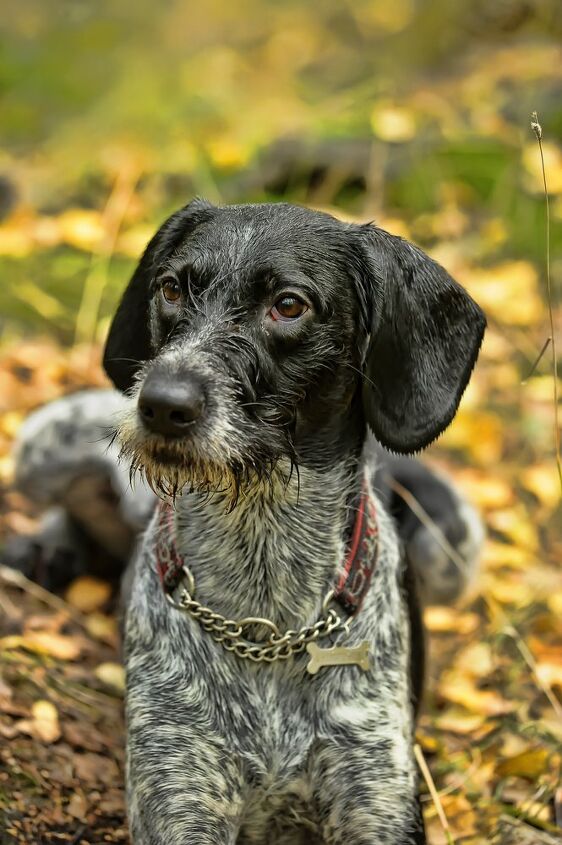
The Stichelhaar is the result of a crossing between German sheepdogs and various rough-haired standing dogs in Germany.
Food/Diet
As a breed that walks the line between medium- and large-sized breed, the Stichelhaar should be fed a high-quality dry food formulated for adult dogs. Because this breed was developed specifically for hunting, however, you might also consider an active or working breed formula. Just keep an eye on your Stichelhaar’s bodyweight and body composition to ensure that he doesn’t gain too much weight.
The Stichelhaar is versatile and very intelligent which is a great combination for a hunting dog.
Training
The Stichelhaar is versatile and very intelligent which is a great combination for a hunting dog. These dogs bond very closely with their masters but they do require a firm and consistent hand in leadership, so they are best for experienced dog owners. This breed can be trained as a watchdog or guard dog, though hunting will always be his strongest skill. He does have a tendency to be a little dominant as well, so be careful keeping him with other dogs – early socialization and training is a must for this breed.
Weight
The Stichelhaar is a medium-sized dog, standing between 24 and 26 inches tall and weighing an average of 44 to 66 pounds at maturity.
Temperament/Behavior
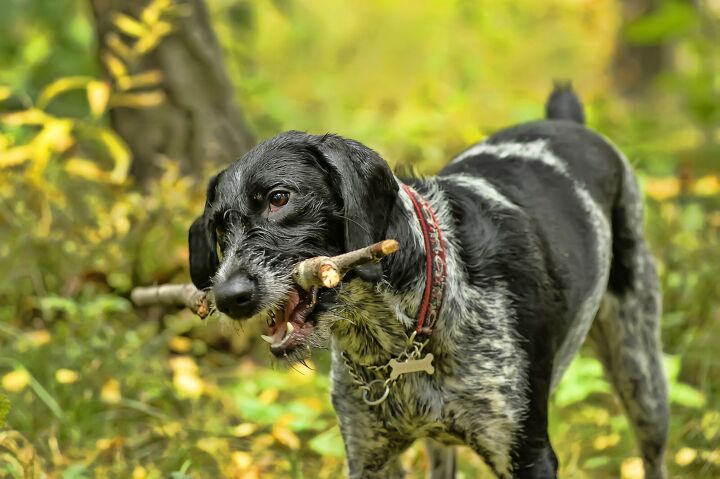
The Stichelhaar is naturally a calm and steadfast breed who does well in the role of both a family companion and a hunting dog. These dogs make wonderful family pets, though they do tend to bond more closely with one person. This breed does well with children and, though he may be a little aloof around strangers, he warms up quickly and is never aggressive. The Stichelhaar is loyal and affectionate with family, as well as being very alert – he makes a very capable watchdog for these reasons. He can get along with other dogs if properly socialized, but he has a strong prey drive so be careful around pets.
Common Health Problems
The Stichelhaar is fairly healthy with no serious congenital health problems. Even so, all dogs are prone to certain health problems and those to which the Stichelhaar breed may be prone include hip dysplasia, eye problems, ear infections, skin cancer, and von Willebrand’s disease.
Life Expectancy
The average lifespan for the Stichelhaar is thought to be about 12 to 14 years which is about average for a breed of its size. This breed is generally healthy but feeding him a high-quality diet will help to maximize his lifespan.
Exercise Requirements
The Stichelhaar is an active breed that requires a great deal of exercise. This breed needs at least an hour of rigorous exercise on a daily basis, though he will also appreciate having a fenced yard in which to run and play. He may also do well in certain dog sports and training for that can provide him with extra exercise as well.
The Stichelhaar is naturally a calm and steadfast breed who does well in the role of both a family companion and a hunting dog.
Recognized Clubs
The Stichelhaar was recognized by the AKC in 1959 and is classified by the FCI in Group 7 as a Continental Pointing Dog.
Coat
The Stichelhaar has the harsh, wiry coat characteristic of pointing breeds. The coat is short to medium in length with longer fur on the chest and the backs of the legs, in some cases. This breed is largely brown in color with white, mixed, or chestnut coloring. The coat naturally repels dirt and water, so frequent grooming is not needed, though the feet and ears should be checked after hunting.
Puppies
The average litter size for the Stichelhaar is fairly large, between 6 and 9 puppies. Because the breed grows to over 50 pounds at maturity, it technically classifies as a large-breed dog, so puppies should be given a large-breed puppy formula to prevent them from growing too quickly. If your Stichelhaar puppy grows too fast, it could increase his risk for musculoskeletal issues in adulthood. This breed is requires early socialization and training, especially to control his prey drive if you have other pets.
Photo credit: By rodimov/Shutterstock; Evdoha_spb/Shutterstock