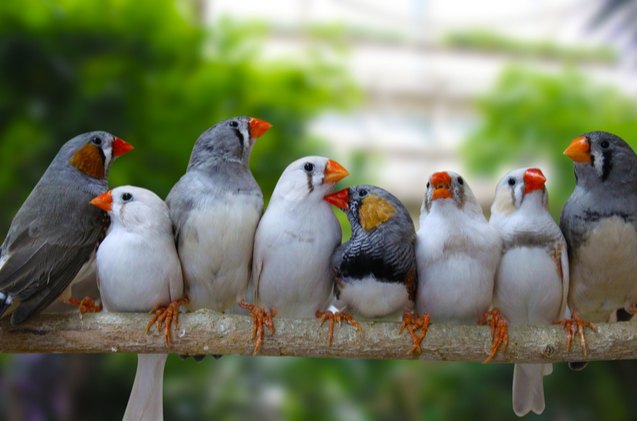
Zebra Finch General Info
There’s no doubt whatsoever that the Zebra Finch is one of the most sought-after and widespread pet birds today. With their robustness and lively personalities, they won over the hearts of many families across the world. One of the reasons why these tiny pet birds are so popular is the fact that they require very little care but offer a lot in return.
So if you’re on the lookout for a perfect pet bird for beginners, seniors and families alike, then the Zebra Finch might be just the choice for you!
The Zebra finch has all the traits of a perfect pet bird – ease of care, lovely personality and availability.
Native Region/Natural Habitat
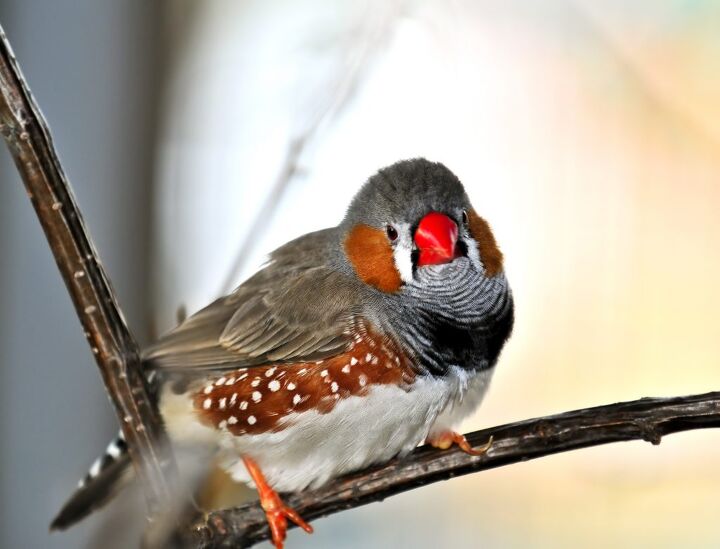
The natural home of these birds is reserved for almost the entire Australian continent, as well as Indonesia and Timor – the Lesser Sunda Islands. In the wild, they prefer the dry savannas, the shrubland and the wide, dry expanses of their native habitat, where they live gathered in flocks close to water.
Overall Description
Zebra Finches, like most of their cousins, are small birds, reaching an overall length of 4 inches (10 centimeters). Both male and female birds are similar in appearance, with the females being slightly less colorful.
Their lifespan is relatively moderate, and in a good home they can live up to 10 years.
Speech and Sounds
The most famous and distinctive trait of these finches is their song. They are loud and persistent singers, with a wonderful mishmash of tones and beeps, which they will proudly display throughout the day. They’ll often learn the sounds from an older bird, repeating and refining their unique tune. Generally, their singing is comprised of many different tweets and beeps that can sometimes evolve into a more complex, rhythm-based song, and will usually be a fun, regaling tune that will always present some new and unique aspect to the listener.
Colors
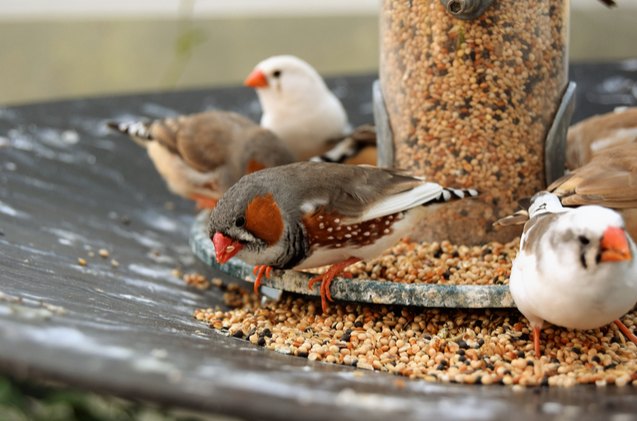
There are so many different patterns and colors of these small birds, which makes them very interesting to see, as well as hear. Usually, the back and top of their head are light gray. The lower body and the part under the wings are brown, with small white dots, while their bellies are pure white. Zebra finches have brown cheeks and accentuated red beaks. Horizontal black and white striped patterns cover their necks, and this whole combination gives them a unique and colorful look: all of the hidden little details make these petite birds incredibly charming.
Many different patterns and colors create a whirlwind of details, which makes Zebra Finches an interesting sight.
Care and Feeding
The usual commercial seed mixes for Zebra finches will be the best choice for the basics of their diet. They contain all the important grass seeds and added nutrients. As an addition to this, you can give your finches an occasional vitamin supplement in the form of sliced oranges, lettuce, spinach or bread dipped in milk. They are sure to love the added goodies. Grit and cuttlebone are also recommended, providing your birds with needed calcium and minerals.
Finches love to bathe. So be sure to always provide them with a fresh source of water and a little dish in which they can bathe on a regular basis.
Health and Common Conditions
Clean space and plenty of room are mandatory for Zebra Finches. They are nimble and require a lot of space to move around. As a favorite and established pet bird, they are usually very hardy and enduring. Make sure the room temperature is moderate, no draft is present, and hygiene is taken care off – and you’re guaranteed to have little to no trouble. Observe the potential signs of illness, like apathy, prolonged silence, ruffled or missing feathers, etc… Zebra Finches are social so boredom and solitude will do them no good.
Even though they’re small, the Zebra finches are healthy and hardy. With just a little bit of care, they’ll grow into happy and lively birds.
Personality & Behavior
Lively and social, inquisitive and fun, these finches are an entertaining bunch. Avoid keeping a solitary bird, and instead opt for a pair or two, since they largely depend on social interaction with other members of their species. This will require a big cage with a lot of room, or perhaps a modified aviary. During most of the day, they will be active – moving and jumping about as they chirp their beeps and tweets. With their goofy behavior and wild, colorful looks they are sure to take away the dullness and bring about some fun to your day!
Photo credit: Empiric7/Shutterstock; Elena Elisseev/Shutterstock; Flily/Shutterstock