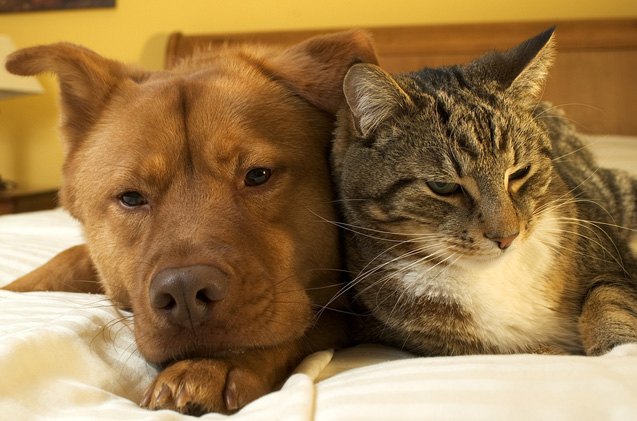
Other than the obvious physical differences, here are other considerable contrasts between the two household pets.
Although cats and dogs are the most popular pets, there are some major differences between the two species, and understanding those differences will prepare you to be a great guardian to your canine or feline companion.
Below is a list of just five ways that dogs and cats differ. As you get to know these animals better, what you will undoubtedly realize is that these adorable pets are special in their own ways. And, despite their differences, they both have so much love, affection, and attention to offer you. So, whether you are currently a cat or dog parent or you are planning on becoming one, understanding their needs and behaviors is definitely worthwhile.
Diet and Nutrition
One of the biggest differences between cats and dogs is how they eat and what nutrients they need to acquire from their food.
Felines are obligate carnivores, which means they must consume animal protein (i.e. meat) in order to survive and to thrive. On the other hand, canines definitely prefer a carnivorous diet, but they are better equipped to scavenge for food and can, therefore, digest and reap the benefits of plant material better than cats can. Dogs can actually survive solely on plant material, if necessary. This is why it is important to take precautions before putting your dog on a vegan diet, and most vets advise against putting a cat on a vegan diet.
Canines are also able to survive longer periods of time without food, thanks to their ability to burn fat reserves for energy. Felines, on the other hand, will end up using non-fatty tissues to get the energy they need when they are not consuming enough food, and this can lead to life-threatening hepatic lipidosis.
Related:Can Your Cat Be A Vegetarian?
Claws
A cat’s claws will remain sharp, and grow sharp again and again between trimmings, because they retract and become hidden. On the other hand, a dog’s claws are always extended. This helps keep them blunt because they are always getting worn down through continual contact with the ground with every step. Nevertheless, it is important to check your dog’s claws and trim them whenever necessary to ensure his gait is normal and the claws won’t get so long that they are at a greater risk of breaking and becoming infected.
Even though a cat’s claws might be quite different from those of a dog, the key is to check your pet’s paws and claws regularly to be sure they look healthy. Trimming the claws whenever necessary is an important step to take when caring for a canine or feline, and it can all be done as part of an at-home grooming session during which you pamper your furry friend to keep them looking cute and clean.
Related:Declawing Cats: A Cruel and Unnecessary Procedure
Training
Many dogs are ready and willing to be trained, and they can pick up on basic commands rather quickly. Sometimes it takes just a few minutes to train a dog to “sit,” for example. Therefore, canines are easier to train than felines, as their goal is to please their owners. Cats, on the other hand, are almost impossible to train. It takes a lot more time, patience, and dedication to train a cat to do tricks like a dog, as they do not readily respond to commands.
However, just because cats might be more challenging when it comes to training, it certainly doesn’t mean that they can’t be trained. In fact, some kitties will gladly perform little tricks and follow easy commands if they have been taught that they will get a treat as a reward for that type of behavior. Clicker training is something that you can try with your frisky feline, whether you want to do it for fun or you want to encourage better behavior.
It’s also worth noting that there are differences between dogs and cats when it comes to their bathroom habits. If cats are given access to a clean litter box, they will automatically know where to go to the bathroom instinctually, without needing to be trained. But if you have a dog, you will need to dedicate quite a bit of time to housetraining him so he doesn’t go to the bathroom inside the house.
Fight versus Flight
Cats can run quickly, climb, and jump high to get away from a potential predator. They know that, even though they are predators, they can also be prey, so their bodies are equipped to get away fast. And these same quick reflexes also make them agile hunters. But dogs, who are unable to climb, are more reliant upon their packs to take down prey, and they are more likely to stand their ground and become aggressive in order to defend themselves against an attacker because they are not able to get away as easily as cats.
Also, dogs are long distance runners, while cats are sprinters, which is why cats have to use more stealth during their attacks on their prey, while dogs can use their endurance to exhaust an animal before taking it down.
By understanding how cats and dogs attack their prey, you can adjust your play sessions with them to better mimic the act of hunting. For example, you might purchase interactive toys for kitties that encourage them to pounce from a hiding spot and sprint in order to tackle their “prey.” This can help your feline friend release energy in a positive way, while also fulfilling the natural instinct to hunt and feeling the satisfaction of doing it successfully.
Social Life
It should come as no surprise that dogs are more sociable than cats and they prefer to be in crowds of people, thanks to their pack mentality. Cats tend to be more solitary and tend to become more attached to their territory than the other inhabitants within it. However, any cat owner will tell you that cats can become very attached to their owners and to other felines or pets in the family, which is why they make great companions like dogs do.
Just like people, though, dogs and cats are individuals with unique personalities, so there are exceptions to these general traits. For instance, you might have a dog who actually prefers quiet environments and who is attached to one person in the family in particular. Or, you might have a cat who is extremely social and willing to become friends with everyone that walks through the front door.
The key is to observe your pet to get to know them. Then, you can give them what they need, whether that means giving them a serene space they can retreat to or giving them a lot of time to play with family to enjoy the company of others.
One Thing Is Certain: Dogs and Cats Can Bring You Joy!
It doesn’t matter if you’re a dog person, a cat person, or a little bit of both. The truth is that these animals make wonderful pets and can bring loads of laughter and love into your life, and that’s what makes them similar despite their differences.