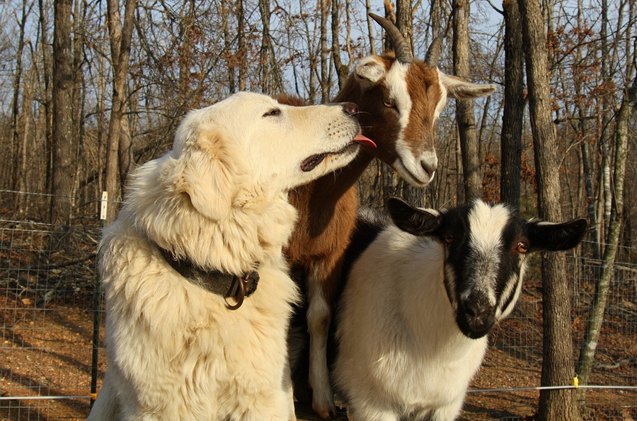
Akbash Dog Basics
The Akbash Dog is a large, white-coated breed that was developed in Turkey to protect livestock from predators. This strong, independent breed is good at its job but it is typically not recommended as a companion pet. Unless you have a great deal of outdoor space to offer and you can give the dog a job to do, the Akbash Dog may not be the right breed for you.
The Akbash Dog is a large, white-coated breed that was developed in Turkey to protect livestock from predators.
Origin
The Akbash Dog is native to Turkey where it was originally bred as a livestock protector. These dogs are an old breed, thought to have been developed about 3,000 years ago by shepherds who selectively breed large, white-coated dogs to protect their flocks from predators. These dogs may share some heritage with other livestock protection breeds including the Komondor, the Kuvasz, the Pyrenean Mountain Dog and the Tatra Mountain Sheepdog. The Akbash Dog gets its name from the Turkish word “akbas” which means “white head” and they are the national dog of Turkey.
Pedigree
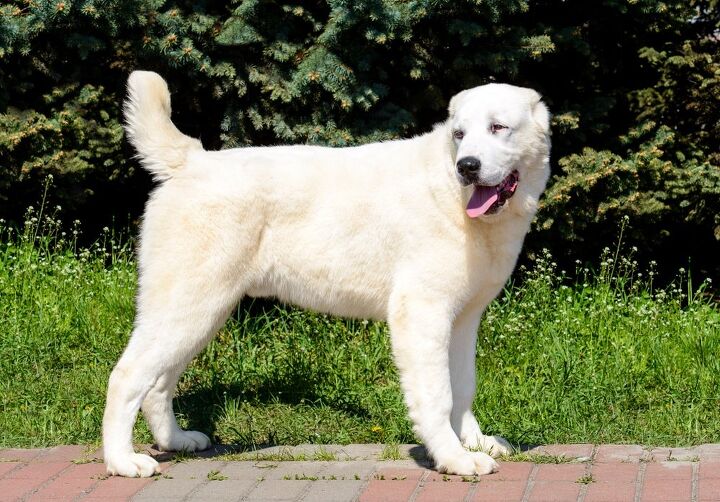
The Akbash Dog is a purebred dog whose origins date back as many as 3,000 years. This breed may share some of its heritage with other livestock protection breeds including the Komondor, the Kuvasz, the Pyrenean Mountain Dog and the Tatra Mountain Sheepdog.
Food/Diet
As a large-breed dog, the Akbash Dog requires a high-quality commercial dog food diet that is formulated for large-breed dogs. Large-breed dog formulas are specially designed to meet the energy needs of large-breed dogs like the Akbash Dog to ensure that they do not become overweight.
The Akbash Dog is an intelligent breed that was developed to work independently as a livestock protector.
Training
The Akbash Dog is an intelligent breed that was developed to work independently as a livestock protector. These dogs may not respond well to training because of their independent nature unless training is started early. Though obedience may not be this breed’s strong suit, these dogs do respond well when given a job to do or, at the very least, when given proper mental stimulation.
Weight
The Akbash Dog is a large-breed dog – the female of the breed tends to weight between 75 and 105 pounds while the male weighs in at 90 to 140 pounds. The average height of this breed is 27 to 34 inches at maturity.
Temperament/Behavior
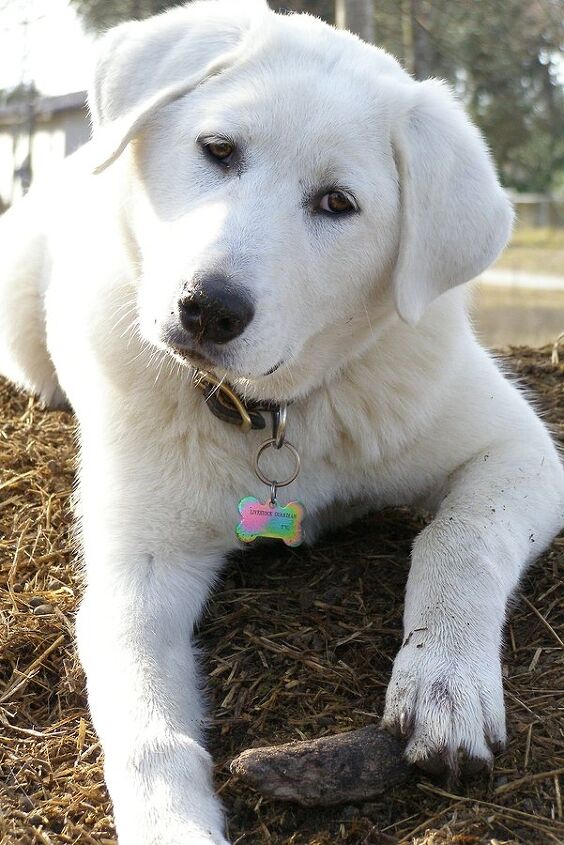
The Akbash Dog is not typically kept as a companion dog though, if properly socialized from a young age, this breed can get along with other dogs and pets. These dogs are calm and gentle by nature, they do have strong guarding and protective instincts. This breed is not aggressive or hostile, but it will respond to threats or intruders in its perceived territory by barking or growling a warning. These dogs tend to be independent and they prefer to have a great deal of space – if they do not have access to the outdoors they may develop problem behaviors such as trying to escape. These dogs do best when given a job to do, though they typically do not do well with obedience because they are so independent.
Common Health Problems
Because the Akbash Dog is such an old breed, it has a fairly large gene pool and is thus fairly healthy. This is not to say, however, that the Akbash Dog is immune to health problems – all breeds of dog are prone to developing certain conditions. Some of the most common conditions affecting the Akbash Dog breed include hip dysplasia, hypothyroidism, dilated cardiomyopathy, and gastric torsion. Responsible breeding practices can help to reduce the incidence of inherited conditions in this and other breeds.
Life Expectancy
The average lifespan for the Akbash Dog is between 9 and 11 years.
Exercise Requirements
The Akbash Dog is a working breed, originally bred for the purpose of livestock protection and thus they are not highly active – when protecting a flock, these dogs may spend hours lying with the flock. These dogs are a low-energy breed that does perfectly fine with a daily walk. Though they are not terribly active, these dogs can move with speed and agility when needed to fight off wolves and other large predators.
These dogs are calm and gentle by nature, they do have strong guarding and protective instincts.
AKC
The Akbash Dog is not currently recognized by the American Kennel Club but it is recognized by the United Kennel Club. It is, however, the national dog of Turkey and thus recognized by the Turkish Kennel Club (Köpek Irkları ve Kinoloji Federasyonu).
Coat
The Akbash Dog is native to Turkey where it was bred to protect livestock in the mountains. This being the case, this breed has a short- to medium-length double coat with a long, curled tail that is heavily feathered. The coat of this breed is always white, though some dogs exhibit biscuit- or gray-colored shading around the ears. These dogs require at least weekly brushing to help reduce shedding.
Puppies
Because the Akbash Dog is a large-breed dog, puppies may take more than one year to become fully grown. This breed tends to be fairly independent so proper training and socialization is important from a young age to ensure that this breed gets along with other dogs.
Photo credit: Janet C/Bigstock.com; JMLR/Bigstock.com; volofin/Shutterstock