
Alaskan Klee Klai Basics
If you love the look of the Alaskan Husky but don’t think you can handle such a large dog, the Alaskan Klee Klai may be the perfect solution. This breed has the looks and temperament of an Alaskan Husky but is much smaller. In fact, the breed comes in three different sizes – toy, miniature and standard. No matter which size you choose, you will find that the Alaskan Klee Klai is a beautiful and intelligent breed that makes a loyal family pet.
If you love the look of the Alaskan Husky but don’t think you can handle such a large dog, the Alaskan Klee Klai may be the perfect solution.
Origin
The Alaskan Klee Klai is a Spitz-type breed that was originally developed during the 1970s to create a companion-sized version of the Alaskan Husky. The first Alaskan Klee Klai was developed by Linda Spurlin by mixing the Alaskan Husky with the Siberian Husky and the American Eskimo dog. The breed was first released to the public in 1988 and was accepted by the American Rare Breed Association in 1995 and the United Kennel Club in 1997. The breed has yet to be recognized by the AKC.
Pedigree

The Alaskan Klee Klai was bred from the Alaskan Husky, Siberian Husky and the American Eskimo dog which makes it mixed breed.
Food/Diet
The Alaskan Klee Klai is prone to having a sensitive stomach, so you need to be careful what kind of food you offer. Ideally, you should choose a food made with natural ingredients that doesn’t contain common allergens like grain.
These dogs are quick learners and they enjoy being given a task to complete.
Training
Due to its high intelligence, the Alaskan Klee Klai typically responds well to training. These dogs are quick learners and they enjoy being given a task to complete. For this reason, Alaskan Klee Klais excel in obedience training as well as agility – agility training also gives the dog a way to exercise its brain as well as its body. Because this breed is prone to developing Small Dog Syndrome, it is essential that you start training early and that you maintain a firm and consistent hand.
Weight
The average weight of an Alaskan Klee Kai varies depending on the size variation. Toy variations weigh up to 9 lbs. while miniature variations weigh between 9 and 15 lbs. The standard variety typically weighs between 16 and 22 lbs.
Temperament/Behavior

The Alaskan Klee Klai is highly intelligent and requires a lot of daily mental and physical exercise to keep his mind sharp and his energy under control. These dogs have a very strong prey drive, so they are not recommended for households with small pets, particularly rodents and cats. This breed can get along with children, however, as long as they are old enough to handle the dog properly. The Alaskan Klee Kai is not an aggressive breed, but it will not tolerate being mistreated.
These dogs have a natural tendency to be aloof or reserved around strangers but they can be very affectionate and loyal with family. Though they may be small, the Alaskan Klee Klai makes an excellent guard dog because it is not afraid to defend its territory. These dogs are always going to be a little shy around people they don’t know, but continued socialization will prevent the dog from becoming nervous or aggressive around strangers.
Common Health Problems
There is some argument regarding the genetic soundness of the Alaskan Klee Klai breed. It was once believed that the breed was remarkably unaffected by genetic defects but it is now coming to light that breeding the dog for its small size may increase the incidence of hydrocephalus in puppies. Some common health problems seen in this breed include stomach problems, juvenile cataracts and patellar luxation.
Life Expectancy
The average life expectancy of this breed is between 12 and 16 years.
Exercise Requirements
The Alaskan Klee Klai is a very active and energetic breed that requires a significant amount of daily exercise. This breed can be adaptable to apartment life but you will need to take the dog for a long walk on a daily basis. Regular playtime is also encouraged to help this breed work off its energy.
The Alaskan Klee Klai is highly intelligent and requires a lot of daily mental and physical exercise to keep his mind sharp and his energy under control.
AKC
Because the Alaskan Klee Klai is a mixed breed created from the Alaskan Husky, Siberian Husky and American Eskimo Dog, the AKC does not recognize it as a separate breed. The breed has been recognized, however, by the American Rare Breed Association and by the United Kennel Club as a stand-alone breed.
Coat
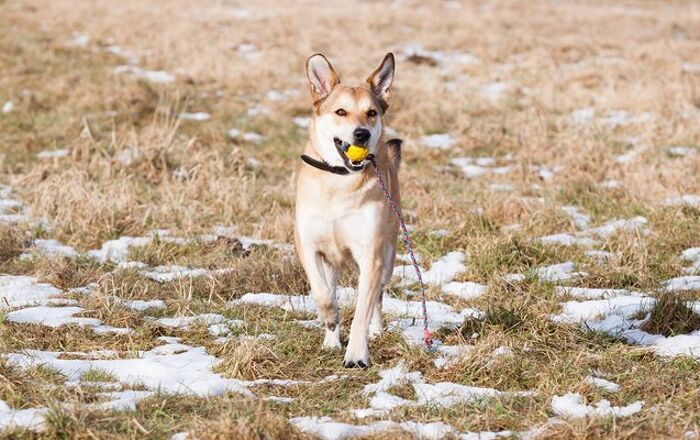
The coat of the Alaskan Klee Klai resembles the thick double coat of the parent breeds. There are actually two different coat types seen in this breed: the standard and the full coat. The undercoat in both varieties is short and soft while the outer coat is made of long guard hairs. Several color variations can be seen in the Alaskan Klee Klai including combinations of black and white, gray and white or red and white. The only color that is considered a disqualification is solid white.
Puppies
The average litter size for the Alaskan Klee Kai is very small, between 1 and 3 pups per litter. While they are young, Alaskan Klee Klai puppies should be socialized to ensure that they remain friendly toward people and that they get along with other dogs and pets.
Photo credit: Tanya Zima/Shutterstock; Michael Gordon/Shutterstock