Breed History
The American Bobtail appeared through natural selection. They are not the result of crossbreeding a domestic cat and a bobcat. In the 1960s, breeders used a foundation stock of feral and domestic cats with natural bobtails to produce these hearty cats with their wild looks and excellent dispositions. They were recognized by The International Cat Association in 1989, and accepted for championship competition in the Cat Fanciers Association in March 2013. No pedigreed cats were used to develop the breed, and it has no relation to the Japanese Bobtail. The American Bobtail is an especially healthy animal, with no known genetic tendencies toward any particular health issues.
Fun, playful, affectionate and endlessly interested in whatever their humans are doing, the American Bobtail cheerfully initiates games of fetch and will execute stunning acrobatic leaps at any errant moth silly enough to come flying by.
Breed Traits
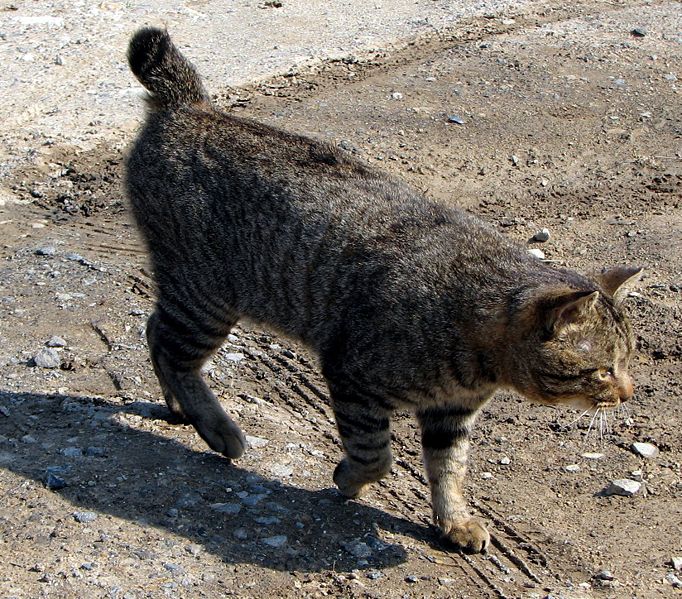
Fun, playful, affectionate and endlessly interested in whatever their humans are doing, the American Bobtail cheerfully initiates games of fetch and will execute stunning acrobatic leaps at any errant moth silly enough to come flying by. The Bobtail’s wild appearance is never more evident than when he’s stalking a favorite toy, which he will then likely drop at your feet. Although a quiet cat by nature, Bobtails trill and chirp when they are content and happy. Unlike many cats, they take easily to the leash, and like to go on walks. They are warm and loving, interacting constantly with their humans. Not surprisingly, these happy charmers do quite well with families, other cats, and even dogs. But be warned, Bobtails like shiny objects, which they will steal and hide. Owners often report finding a “stash” of items socked away by their feline companions.
Overall Description
American Bobtails are medium to large-sized cats with a solid, rectangular build. Sometimes described as stocky, they are still a fairly long cat, but definitely broad chested. Their short tails are one-third to one-half the length of a “normal” cat’s tail, and should be visible above the back when the cat is alert and interested. The tail is expressive and flexible, and may be straight or slightly kinked with some bumps present. Both the head and muzzle are wide and well defined. The face is characterized by a strong chin, and a pronounced whisker pad. The overall expression is one of intelligent vigilance. The shoulders and hips are prominent adding to the American Bobtail’s muscular athleticism, and confident manner. They grow slowly, taking as long as three years to reach their full mature size.
Colors
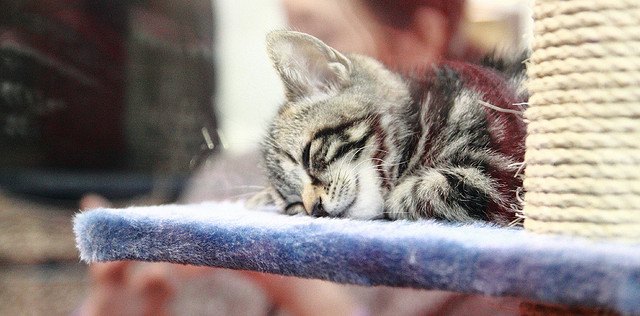
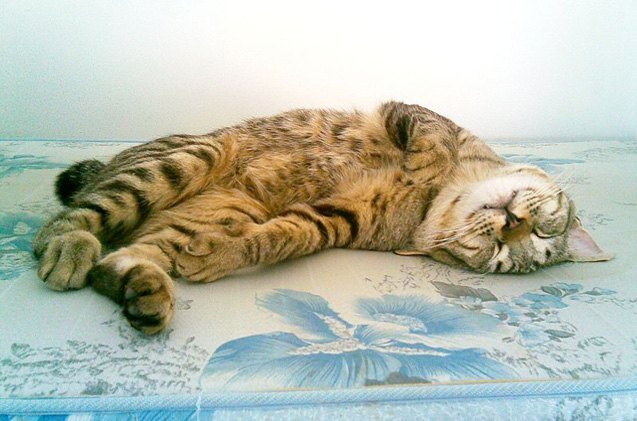
A wide range of colors and patterns are found in the coats of the American Bobtail, and their eyes can be any color as well. Show animals tend to be tabbies with a “wilder” appearance, which is the look emphasized by most breeders. Both short and medium length coats are common.
Grooming Requirements
American Bobtails are easy cats to groom, adding to the popularity of the breed. Since both short and medium length coats appear, requirements for brushing vary. The goal is to keep loose fur cleared away to prevent any chance of matting. Only the occasional bath will be needed.
Photo credit: Chris 73 /Wikimedia Commons; Kai Sun/Flickr